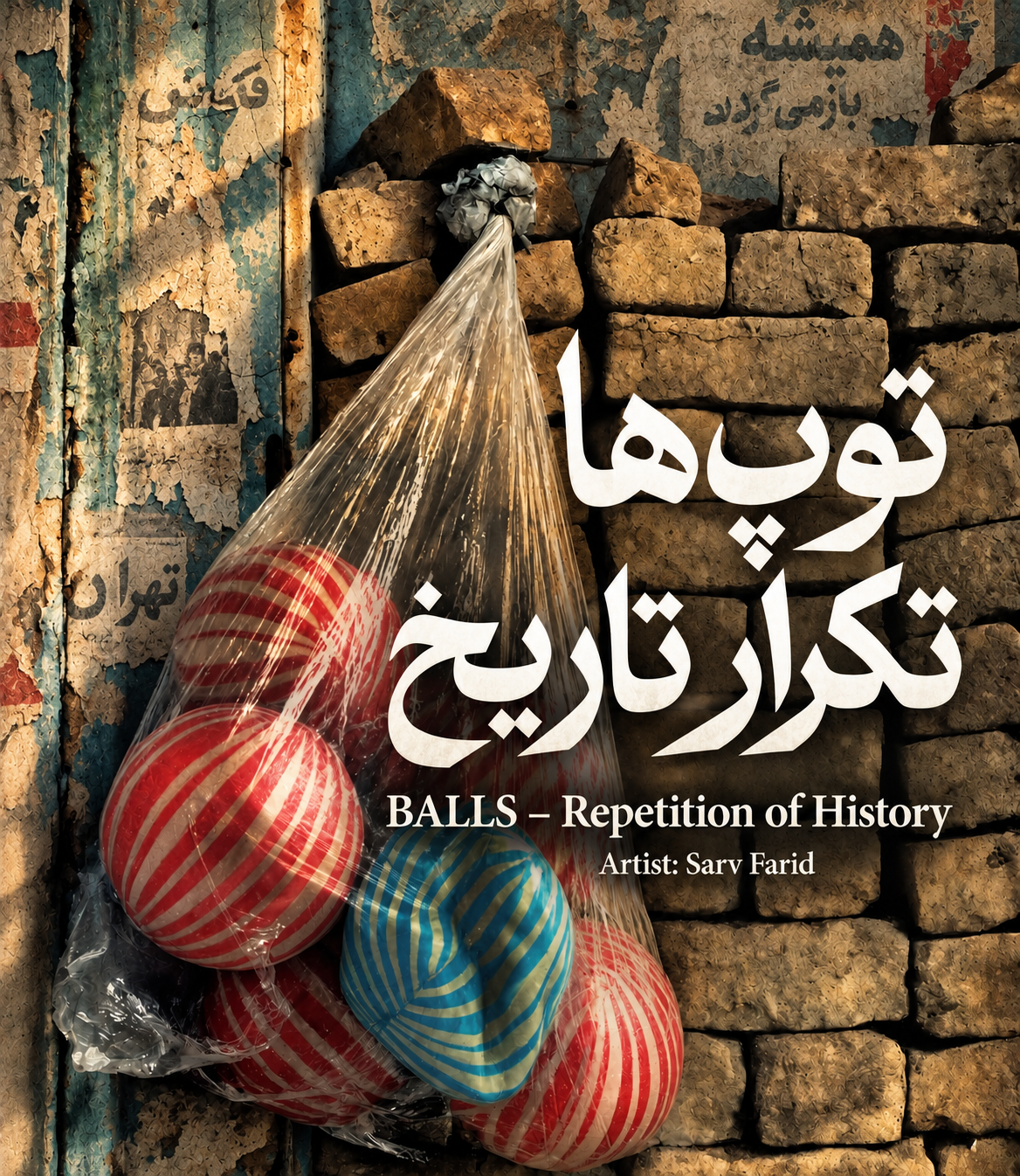
BALLS - Repetition of History
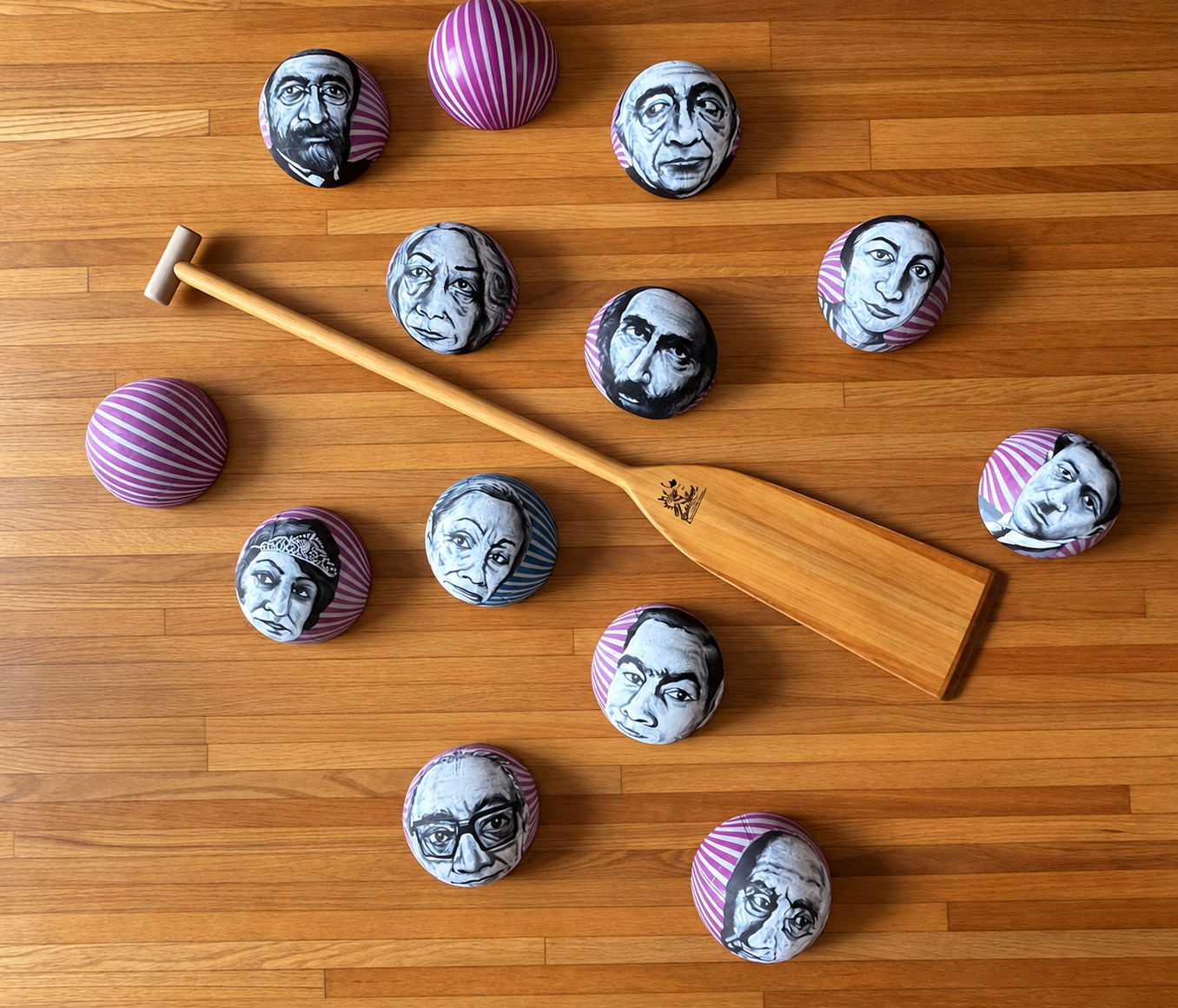
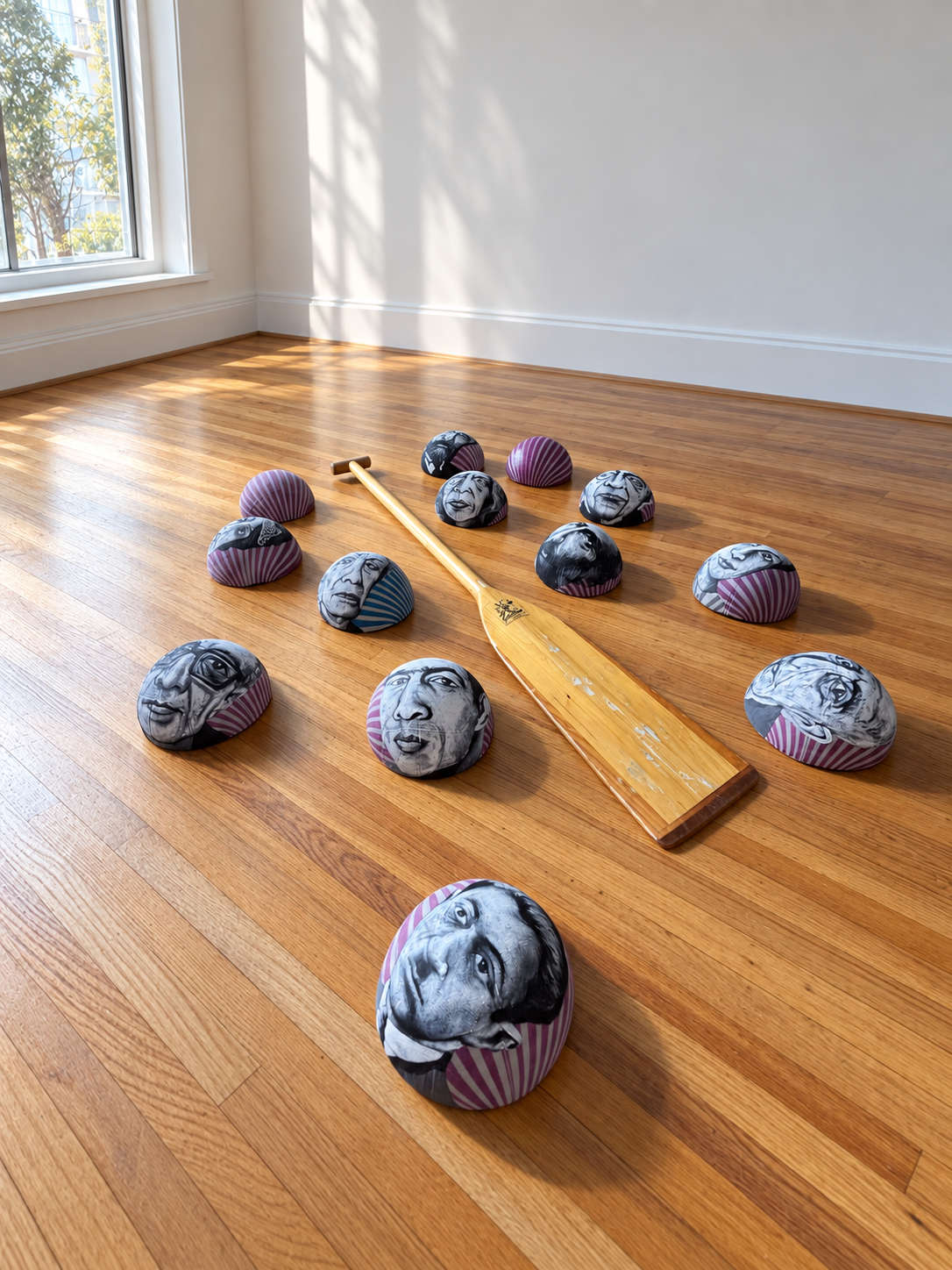
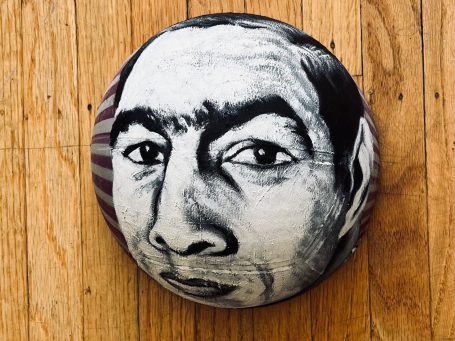
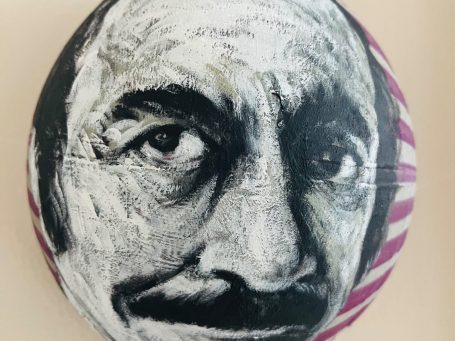
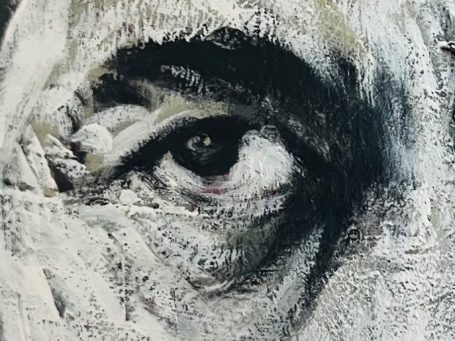
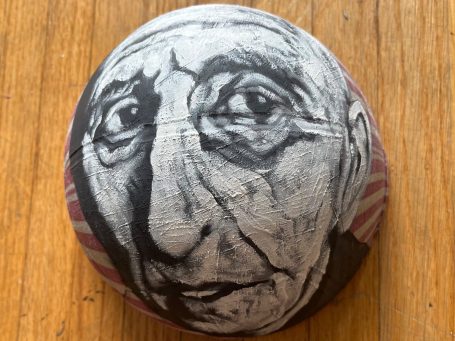
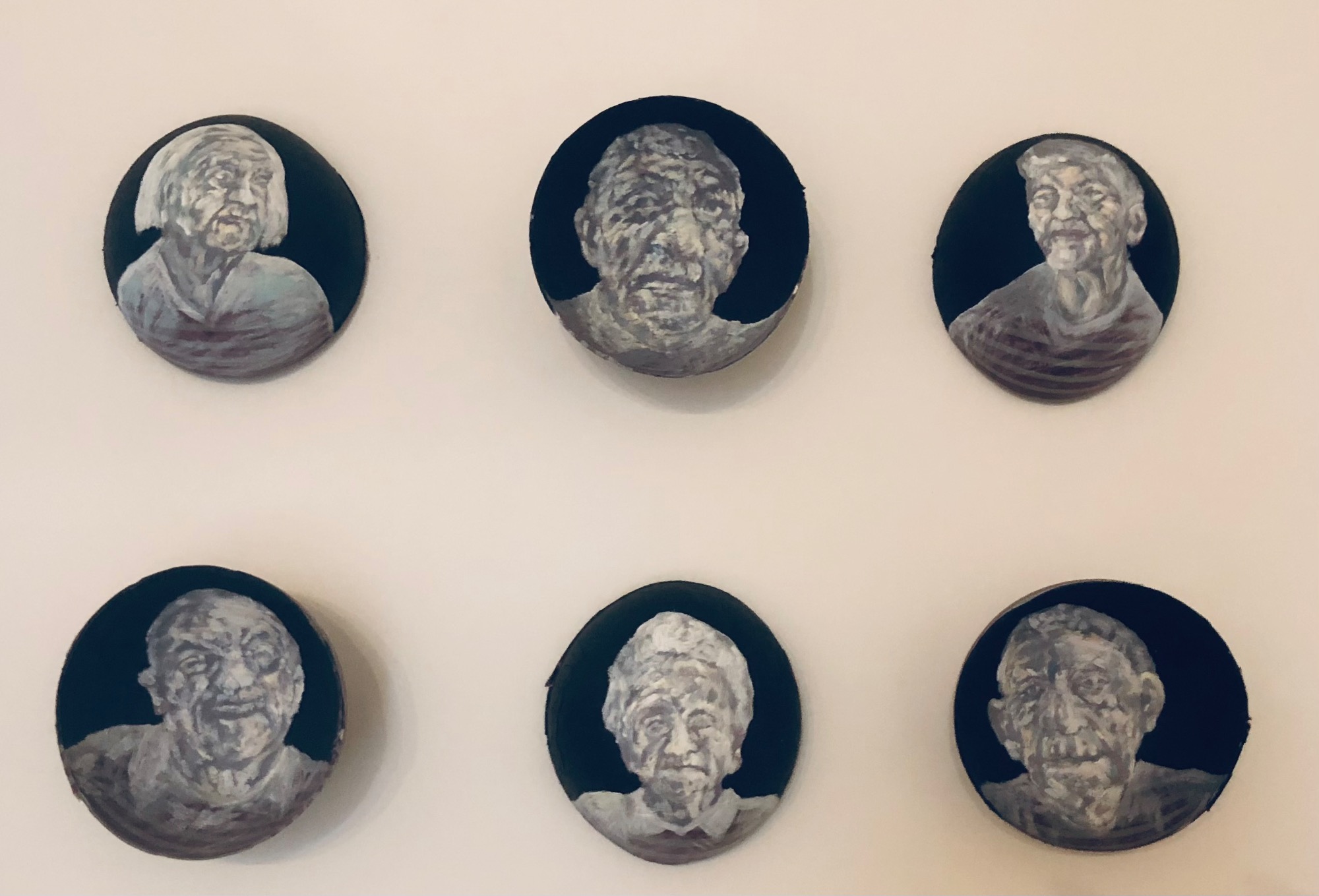
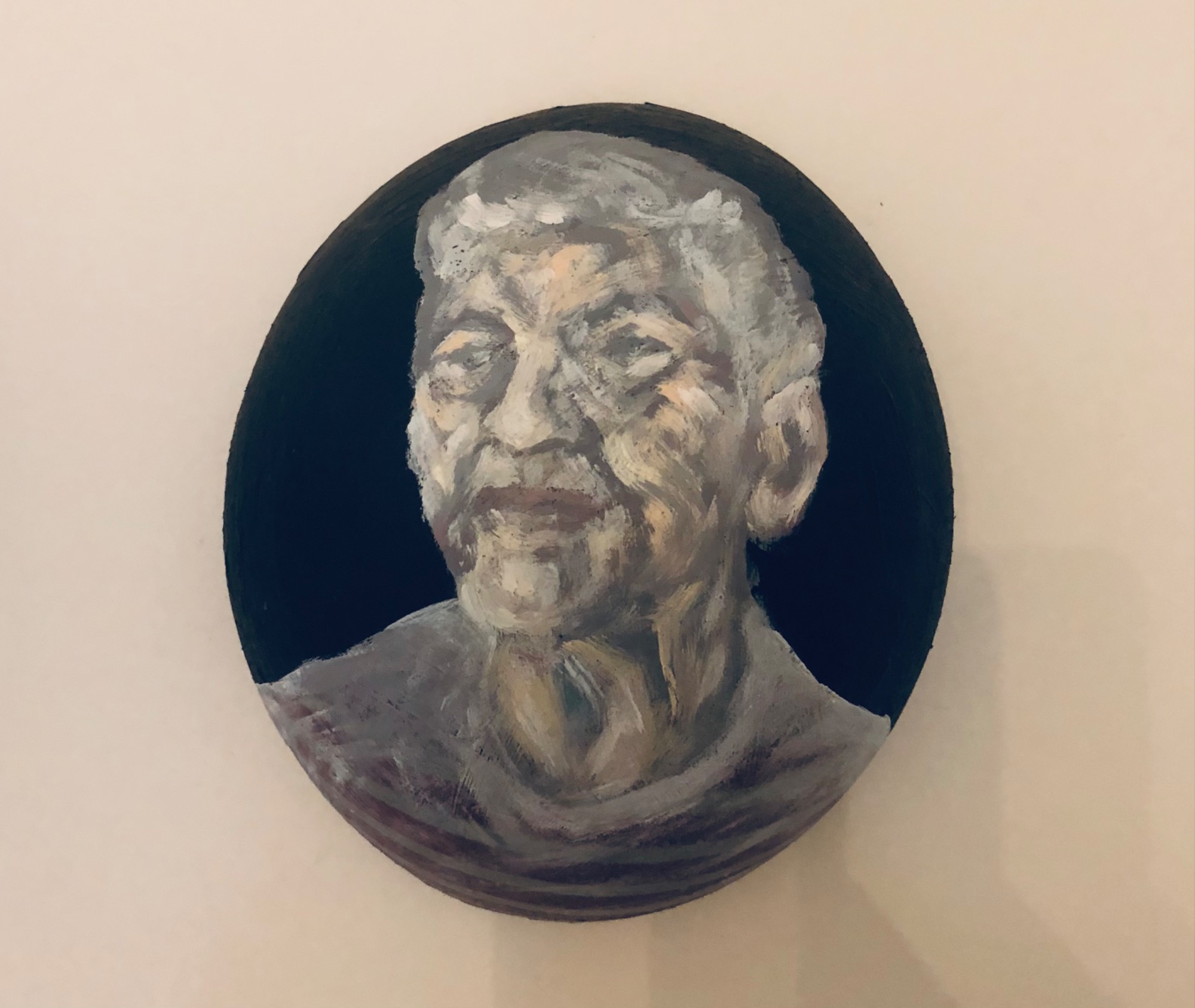
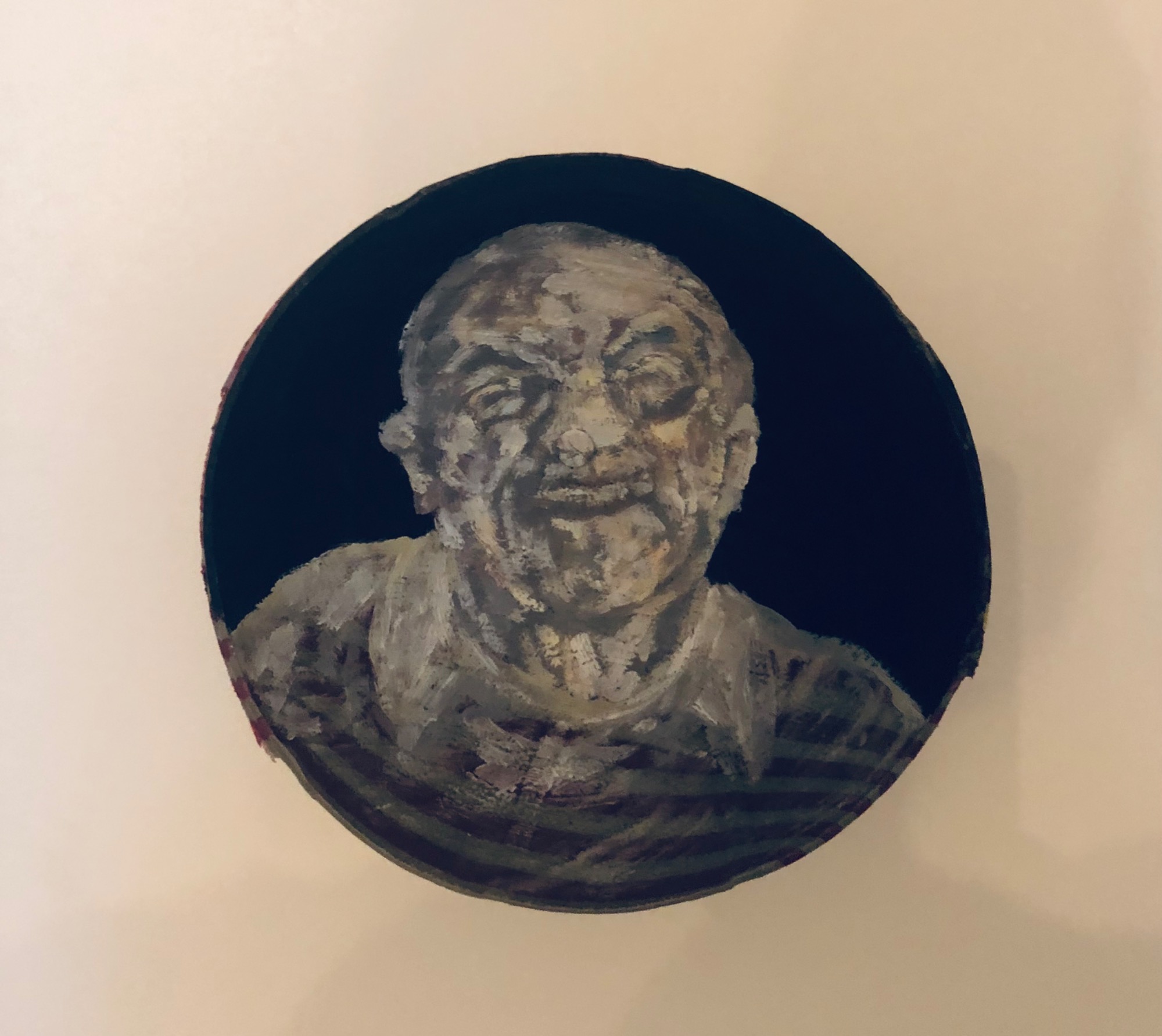
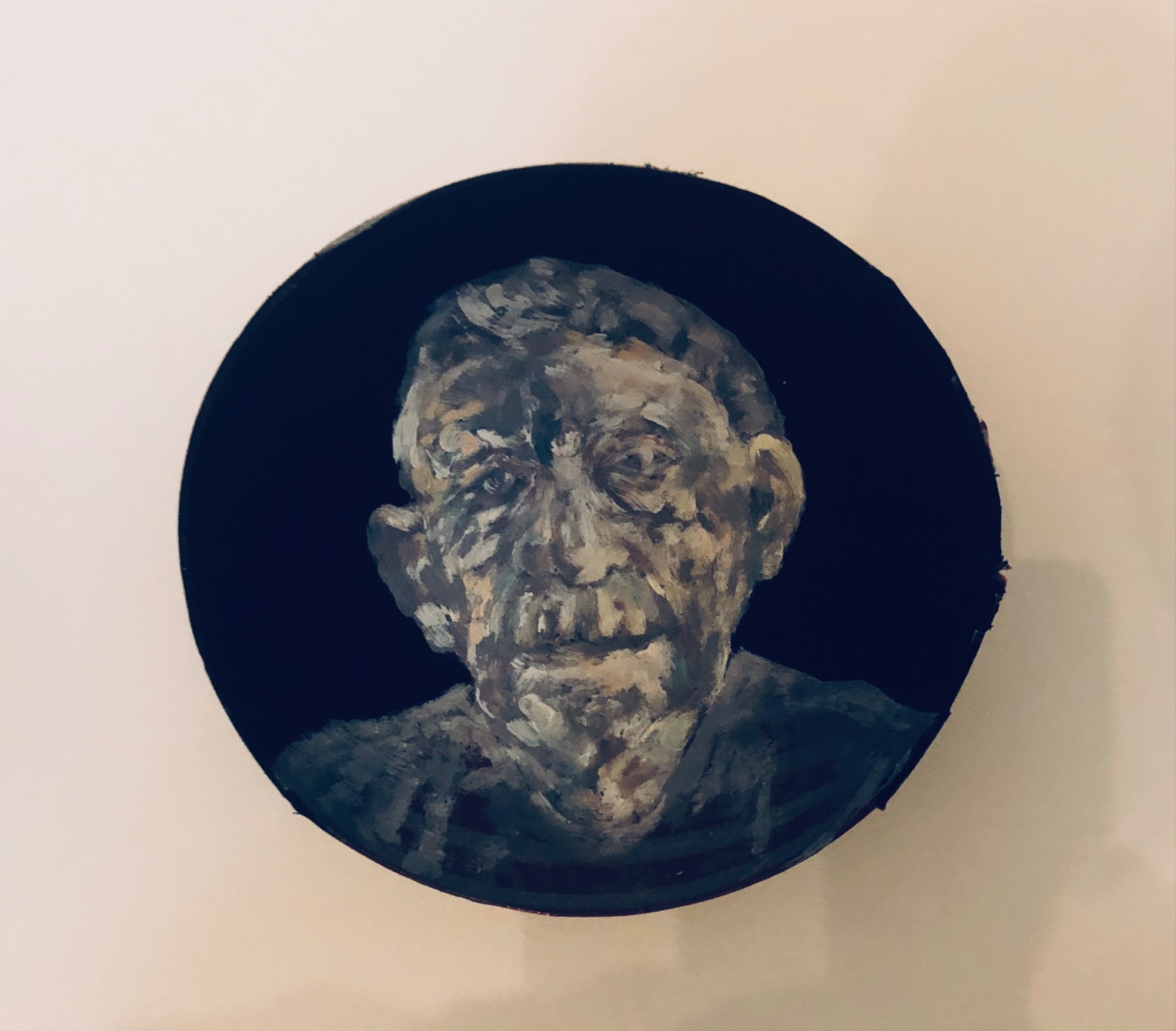
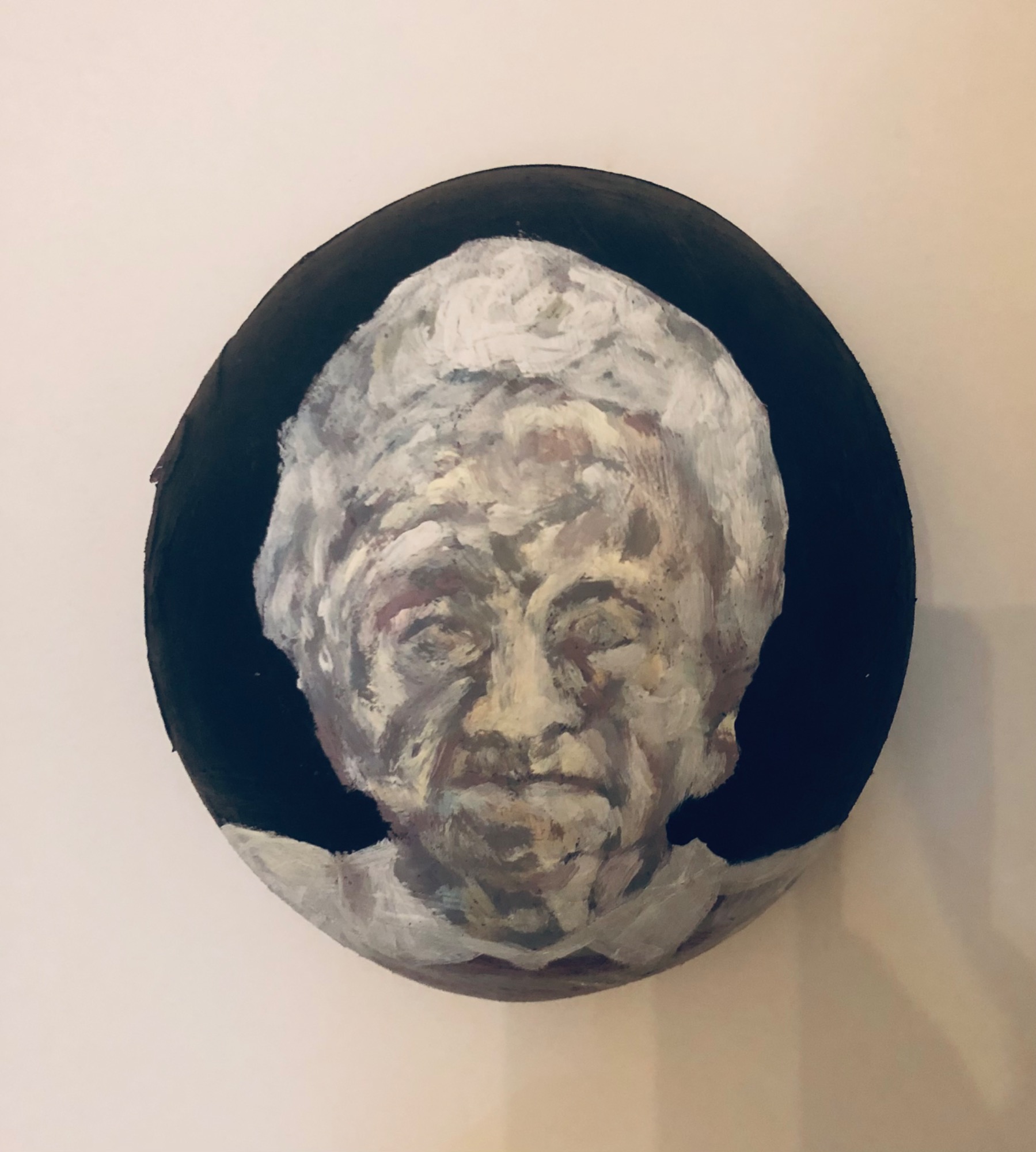
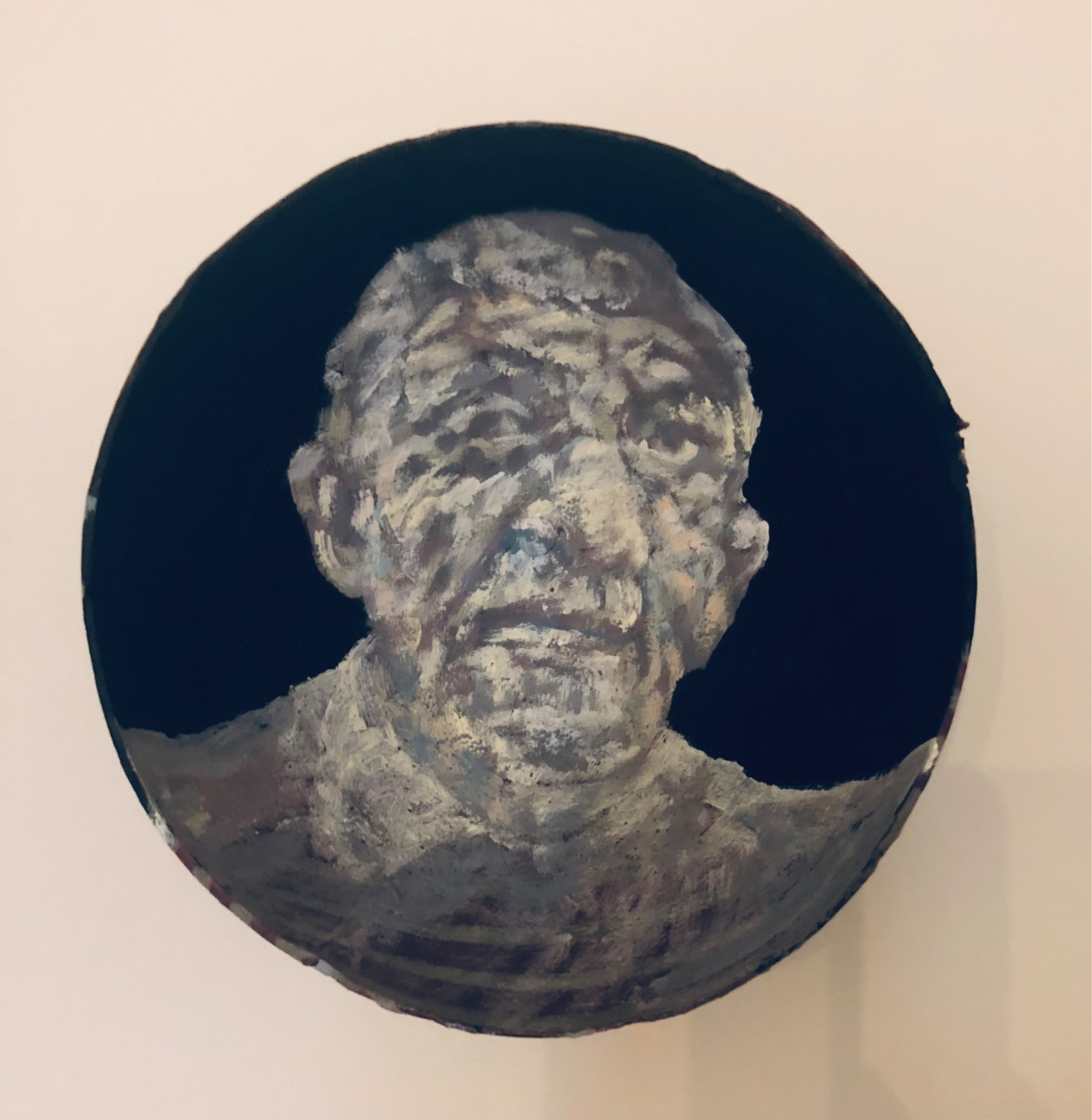
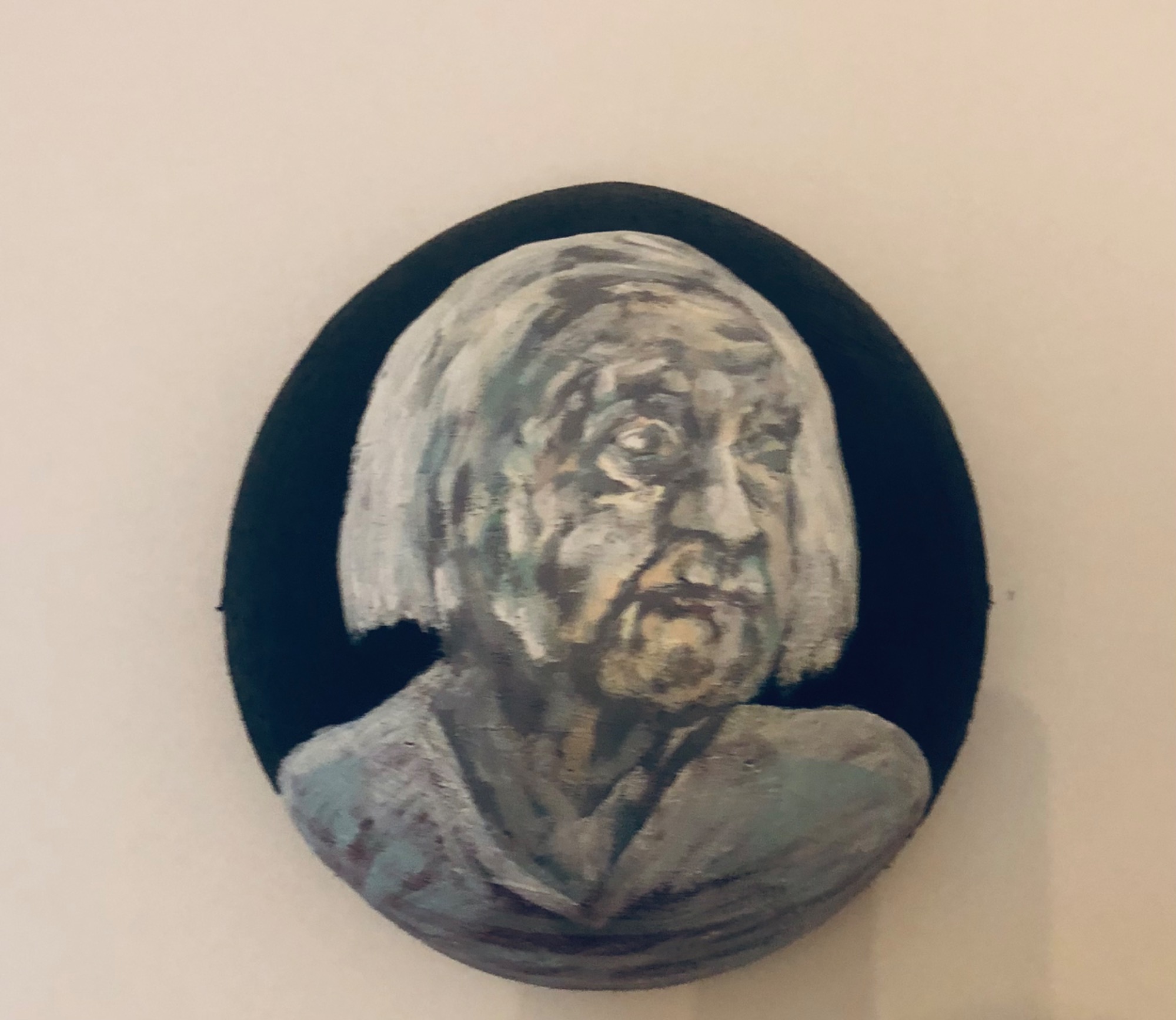
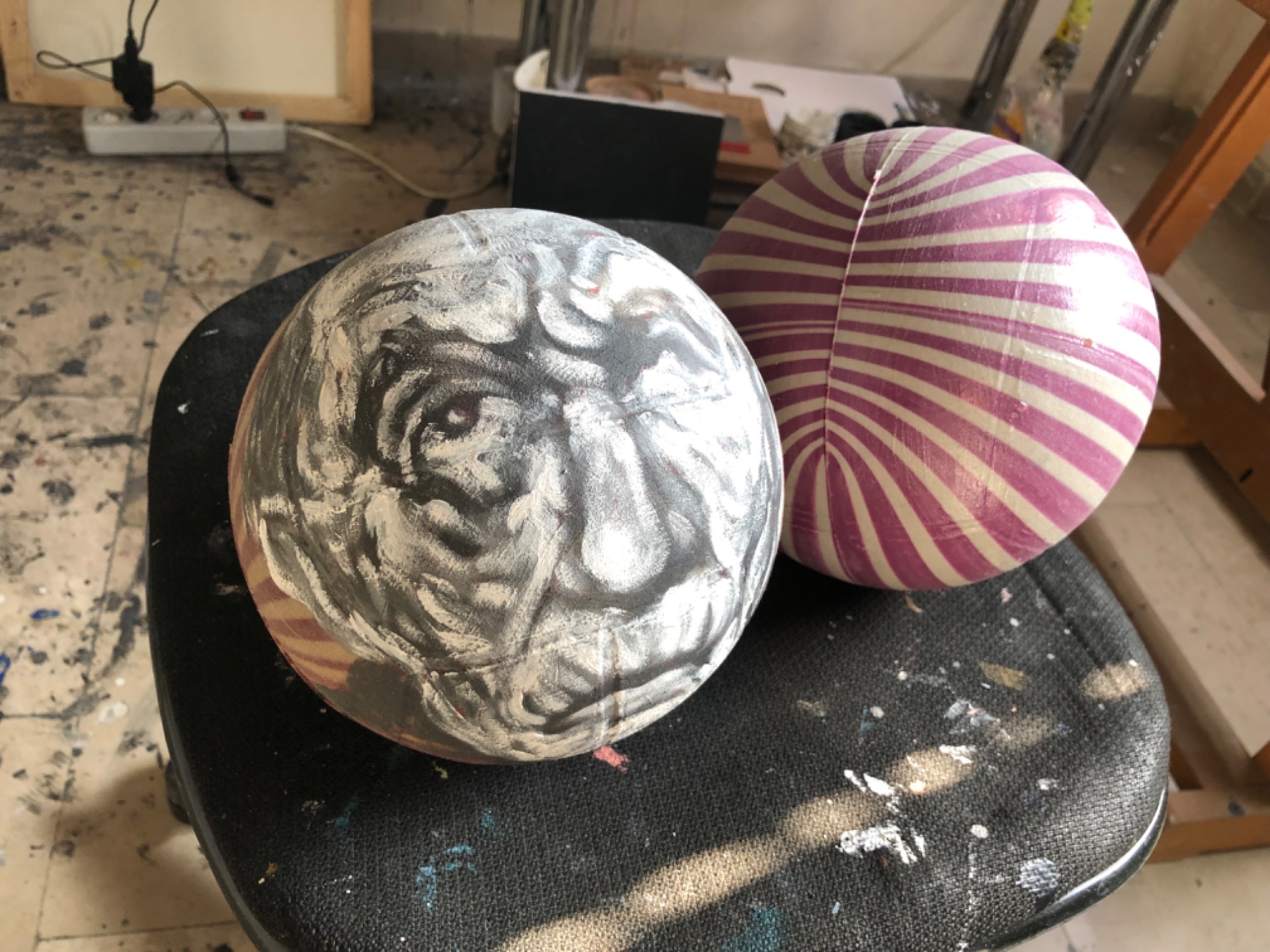
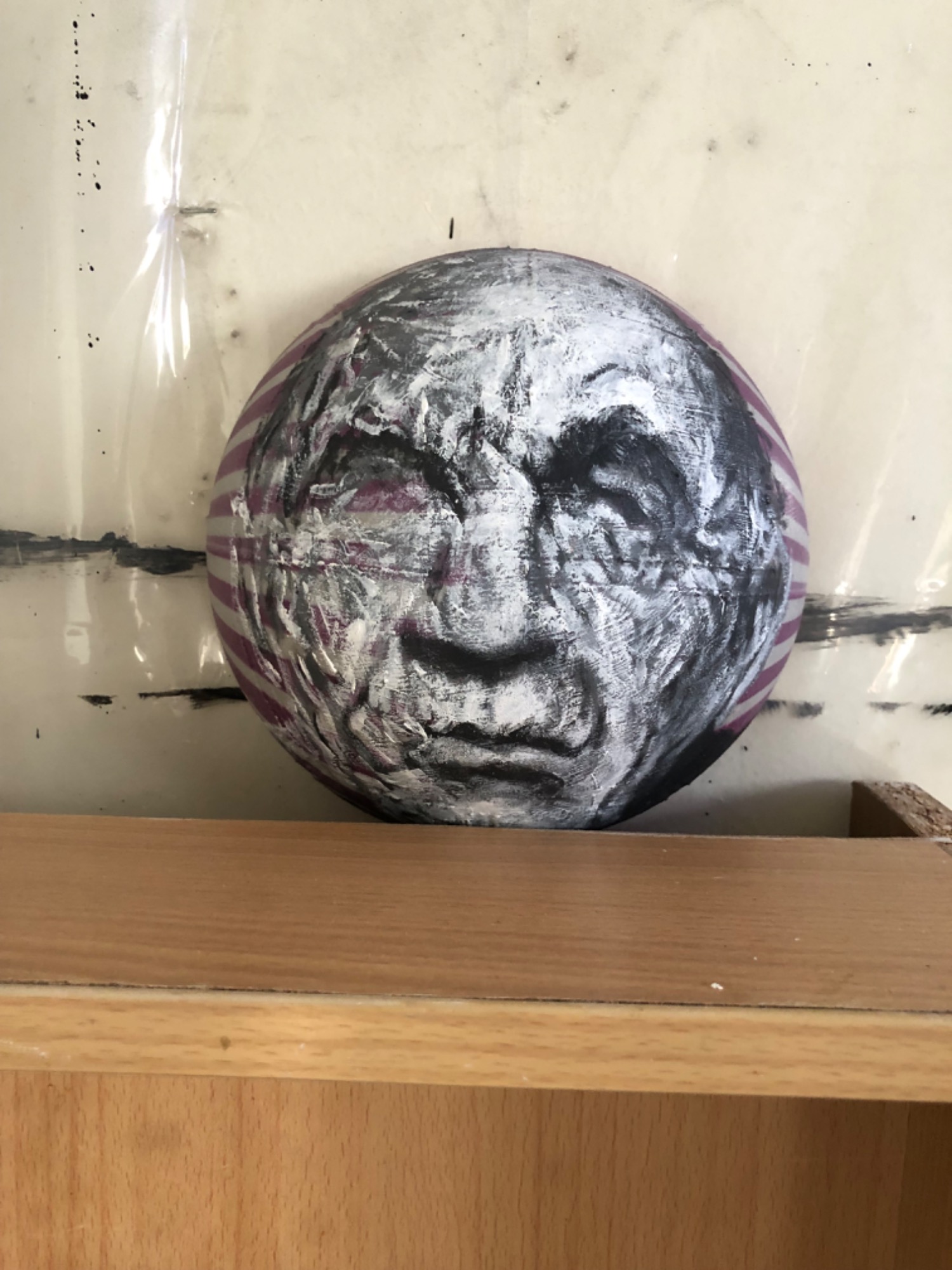
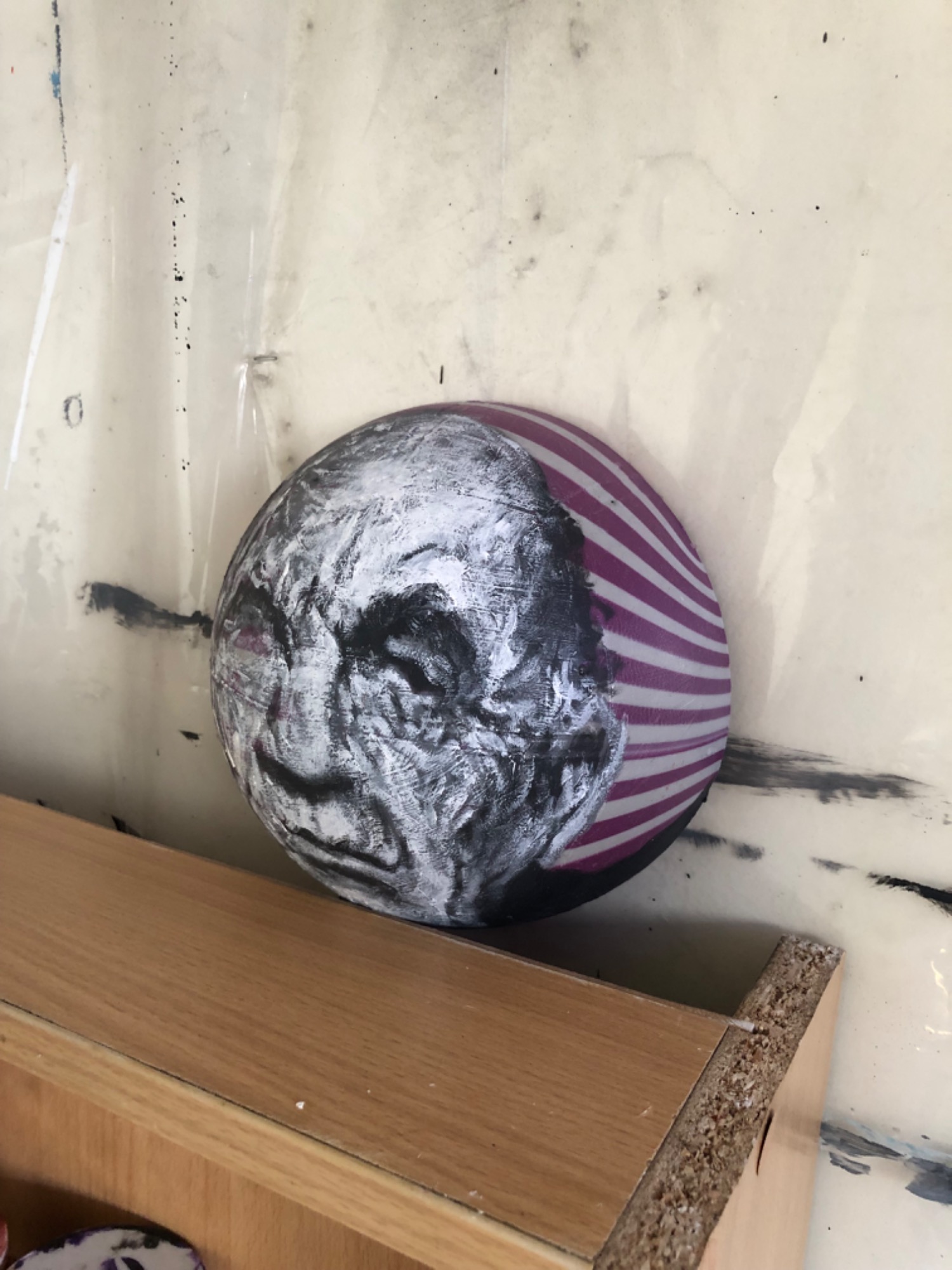
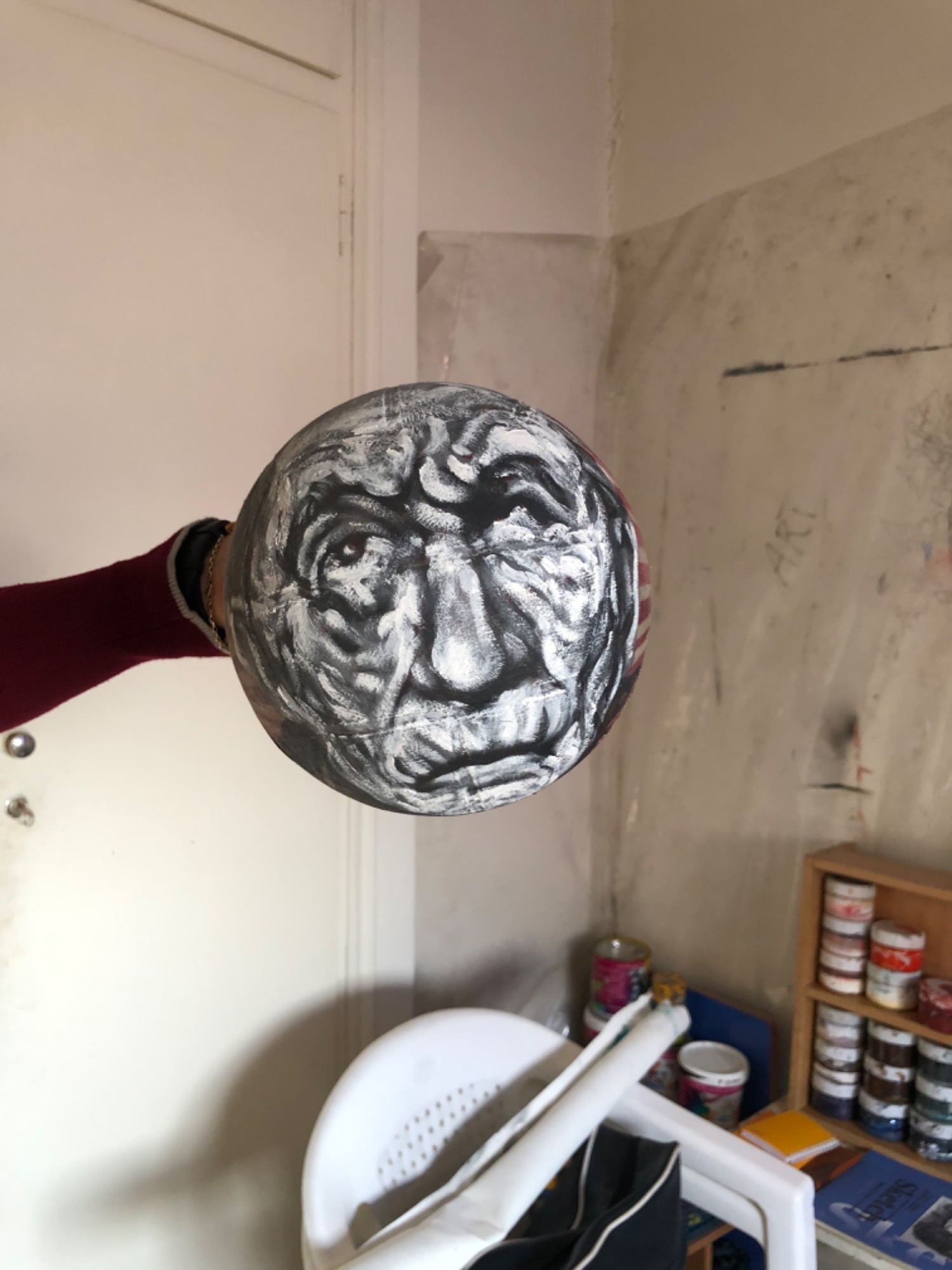
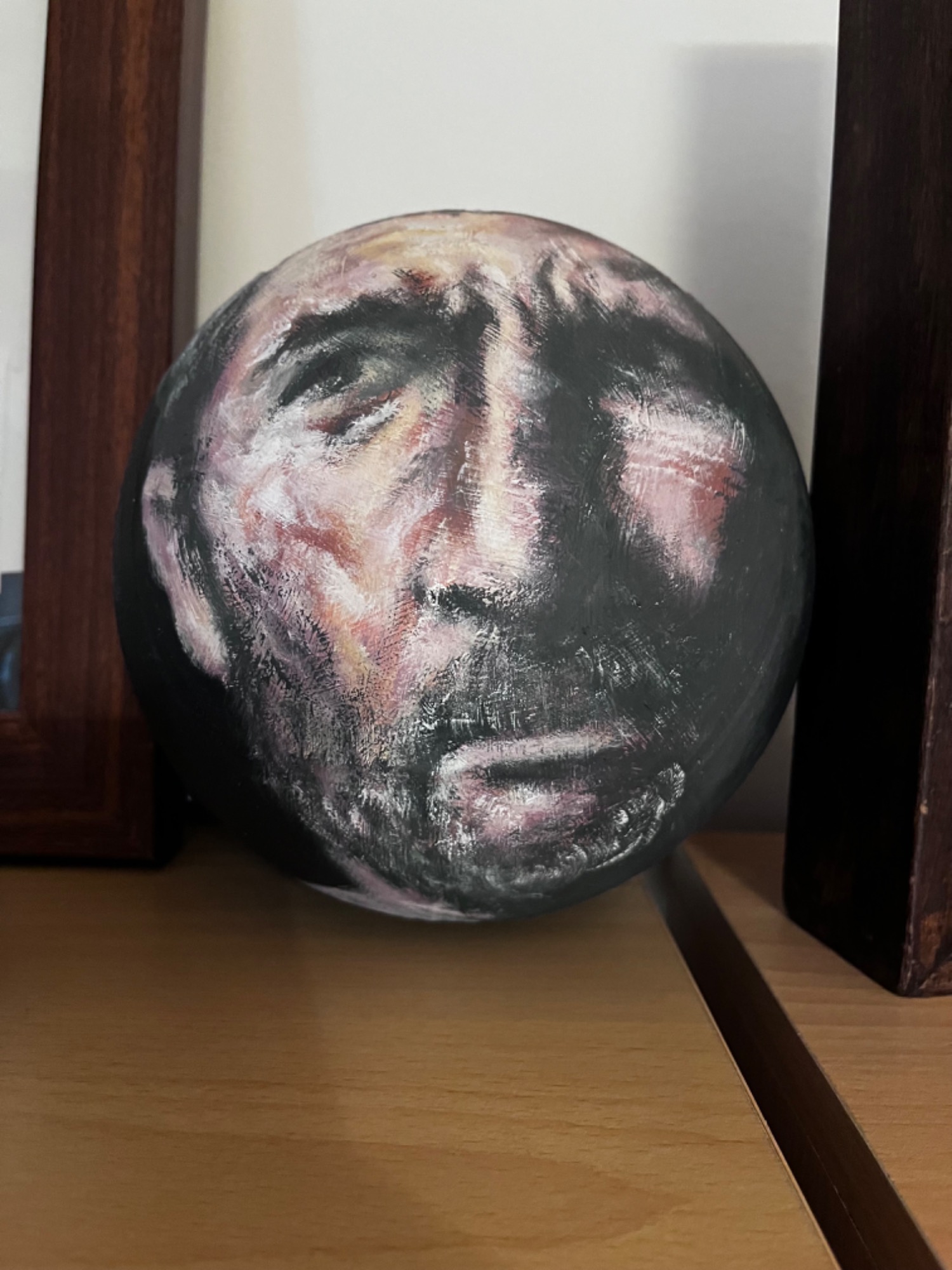
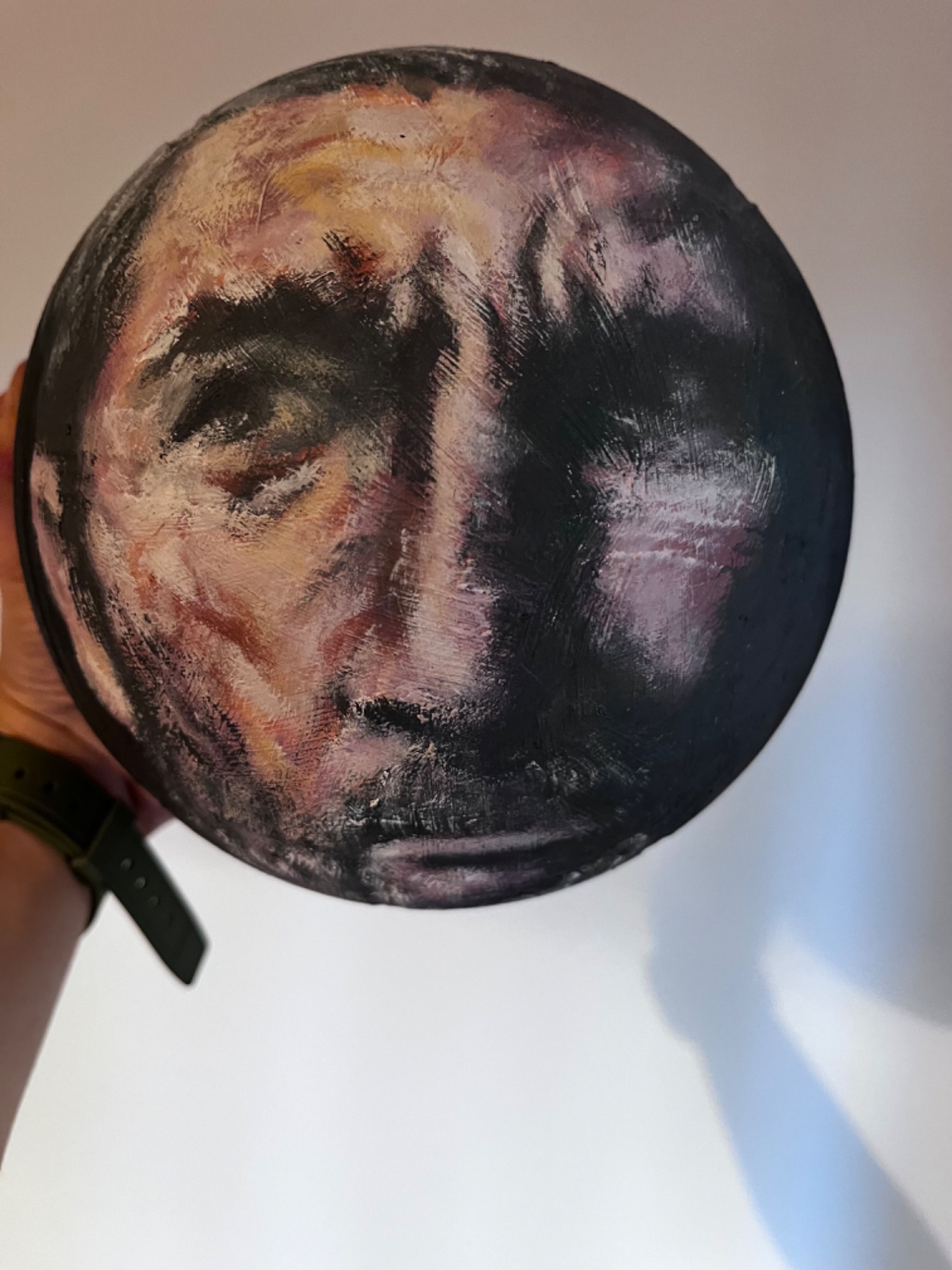
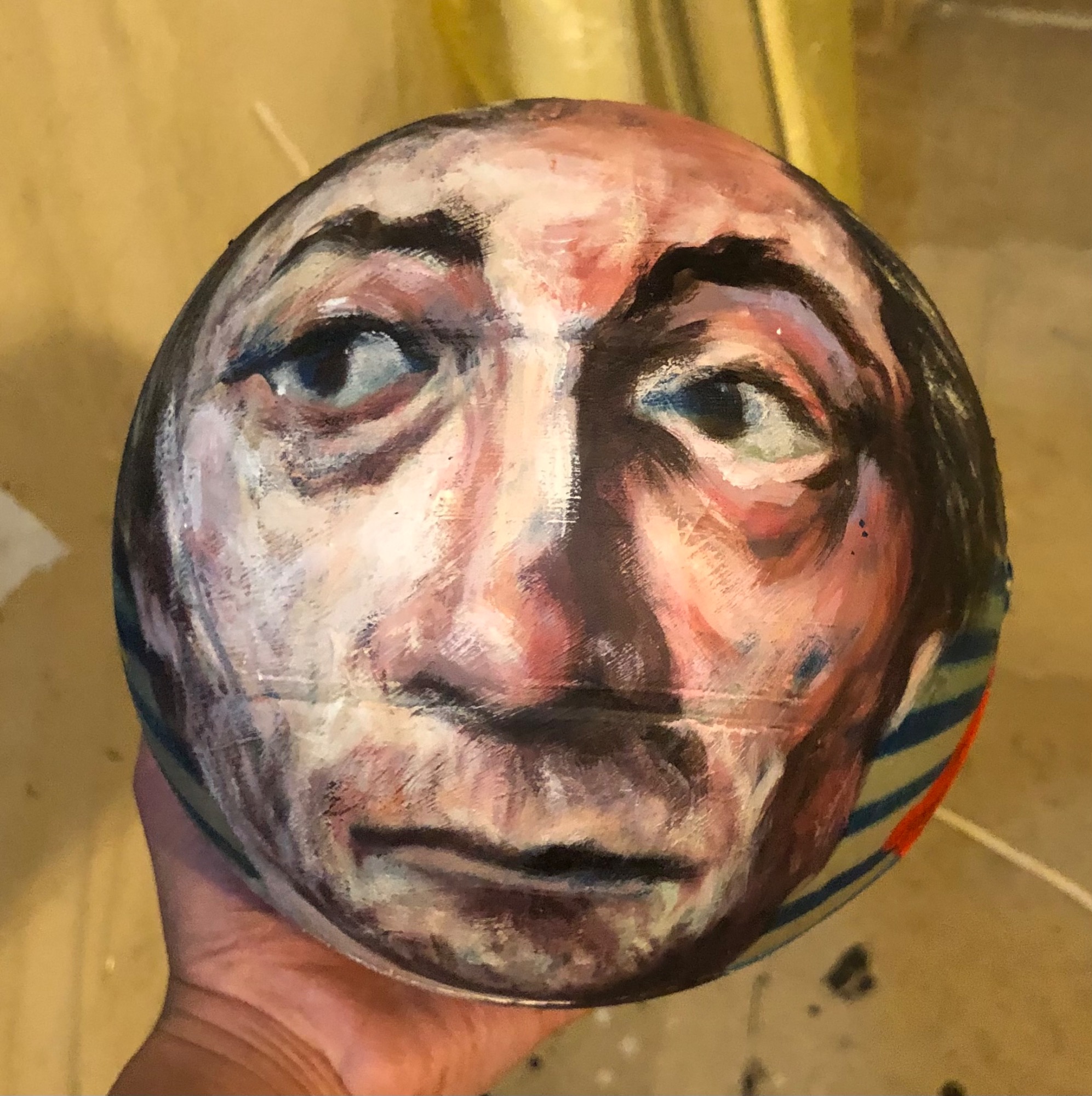
Repetition of History is an ongoing series of portraits painted on plastic playground balls, featuring influential contemporary Iranian figures chosen from my own perspective. Politicians, poets, filmmakers, musicians, and cultural icons appear together, each representing a fragment of Iran’s collective memory.
At its core, this series is also a return to my own roots. The plastic ball is not an accidental surface. It belongs to childhood, memory, play, and to a visual world that shaped me long before I became an artist. By placing historical figures on an object associated with childhood, I bring together two different forms of memory: the personal and the collective.
I often imagine the series in a more intimate way: if I could invite a group of people from different periods of contemporary Iranian history to sit together for an afternoon, who would I choose? These portraits are, in a way, my answer. They are the people I would want around the same table, not because they shared the same beliefs, but because each of them left a mark on the culture, history, imagination, or identity of Iran.
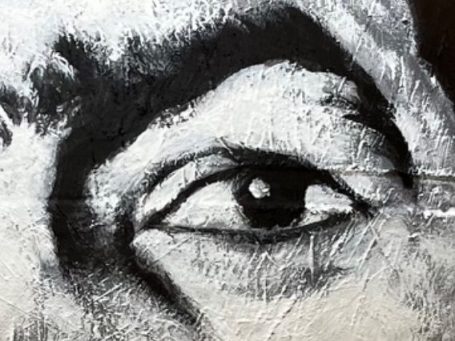
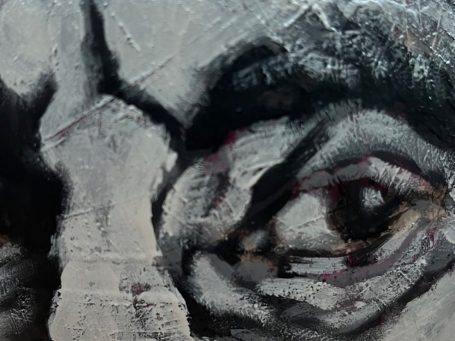
The spherical form prevents each portrait from being seen all at once. As the ball turns, parts of the face appear and disappear, reflecting the fragmented way history itself is remembered, retold, forgotten, and rediscovered.
Rather than presenting a definitive historical narrative, the series is a personal encounter with history. It asks how individuals become symbols, how collective memory is formed, and how our understanding of the past continuously changes from one generation to another.
Medium: Acrylic on Plastic Ball
Series: Repetition of History
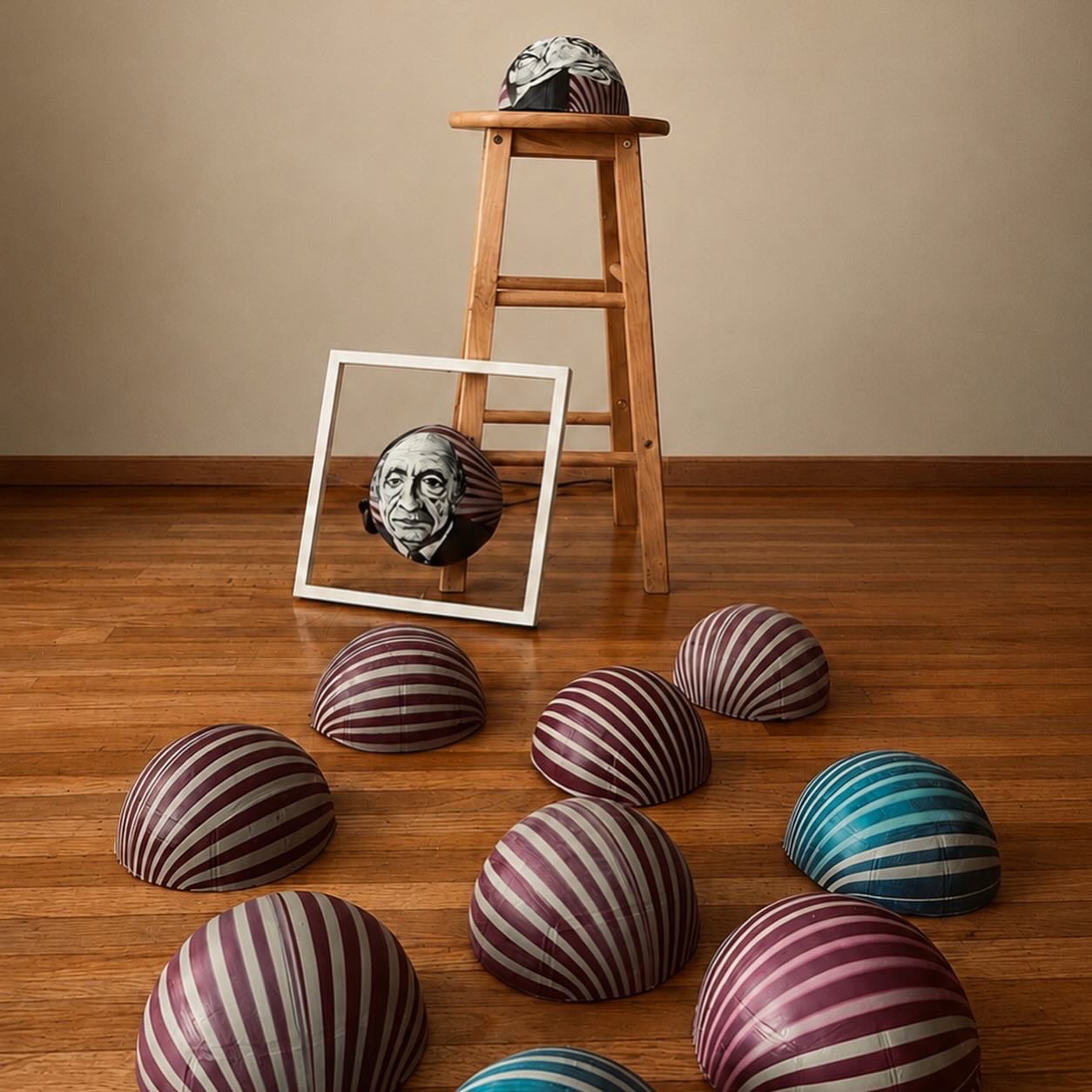
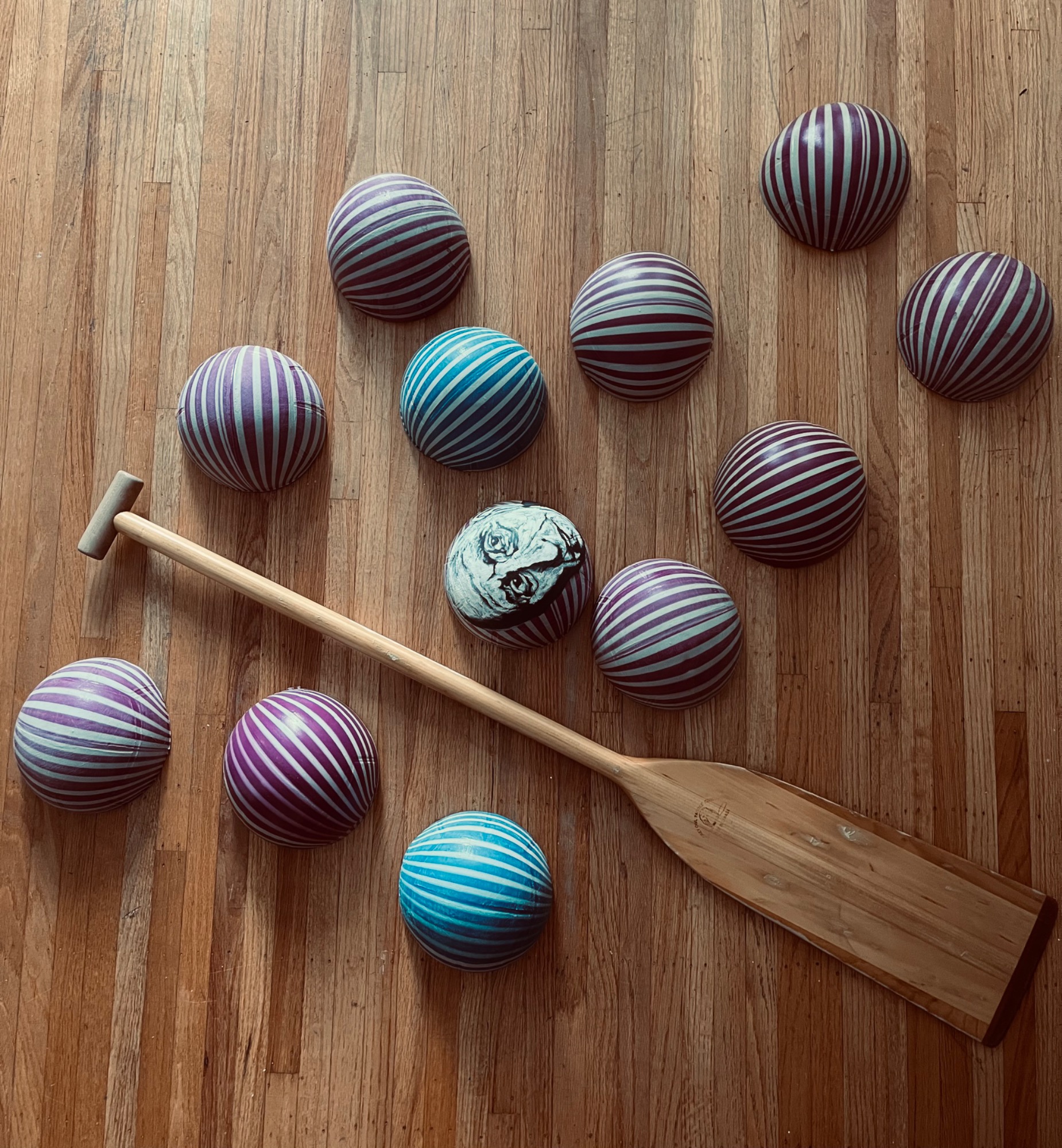
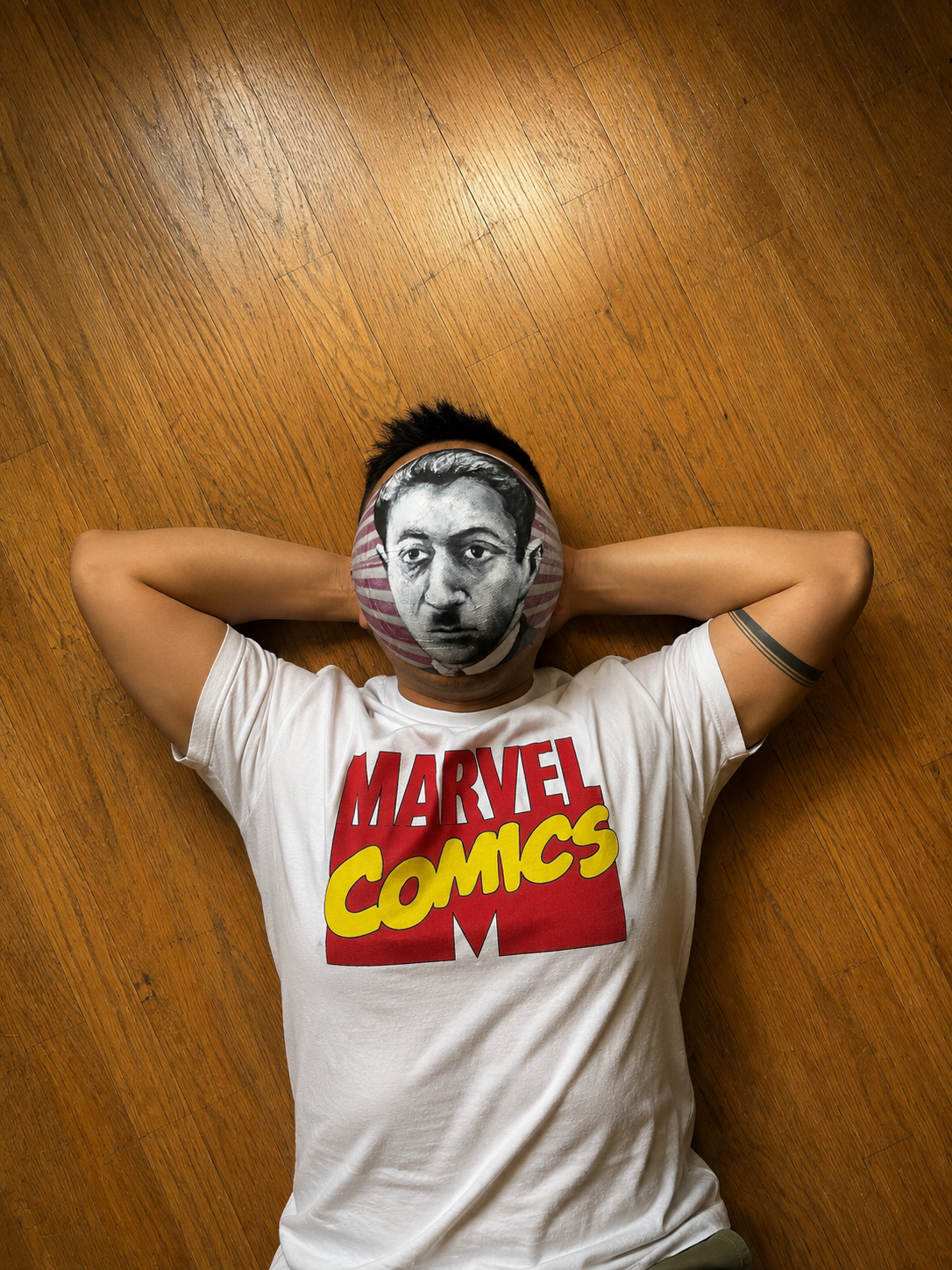
FARAH PAHLAVI
Empress of Iran, cultural patron and advocate for Arts & Social Development
Farah Pahlavi was born on October 14, 1938, in Tehran, Iran. As the Empress of Iran, she became an influential supporter of Iranian art, culture, education, healthcare, and social welfare. She played a significant role in supporting institutions such as the Tehran Museum of Contemporary Art, the Carpet Museum of Iran, the Reza Abbasi Museum, and the Institute for the Intellectual Development of Children and Young Adults. She also supported historic preservation, traditional arts, music, cinema, theatre, and major cultural events including the Shiraz Arts Festival.
Beyond the arts, Farah Pahlavi was involved with numerous charitable and social organizations focused on children, women, healthcare, blood donation, cancer treatment, people affected by leprosy, and other vulnerable communities. In 1967, she became the first woman in modern Iranian history to be officially crowned as Empress. Following the 1979 Iranian Revolution, she left Iran and has since continued to support and promote Iranian art, culture, and heritage internationally.
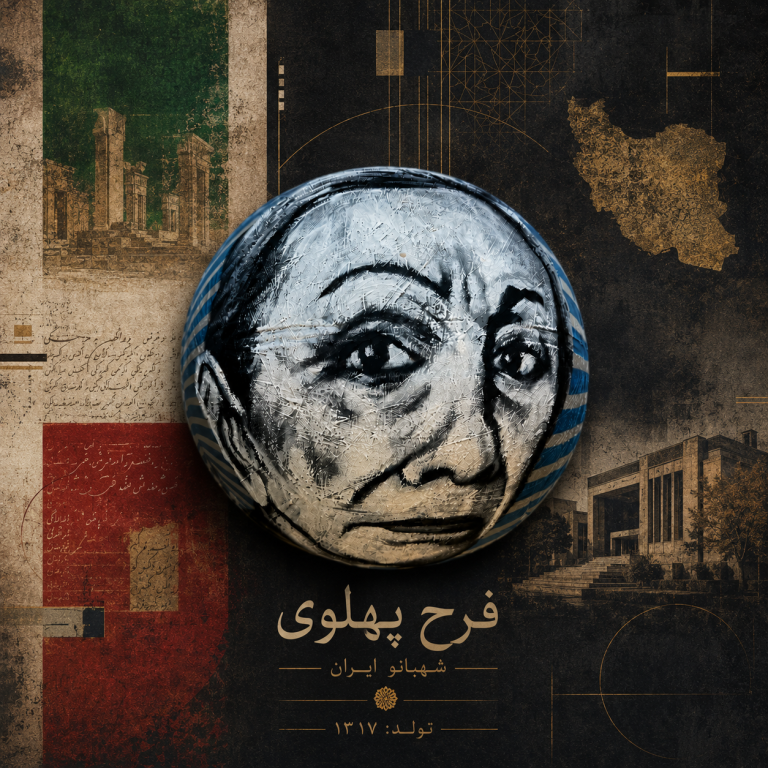
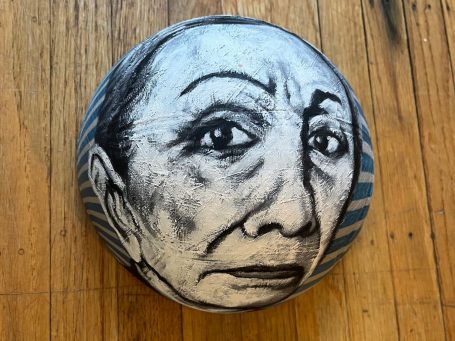
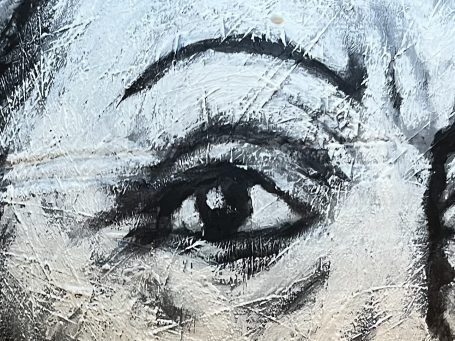
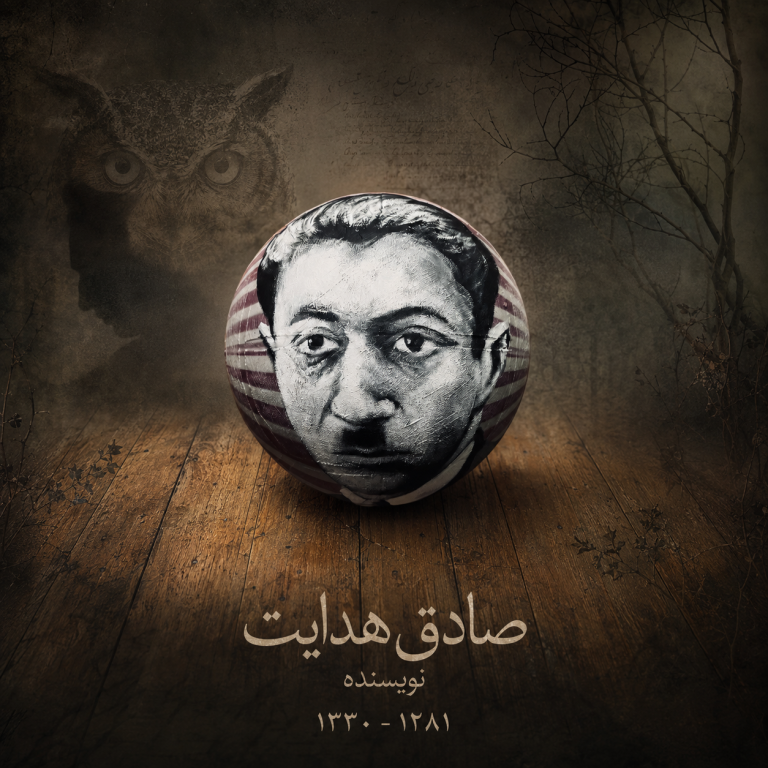
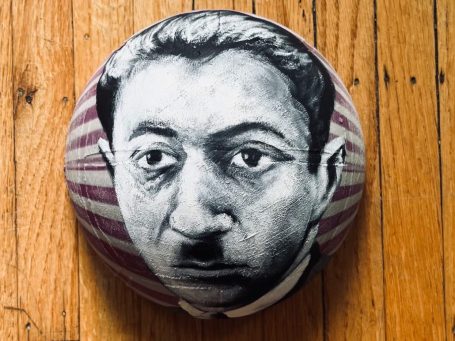
SADEGH HEDAYAT
Iranian writer and Novelist and Intellectual
Sadegh Hedayat was born on February 17, 1903, in Tehran, Iran. He is widely regarded as one of the most important and influential figures in modern Persian literature. Through his fiction, essays, translations, and studies of Iranian folklore, he helped introduce a new psychological and modernist voice to Persian writing.
Hedayat is best known for his novel The Blind Owl, a dark and deeply introspective work that became one of the most internationally recognized works of modern Iranian literature. His writing often explored loneliness, alienation, death, social hypocrisy, and the inner conflicts of the individual.
Alongside his literary work, Hedayat was deeply interested in Iranian history, folklore, and pre-Islamic culture. He collected and studied popular beliefs, translated works from European literature, and influenced generations of Iranian writers who came after him.
Sadegh Hedayat died on April 9, 1951, in Paris, at the age of 48. More than seven decades later, his work remains central to modern Persian literature, and The Blind Owl continues to be read, translated, and studied around the world.
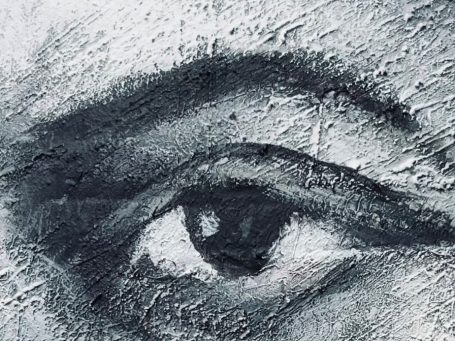
Gholamreza Takhti
Iranian Wrestler, Olympic Champion and National Hero
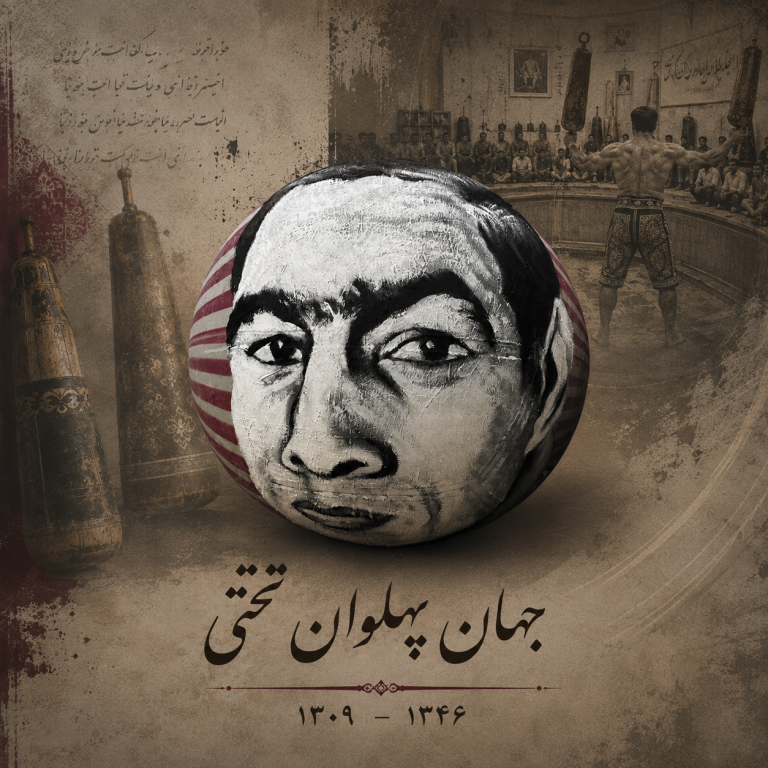
Gholamreza Takhti was born on August 27, 1930, in Tehran, Iran. Widely known as Jahan Pahlevan Takhti, he became one of the most celebrated athletes in Iranian history and a lasting symbol of sportsmanship, humility, and generosity.
Takhti won the gold medal in freestyle wrestling at the 1956 Melbourne Olympic Games, as well as two Olympic silver medals in 1952 and 1960. He also won multiple medals at the World Wrestling Championships and represented Iran internationally for more than a decade.
Beyond his athletic achievements, Takhti became deeply respected for his modest character and his support for ordinary people, particularly after the devastating 1962 Buin Zahra earthquake, when he helped organize public aid for the victims. His popularity extended far beyond wrestling, turning him into a cultural symbol of javanmardi, the Iranian tradition of courage, generosity, dignity, and standing beside the people.
Takhti died on January 7, 1968, in Tehran, at the age of 37. Decades after his death, he remains one of Iran’s most beloved sports figures and is remembered simply as Jahan Pahlevan, the World Champion and hero of the people.
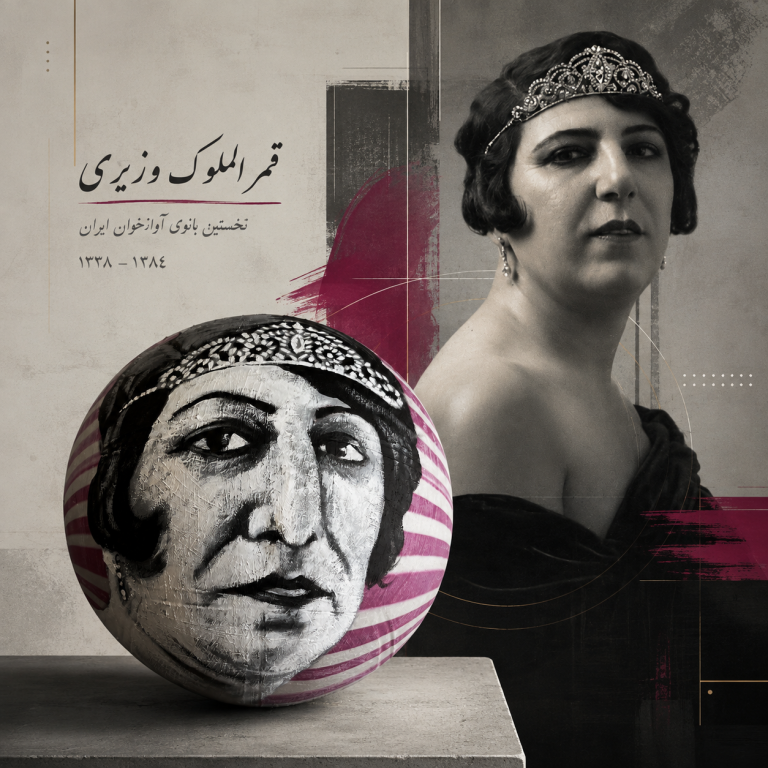
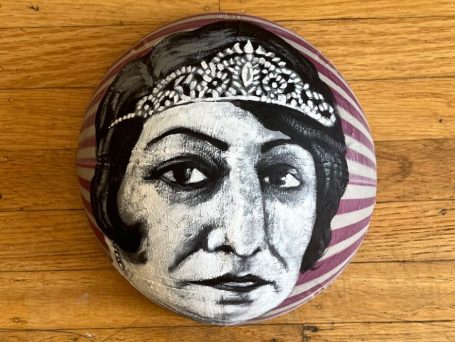
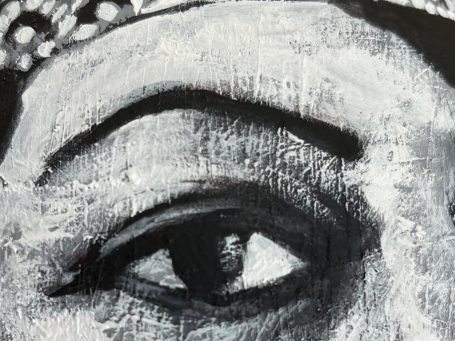
QAMAR-OL-MOLOUK VAZIRI
Iranian Singer and Pioneer of Women’s Public Performance
Qamar-ol-Molouk Vaziri was born in 1905 in Qazvin, Iran. She became one of the most important female voices in the history of Persian classical music and a pioneering figure for women in Iranian public life.
She is especially remembered as one of the first Iranian women to perform publicly without a veil at a time when such an appearance was considered extraordinary and highly controversial. Her powerful voice, expressive style, and commanding stage presence made her one of the most celebrated singers of her generation.
Qamar worked with some of the leading musicians and composers of her time and became closely associated with the development of modern Persian vocal music. Beyond her artistic achievements, she was also known for her generosity and often used her earnings to help people in need.
Qamar-ol-Molouk Vaziri died in 1959 in Tehran. Today, she is remembered not only as a major figure in Iranian music, but also as a symbol of courage, artistic independence, and the expanding public presence of women in modern Iran.
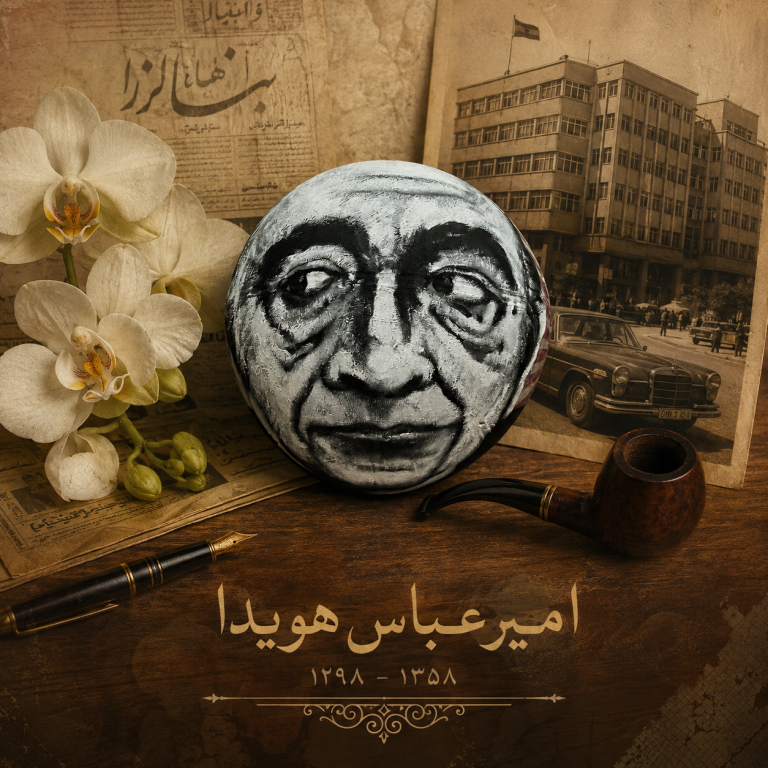
AMIR-ABBAS HOVEYDA
Iranian Statesman, Prime Minister and Diplomat
Amir-Abbas Hoveyda was born on February 18, 1919, in Tehran, Iran. He was an Iranian diplomat and politician who served as Prime Minister of Iran from 1965 to 1977, becoming one of the longest-serving prime ministers in modern Iranian history.
Before entering high-level politics, Hoveyda worked in Iran’s diplomatic service and held several governmental positions. As prime minister, he served during a period of rapid economic growth, industrial development, urban expansion, and major social change in Iran.
Hoveyda was known for his multilingual education, intellectual interests, and distinctive public image. He had a strong interest in literature and culture and became one of the most recognizable political figures of the Pahlavi era.
Following the Iranian Revolution of 1979, Hoveyda was arrested, tried by a revolutionary court, and executed on April 7, 1979, in Tehran. His life and political career remain the subject of intense historical debate, and he continues to be remembered as one of the most prominent and controversial statesmen of twentieth-century Iran.
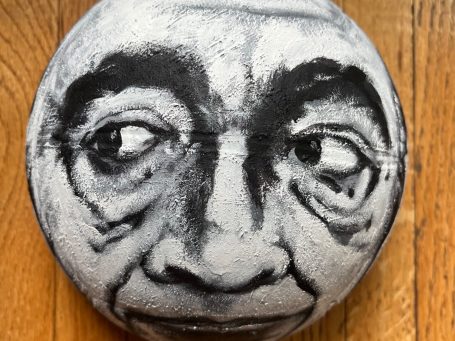
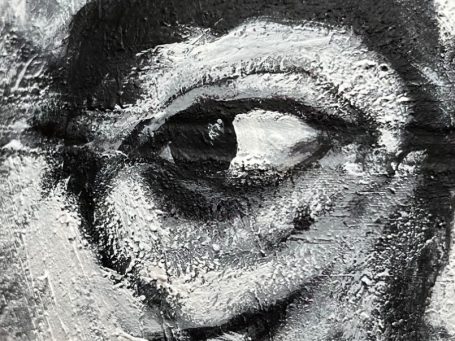
SOHRAB SEPEHRI
Iranian Poet and Painter
Sohrab Sepehri was born on October 7, 1928, in Kashan, Iran. He became one of the most distinctive voices of modern Persian poetry and was also an accomplished painter whose visual sensibility deeply shaped his writing.
Sepehri’s poetry is known for its simplicity, philosophical depth, and close connection to nature. Trees, water, light, silence, gardens, and the desert frequently appear in his work, not merely as images, but as ways of exploring life, solitude, spirituality, and the human relationship with the world.
His most famous collection, Hasht Ketab (Eight Books), brought together many of his major poems and became one of the most widely read works of contemporary Persian poetry. Alongside poetry, Sepehri developed a successful career as a painter, particularly known for his minimalist landscapes and depictions of trees and nature.
Sohrab Sepehri died on April 21, 1980, in Tehran, at the age of 51. Today, he is remembered as one of Iran’s most beloved modern poets and artists, whose words and paintings continue to evoke a quiet, contemplative vision of life.
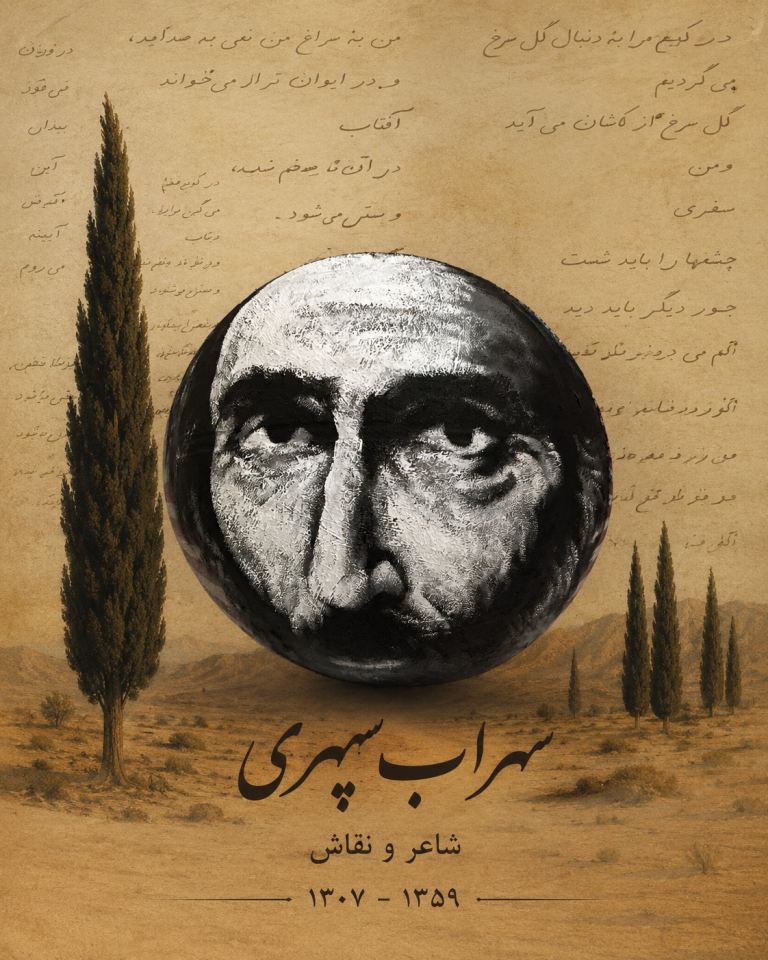
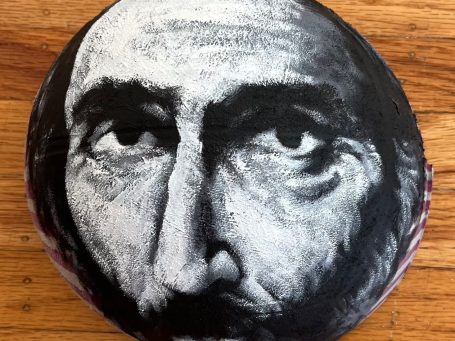
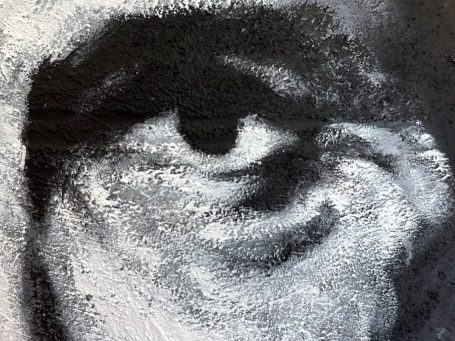
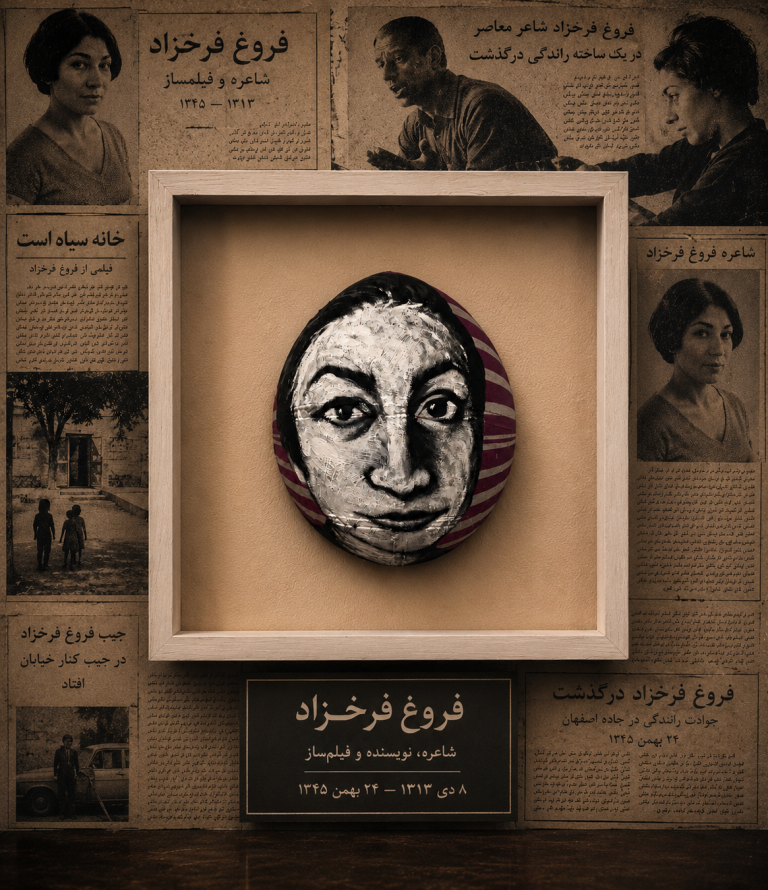
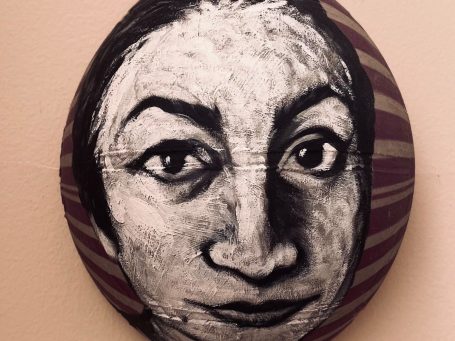
FOROUGH FARROKHZAD
Iranian Poet, Writer and Filmmaker
Forough Farrokhzad was born on January 5, 1935, in Tehran, Iran. She became one of the most influential and groundbreaking voices in modern Persian poetry, known for her deeply personal language, emotional honesty, and fearless exploration of love, desire, loneliness, womanhood, and social expectations.
Her poetry challenged many of the literary and cultural conventions of her time. Through collections such as Another Birth, Farrokhzad developed a modern poetic voice that was intimate, visual, and strikingly independent. Her work helped redefine the possibilities of women’s writing in twentieth-century Iran.
Farrokhzad was also active in cinema. In 1962, she directed the documentary The House Is Black, filmed in a leprosy colony in Tabriz. The film became an important work of Iranian documentary cinema and is widely regarded as one of the early landmarks of the Iranian New Wave.
Forough Farrokhzad died in a car accident on February 13, 1967, in Tehran, at the age of 32. Despite her short life, her poetry and films left a lasting mark on Iranian culture, and she remains one of the most widely read and celebrated poets of modern Iran.
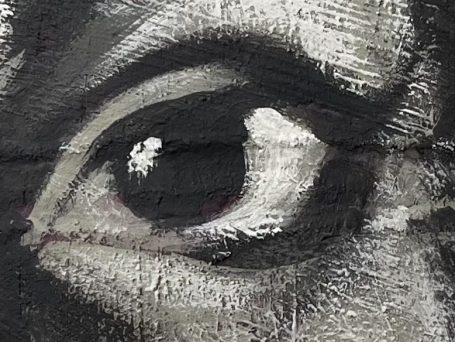
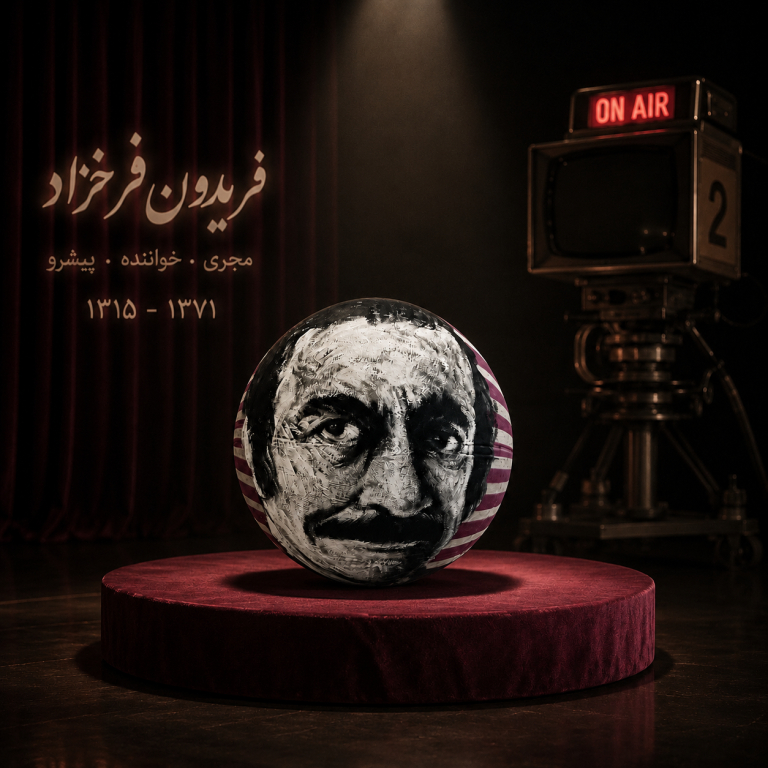
FEREYDOUN FARROKHZAD
Iranian Singer, Poet, Showman and Political Dissident
Fereydoun Farrokhzad was born on October 7, 1938, in Tehran, Iran. He became one of the most distinctive entertainers of modern Iran, known for combining music, poetry, television, humor, and performance with a charismatic and unconventional public presence.
During the 1960s and 1970s, he became a popular television host and singer, helping introduce a more modern style of entertainment to Iranian audiences. He was also a poet and intellectual with a strong interest in literature, culture, and social issues.
After the 1979 Revolution, Farrokhzad lived in exile and became an outspoken critic of the Islamic Republic. His political activities increasingly became part of his public identity alongside his artistic work.
Fereydoun Farrokhzad was murdered on August 7, 1992, at his home in Bonn, Germany. His death remains one of the most discussed political killings involving Iranian dissidents abroad. He is remembered as a bold performer, cultural figure, and one of the most recognizable voices of Iranian exile.
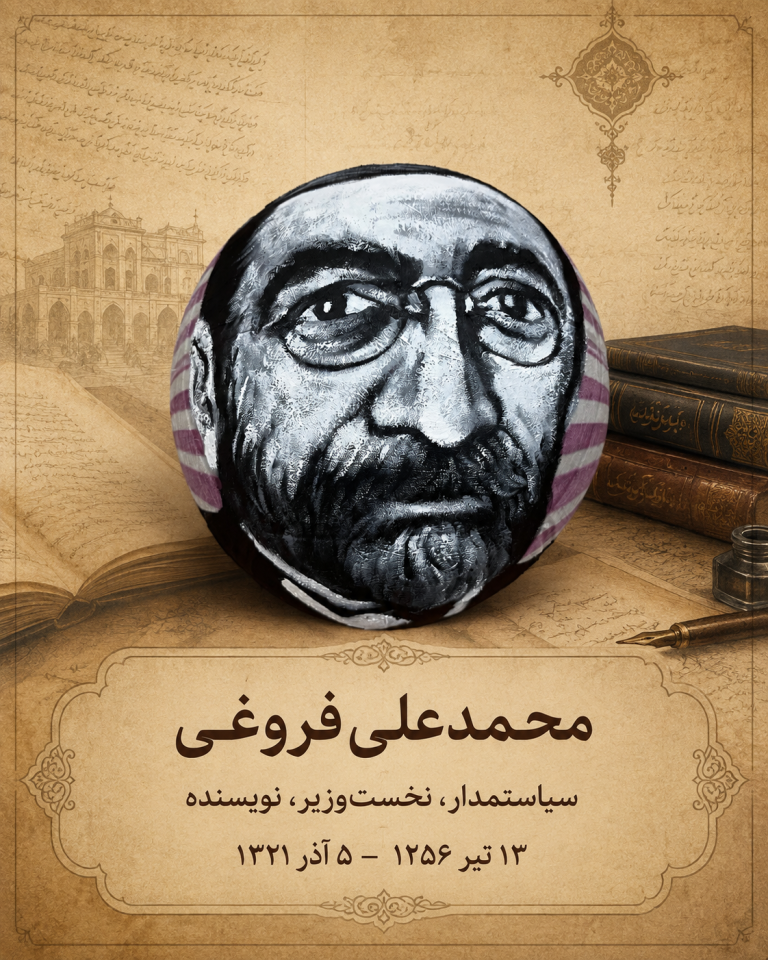
MOHAMMAD ALI FOROUGHI
Iranian Statesman, Prime Minister, Writer and Scholar
Mohammad Ali Foroughi was born on January 1, 1877, in Tehran, Iran. He became one of the most influential intellectual and political figures of modern Iranian history, serving several times as Prime Minister and holding important positions in government, diplomacy, education, and cultural affairs.
Foroughi played a major role in Iran’s political transition during the early Pahlavi era and was also deeply involved in the development of modern education and cultural institutions. He was known for his knowledge of philosophy, Persian literature, history, and Western thought.
As a writer and scholar, he produced important works on philosophy and Persian literature and helped introduce European philosophical ideas to Iranian readers. He also contributed to the study, editing, and preservation of classical Persian texts.
Mohammad Ali Foroughi died on November 26, 1942, in Tehran. He is remembered as a statesman, intellectual, and cultural figure who helped shape both the political and intellectual life of modern Iran.
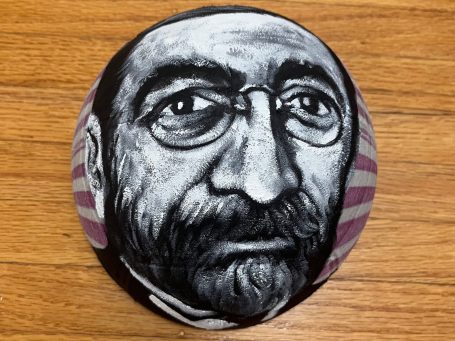
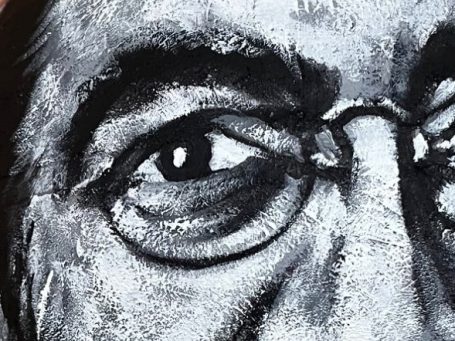
IRAN DARROUDI
Iranian Painter, Director, Writer and Art Critic
Iran Darroudi was born on September 2, 1936, in Mashhad, Iran. She became one of the most distinctive figures in modern Iranian art, known for her dreamlike paintings, luminous landscapes, and deeply symbolic visual language. Her work often explored memory, identity, solitude, love, death, and her emotional connection to Iran.
Darroudi studied art in Paris and later continued her artistic education in Brussels and New York. Over the course of her career, she held numerous exhibitions in Iran and abroad and developed a recognizable style in which light, vast landscapes, flowers, architecture, and surreal forms often appear suspended between reality and imagination.
Beyond painting, she worked in television and documentary filmmaking, wrote about art, and published her autobiography In the Distance Between Two Points, reflecting on her life, personal losses, artistic journey, and decades of creative work. Despite periods of hardship and profound personal grief, she continued painting and remained closely connected to Iran throughout her life.
Iran Darroudi died on October 29, 2021, in Tehran, at the age of 85. Today, she is remembered as one of the prominent women of modern Iranian art, leaving behind a body of work shaped by light, memory, resilience, and an enduring attachment to her homeland.
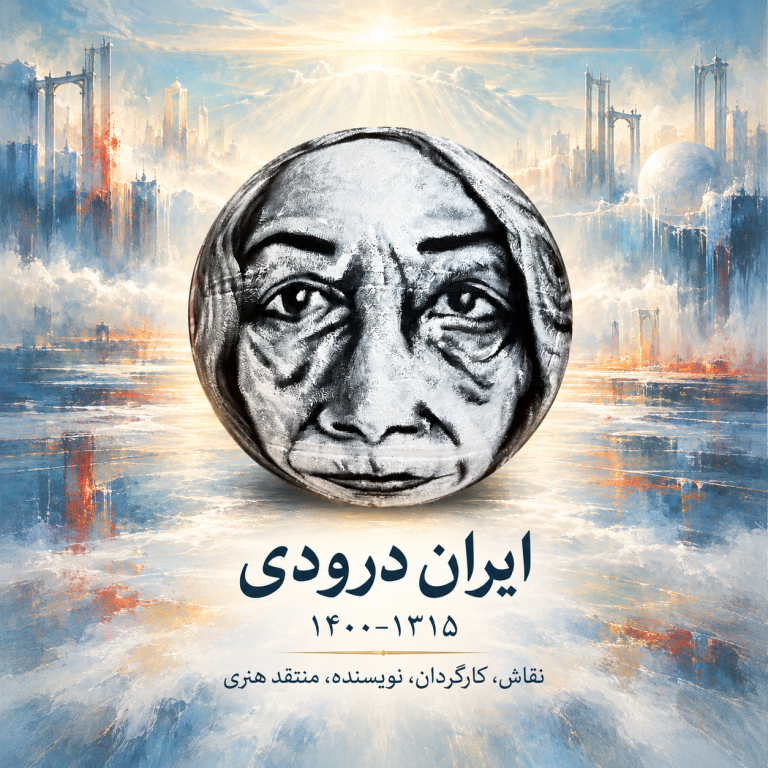
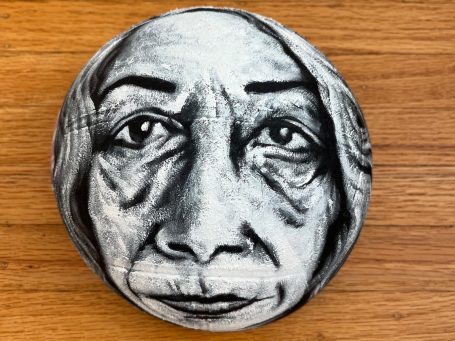
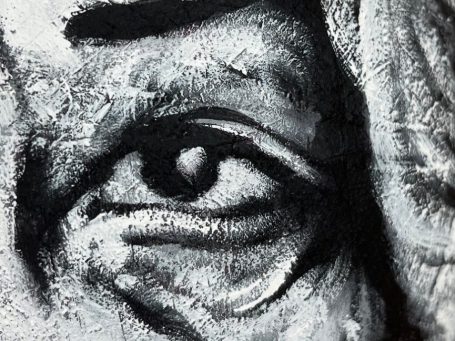
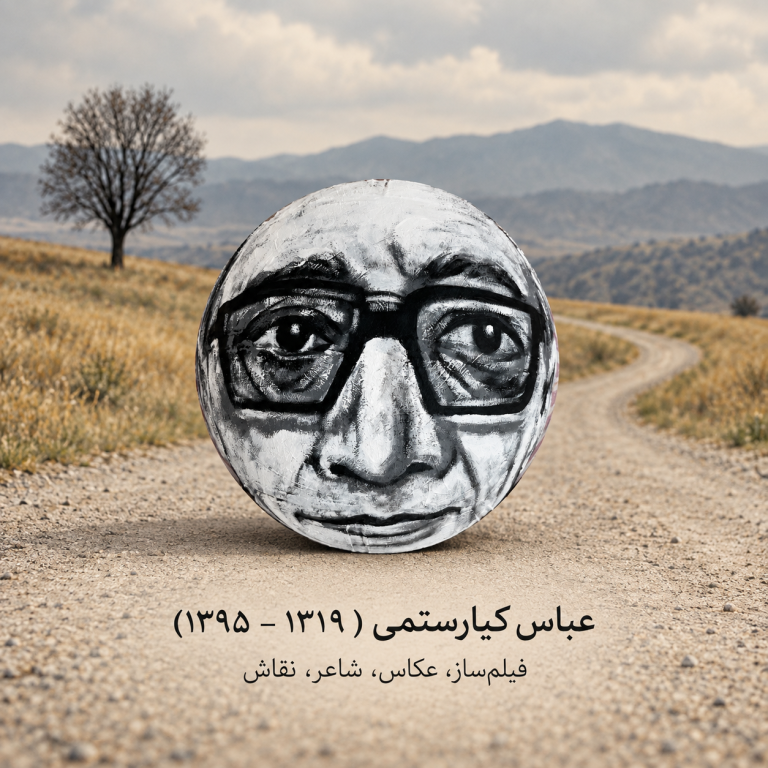
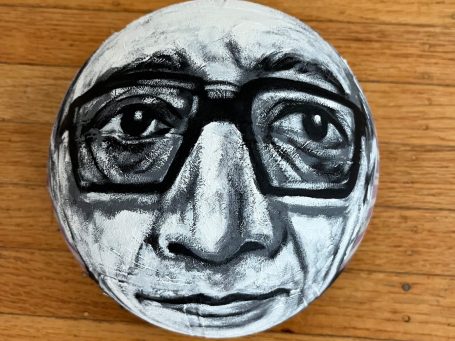
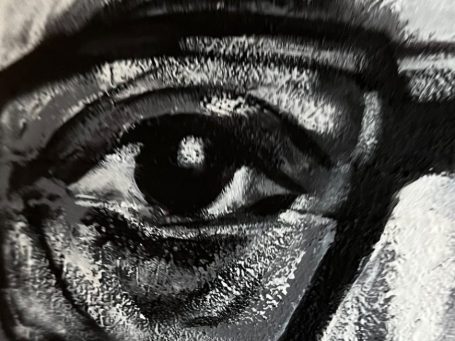
ABBAS KIAROSTAMI
Iranian Filmmaker, Photographer, Poet and Visual Artist
Abbas Kiarostami was born on June 22, 1940, in Tehran, Iran. He became one of the most internationally acclaimed filmmakers in Iranian cinema, known for his quiet, poetic style and his ability to find meaning in ordinary life, landscape, childhood, and human relationships.
Kiarostami began his career in graphic design and filmmaking for children before developing a body of work that brought global attention to Iranian cinema. Films such as Where Is the Friend’s Home?, Close-Up, Taste of Cherry, and The Wind Will Carry Us became landmarks of world cinema. In 1997, Taste of Cherry won the Palme d’Or at the Cannes Film Festival.
Beyond cinema, Kiarostami was also deeply involved in photography, poetry, video art, and installation. His visual work often focused on roads, trees, snow, rural landscapes, and the relationship between the viewer and the image, carrying the same simplicity and contemplation found in his films.
Abbas Kiarostami died on July 4, 2016, in Paris. Today, he is remembered as one of the most influential filmmakers of contemporary cinema and as an artist whose work crossed the boundaries between film, photography, poetry, and visual art.
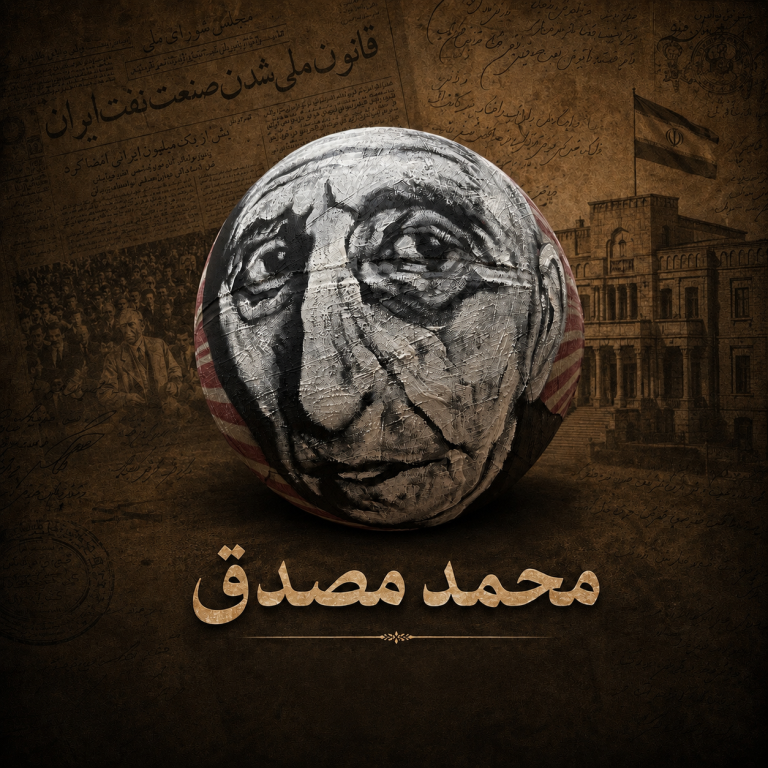
MOHAMMAD MOSADDEGH
Iranian Statesman, Prime Minister and Political Leader
Mohammad Mosaddegh was born on June 16, 1882, in Tehran, Iran. He became one of the most important political figures in modern Iranian history and served as Prime Minister of Iran from 1951 to 1953.
Mosaddegh is best known for leading the nationalization of Iran’s oil industry, a decision that challenged British control over Iranian oil and became a powerful symbol of national sovereignty and political independence.
His government was removed in the 1953 coup, after which he was tried and placed under house arrest for the rest of his life. Despite the continuing debates surrounding his politics and legacy, Mosaddegh remains one of the most influential and recognizable figures in twentieth-century Iranian history.
Mohammad Mosaddegh died on March 5, 1967, in Ahmadabad, Iran.
Survivors
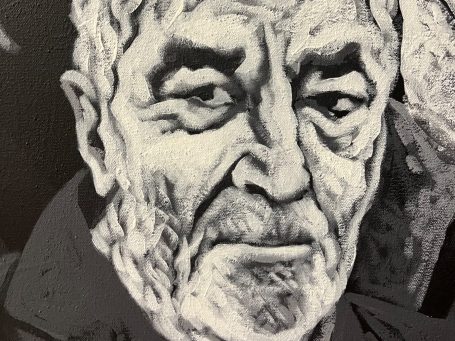
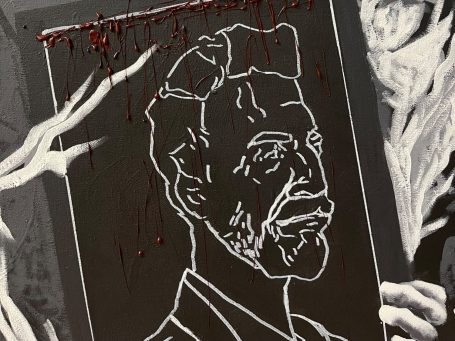
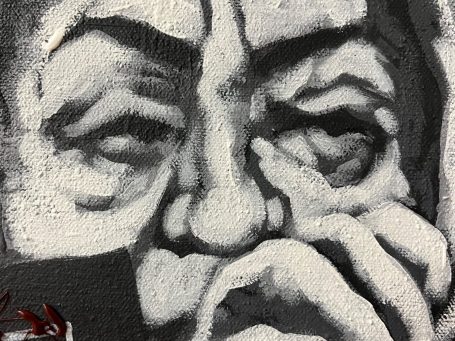
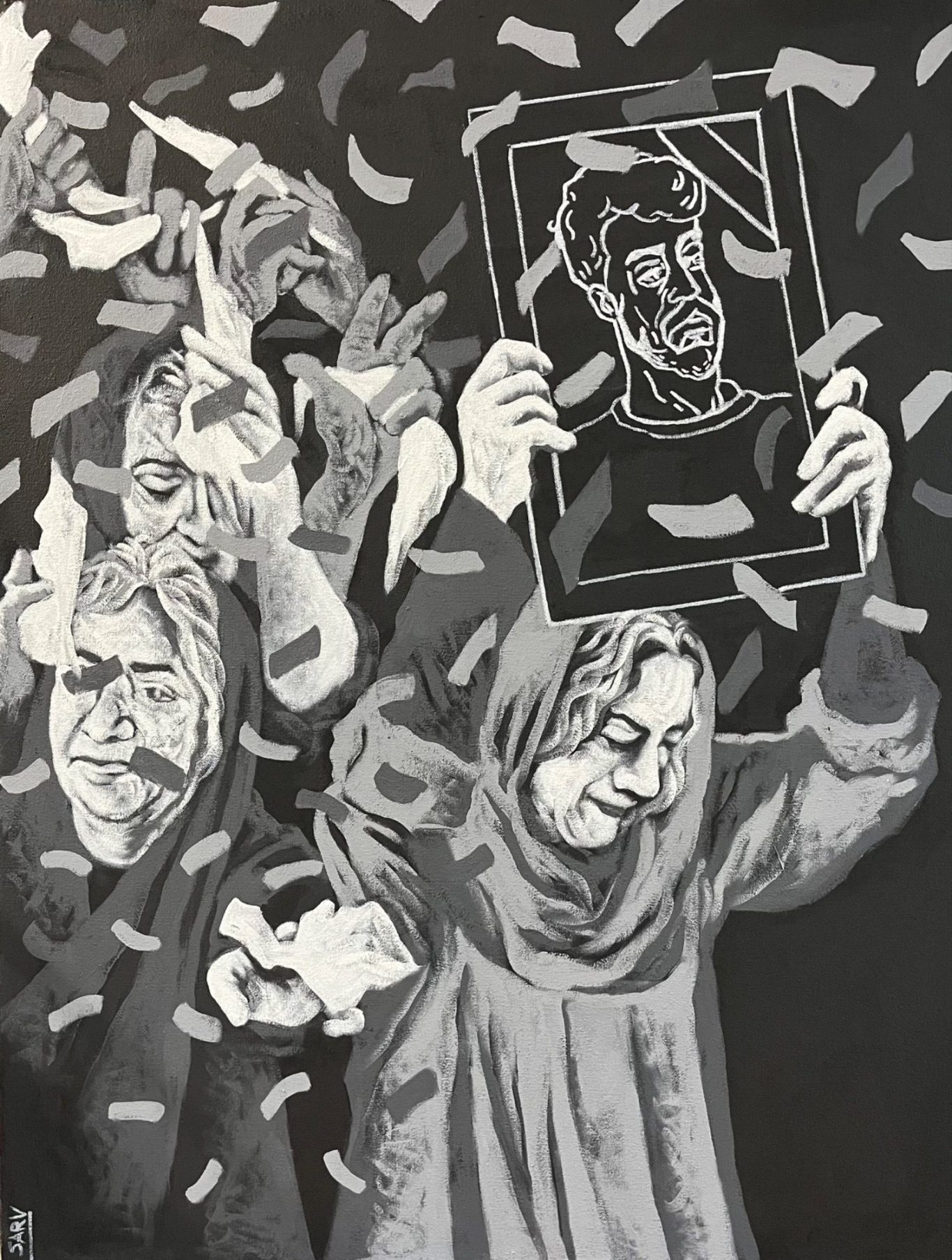
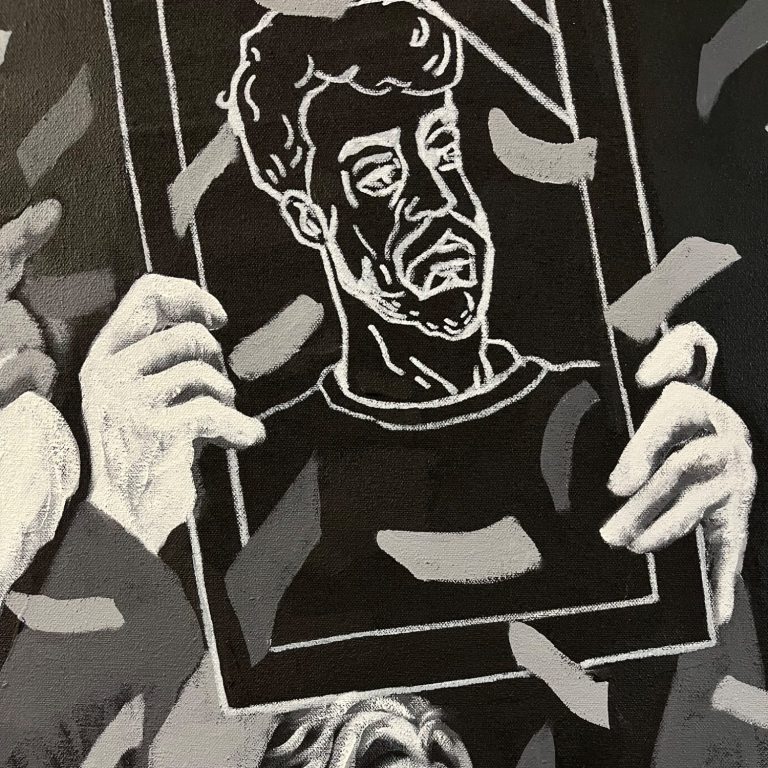
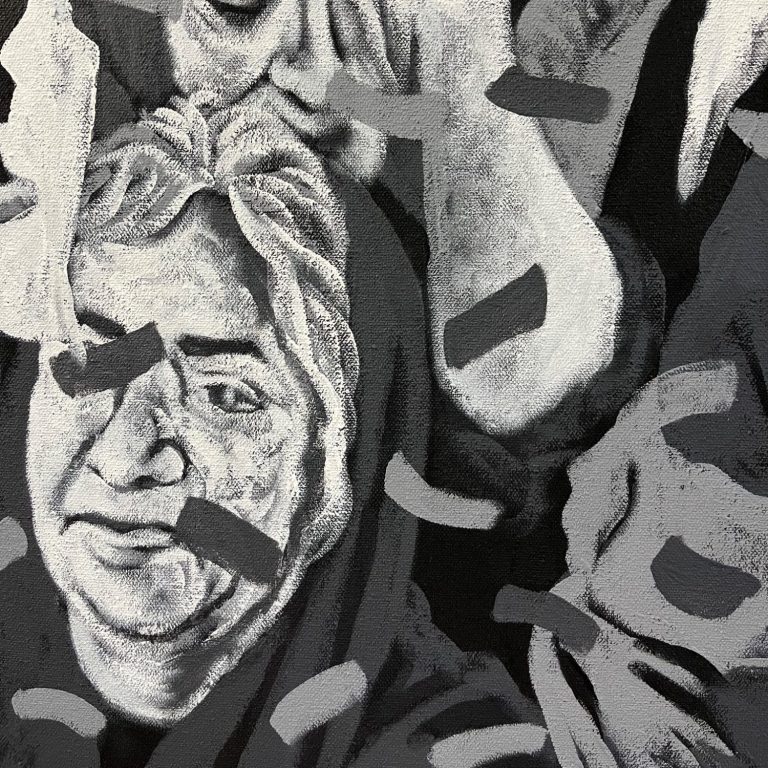
This series was created in the aftermath of the bloody events of January 18 and 19 in Iran, days when grief seemed destined to become the only remaining narrative. Yet these works are not about mourning. They are about choice.
The choice to dance, to celebrate, and to embrace life when violence seeks to reduce everything to silence and sorrow. Each figure in this series reflects the idea that resistance is not always expressed through confrontation. Sometimes it lives in the simple act of continuing, creating, moving, and refusing to surrender joy.
Survivors is a tribute to those who carry their wounds yet continue to choose life, reminding us that one of the most powerful forms of resistance is to remain alive without letting hope disappear.
INDEPENDENT PROJECTS
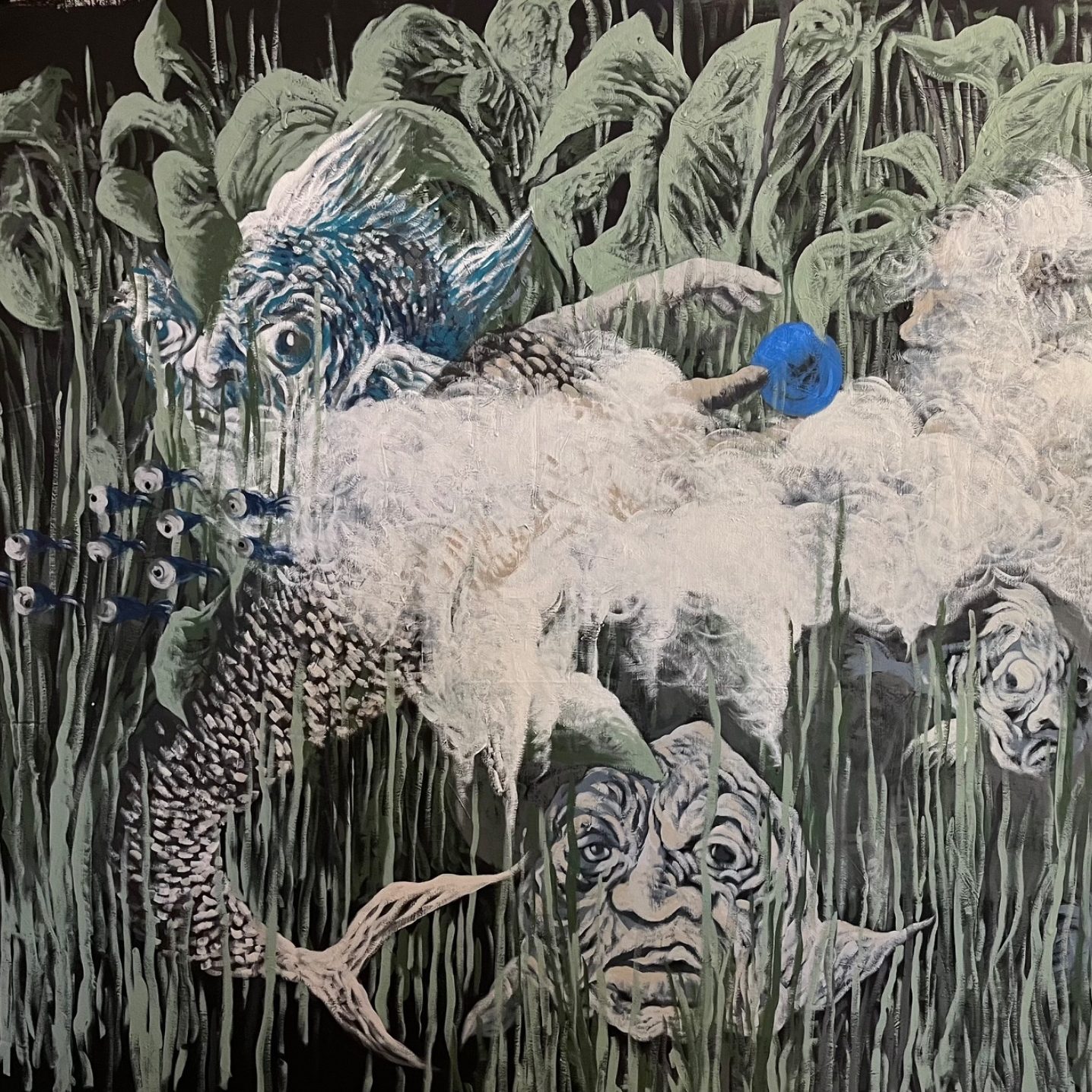
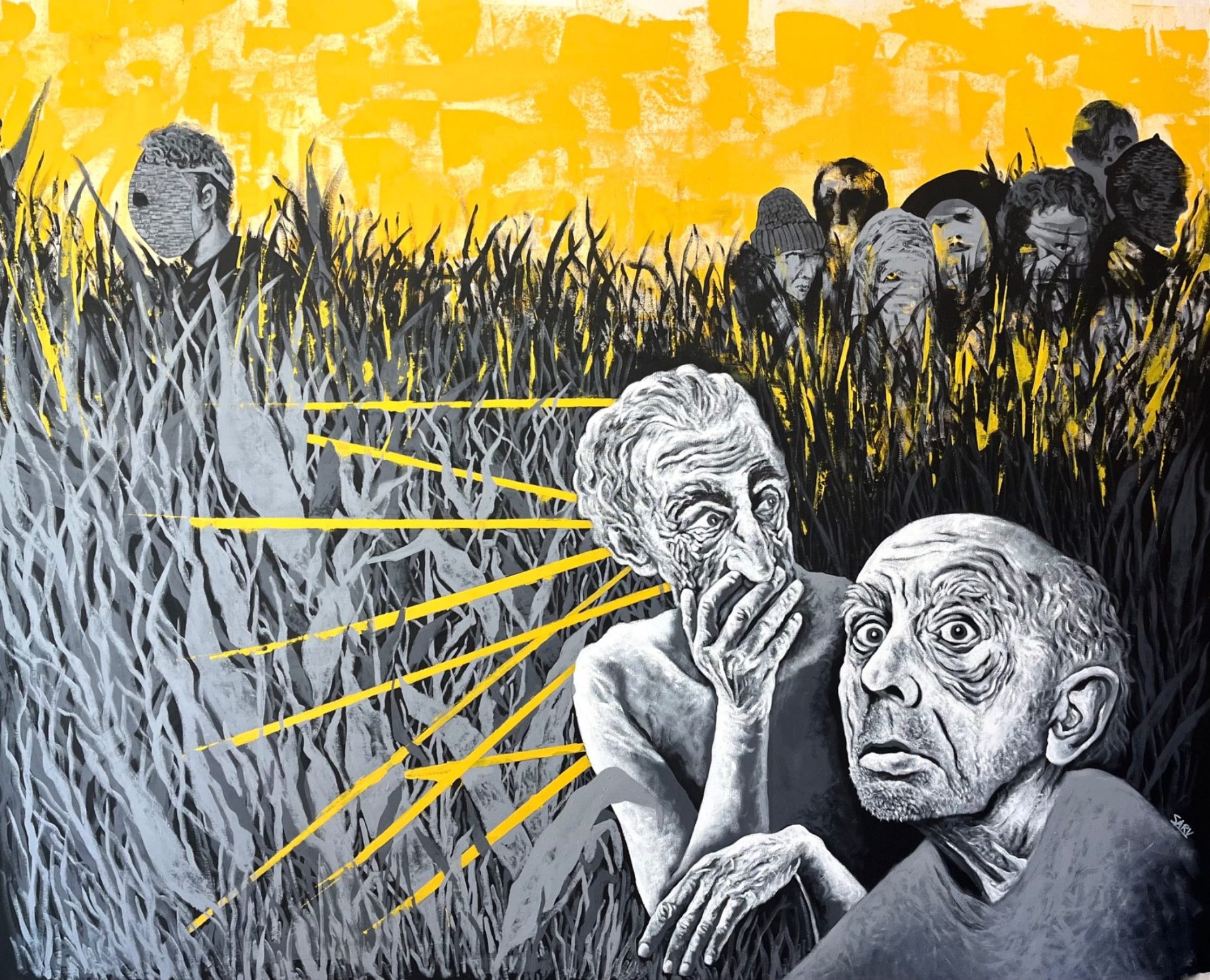
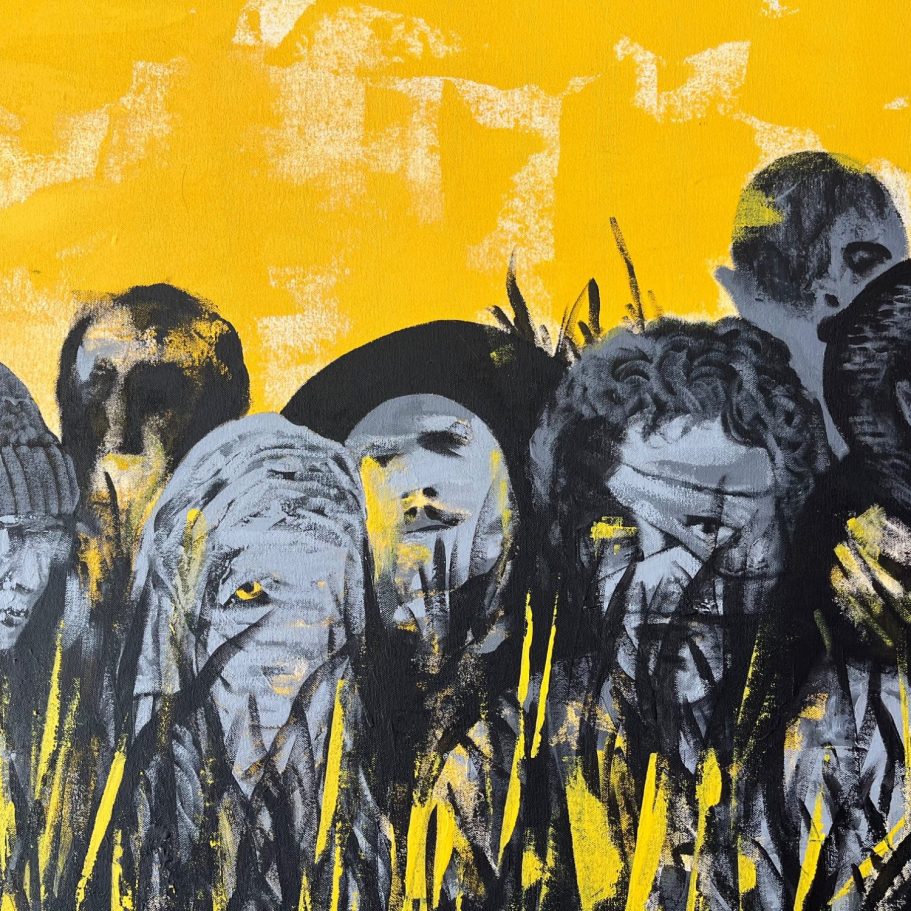
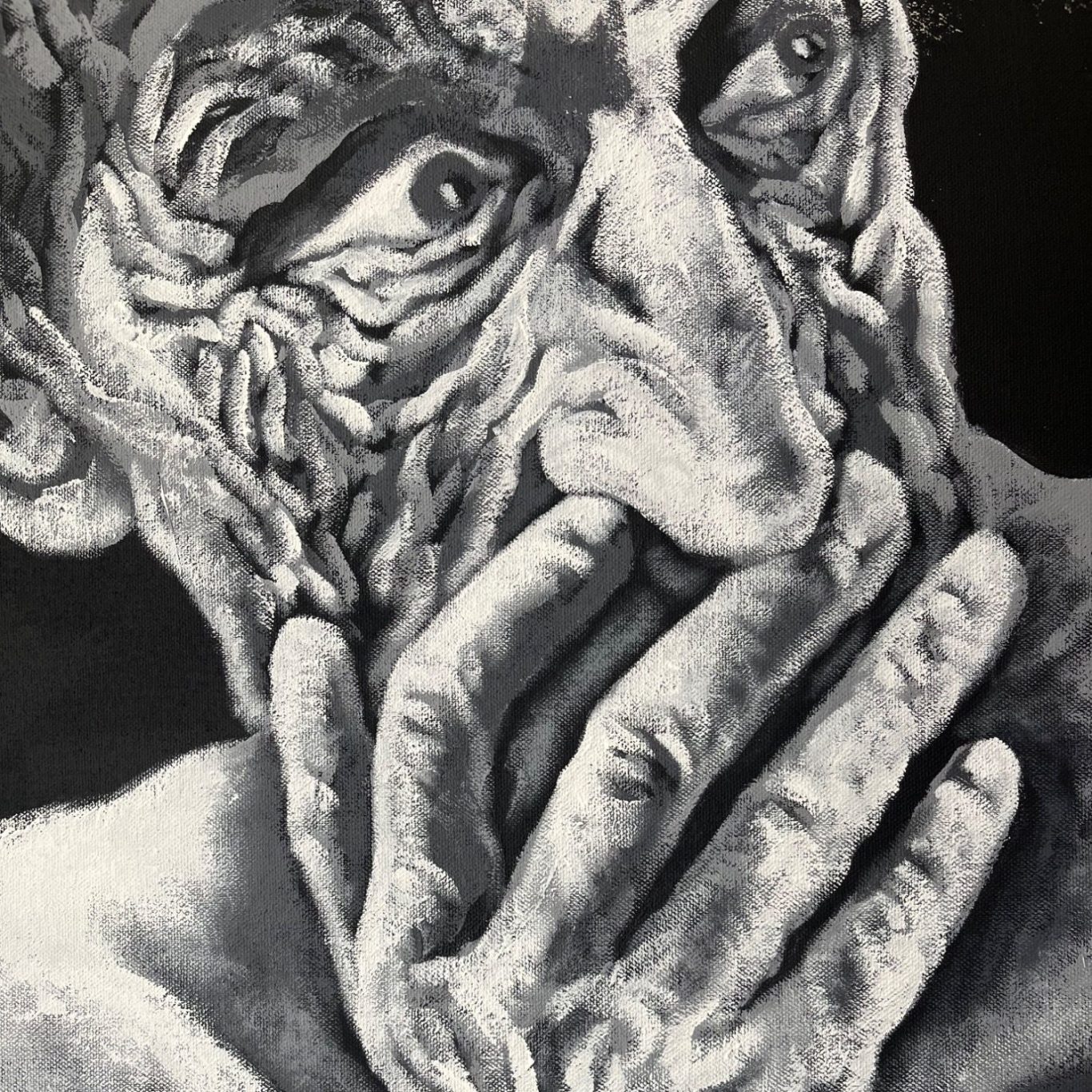
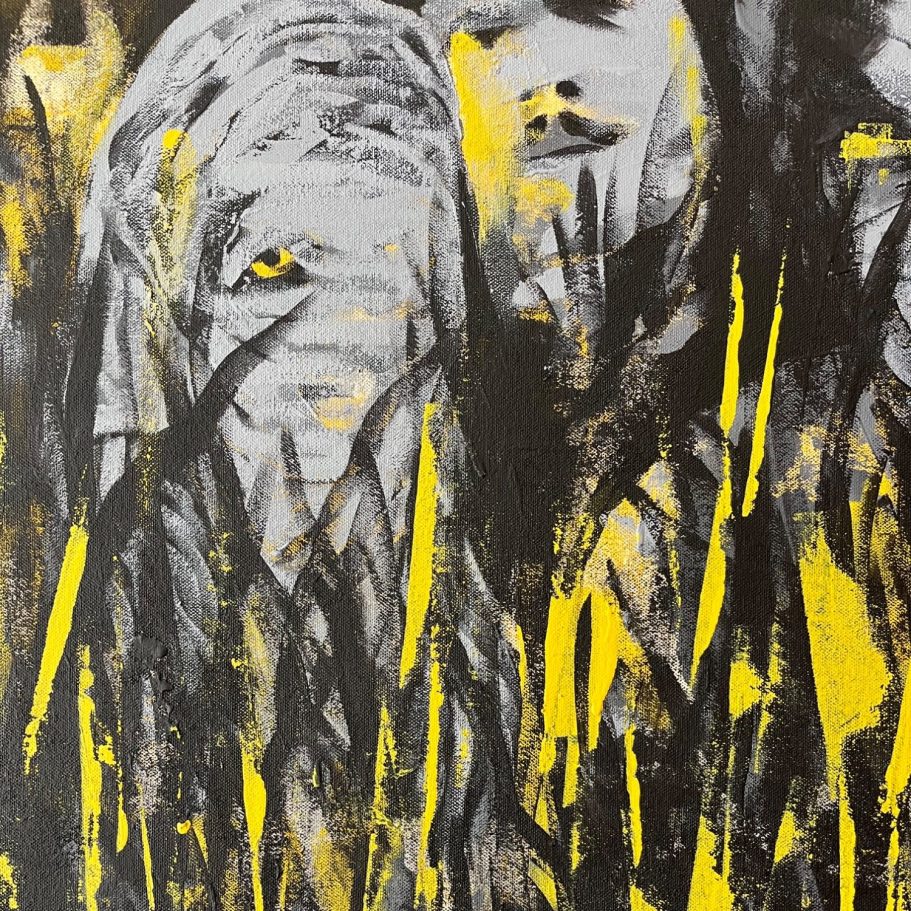
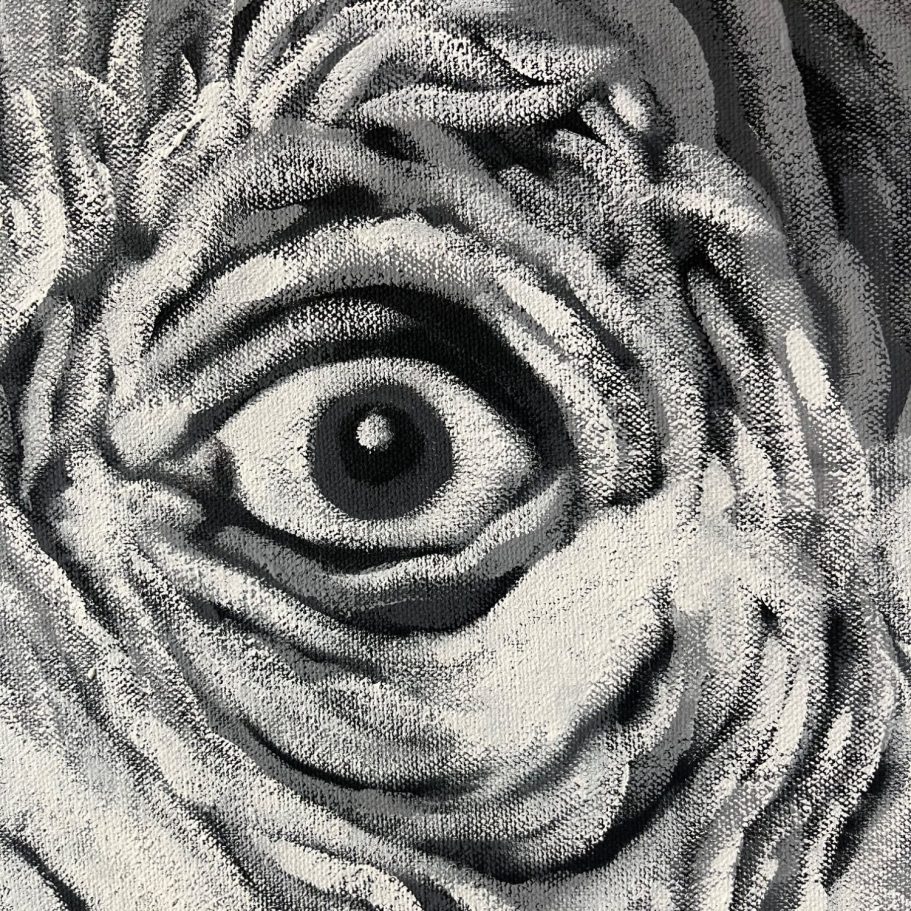
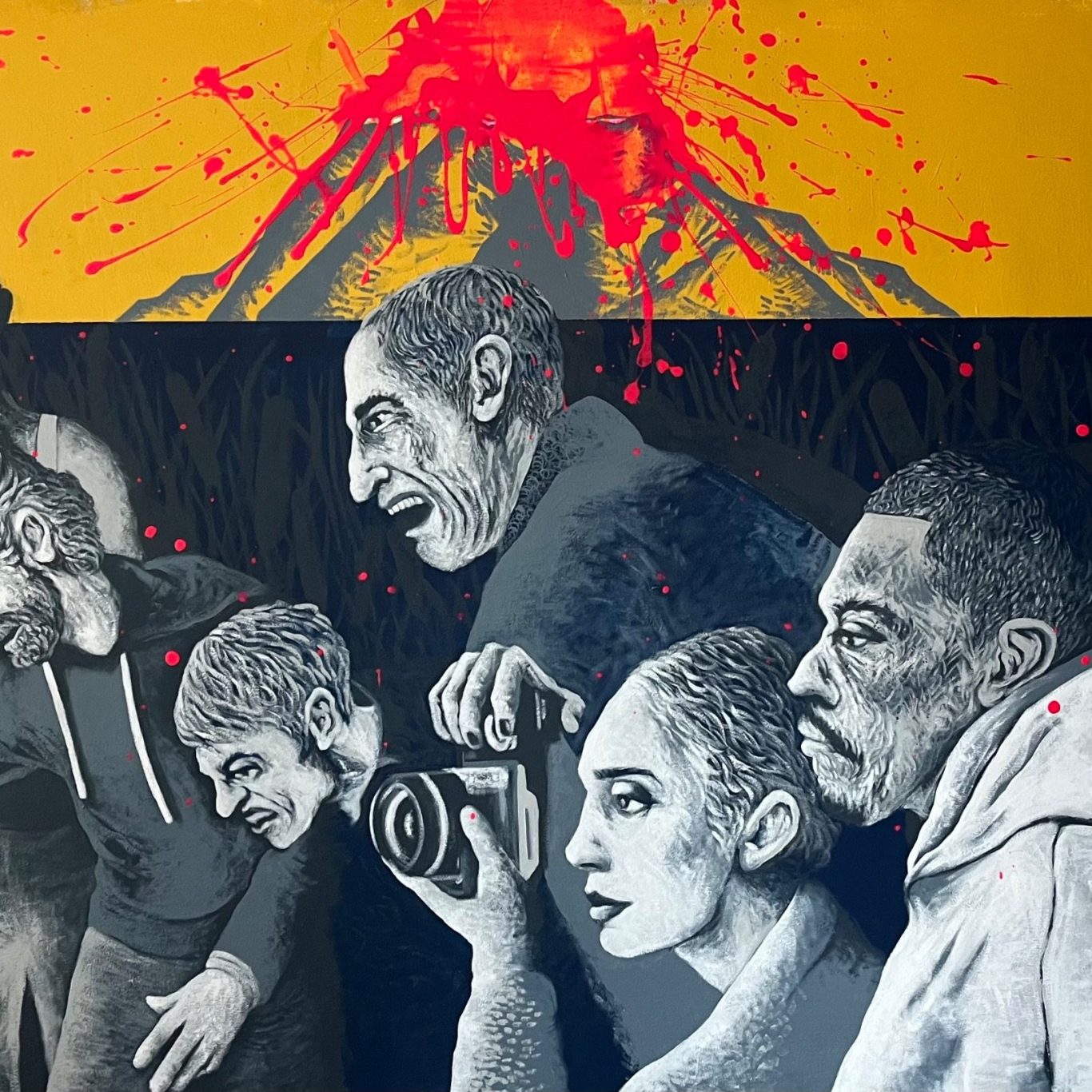
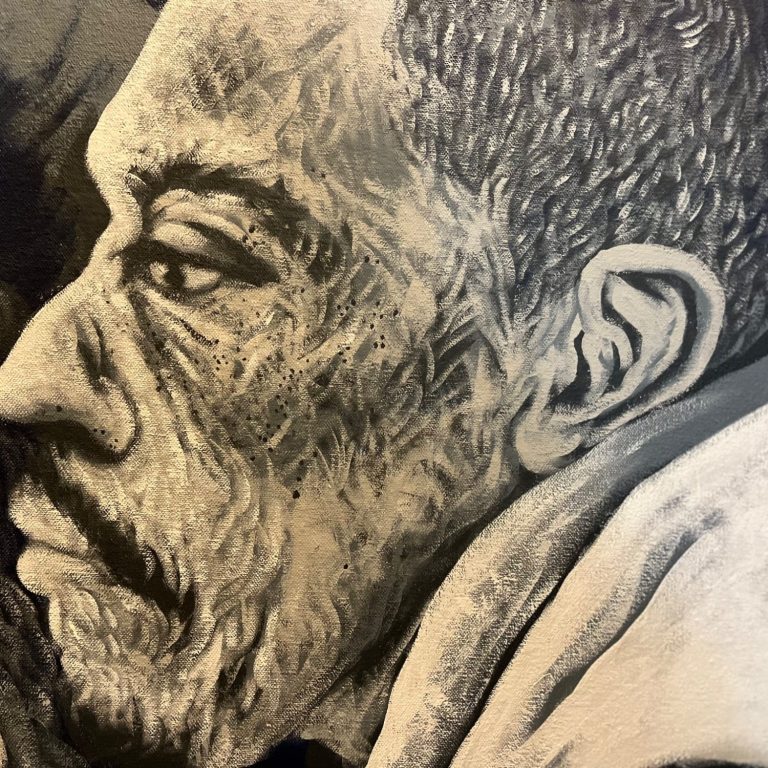
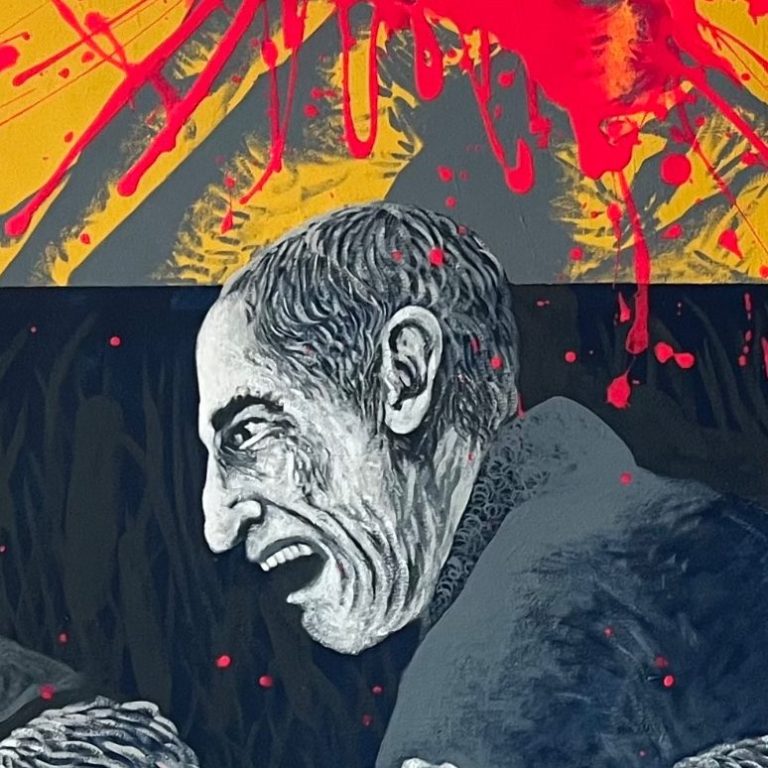
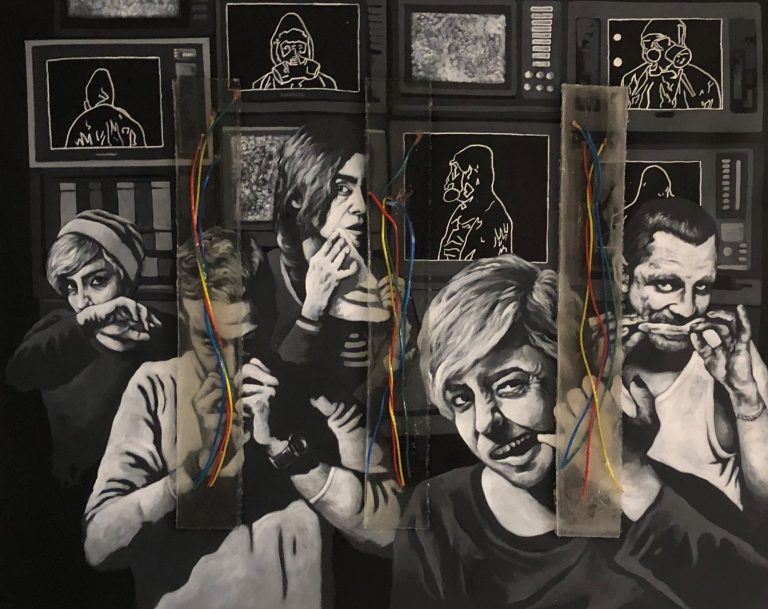
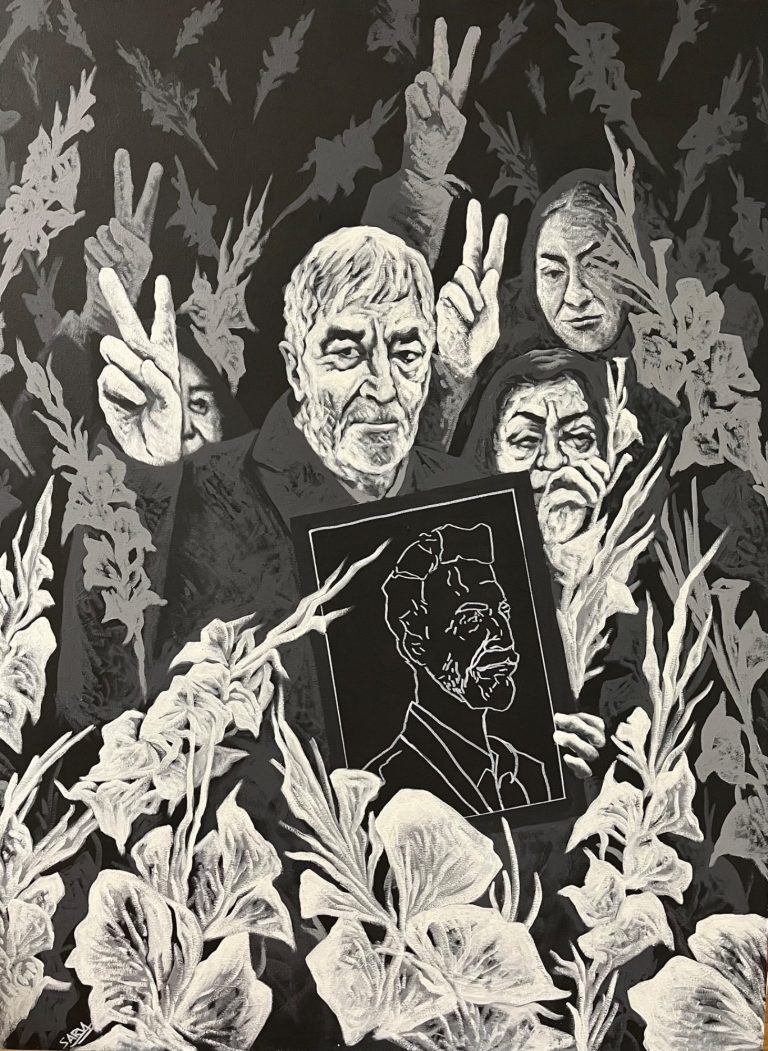
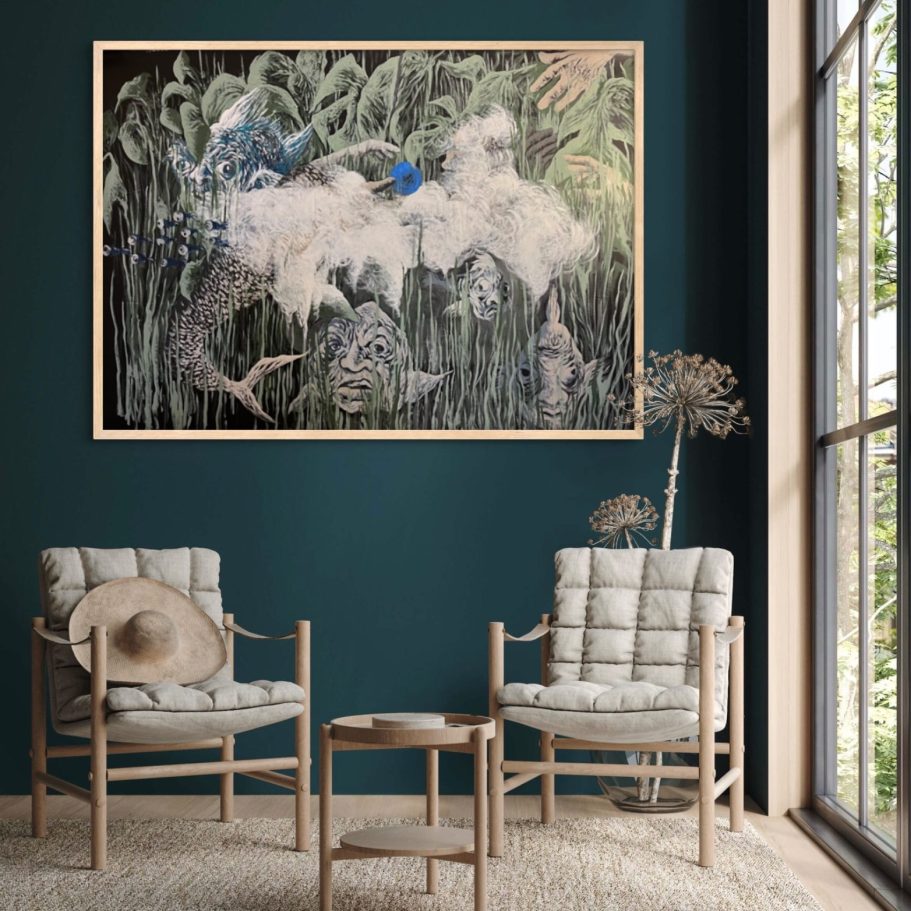
Acrylic on canvas - Mixed Media / 100.120 cm
CENSORSHIP
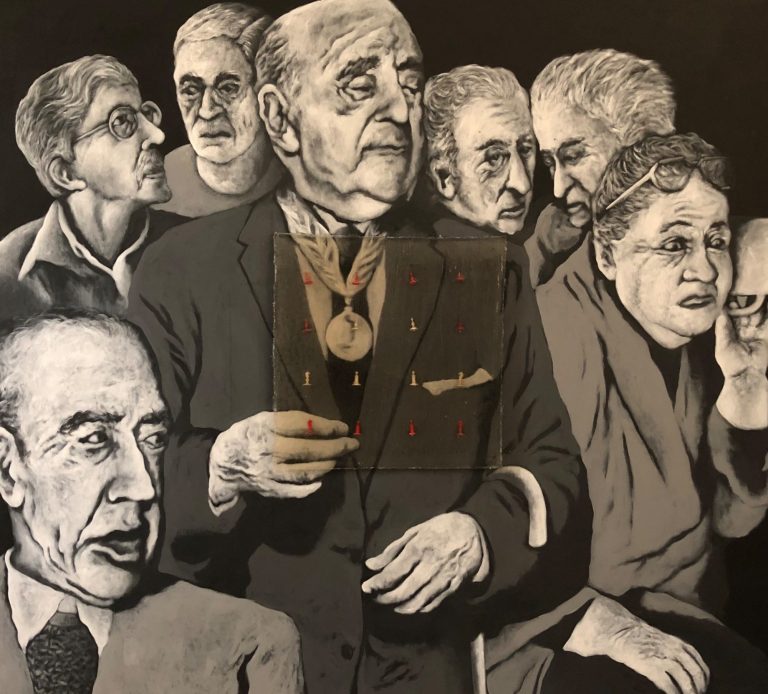
Acrylic on canvas - Mixed Media/ 100.110 cm
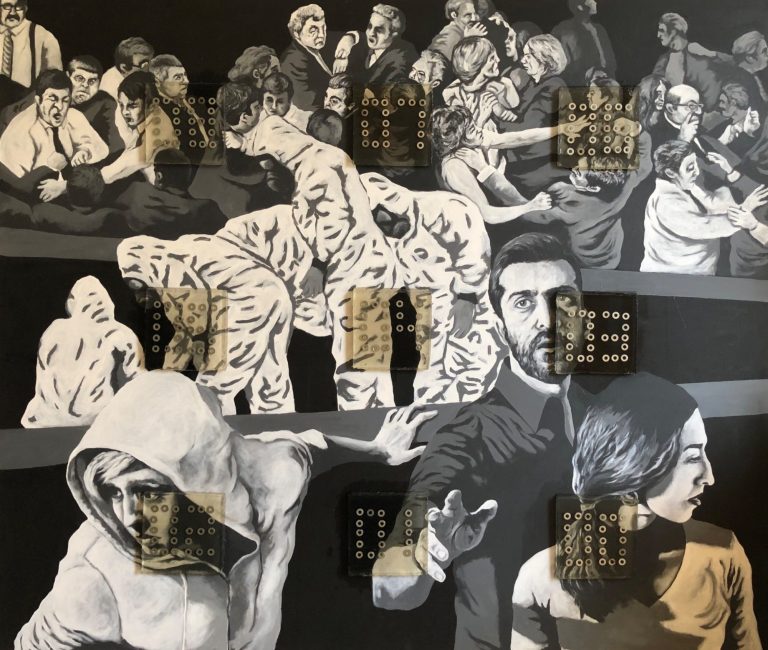
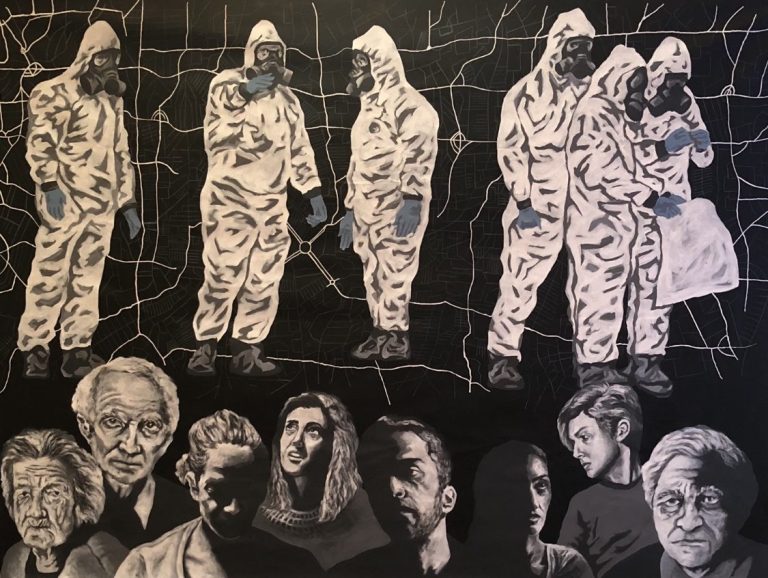
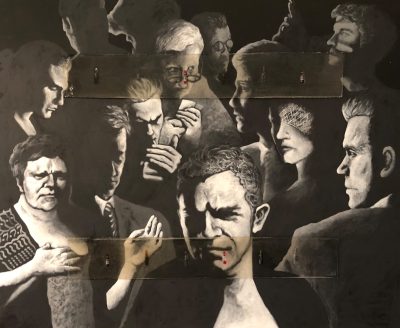
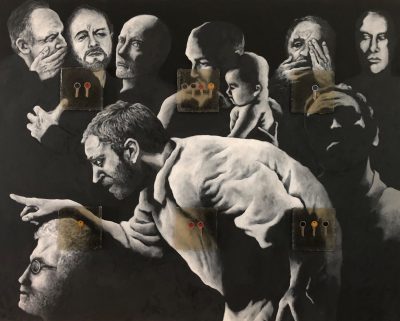
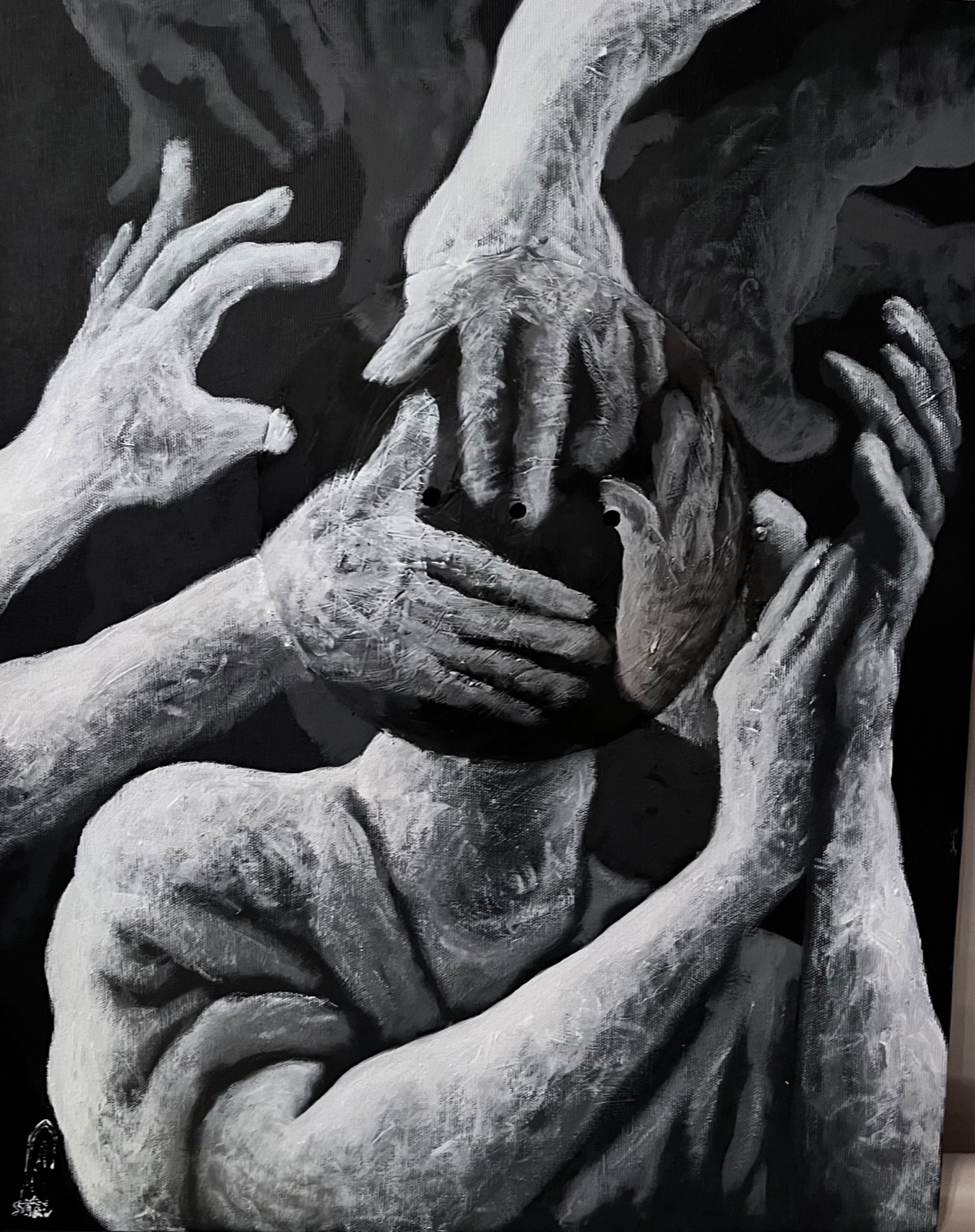
Created before the pandemic, this series of 8 large-scale acrylic paintings on canvas explores themes of censorship in modern society. Each piece incorporates wax and mixed media elements, with the addition of sculptural forms to enhance the narrative. The use of liquid paraffin and molding techniques was the most challenging aspect of the process.
Fingerprint
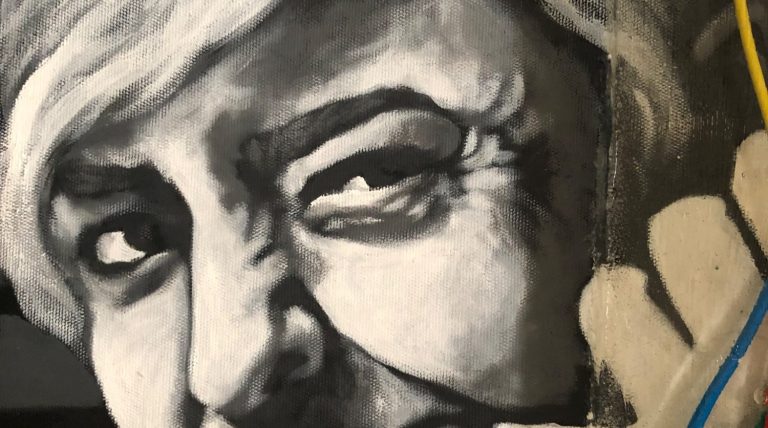
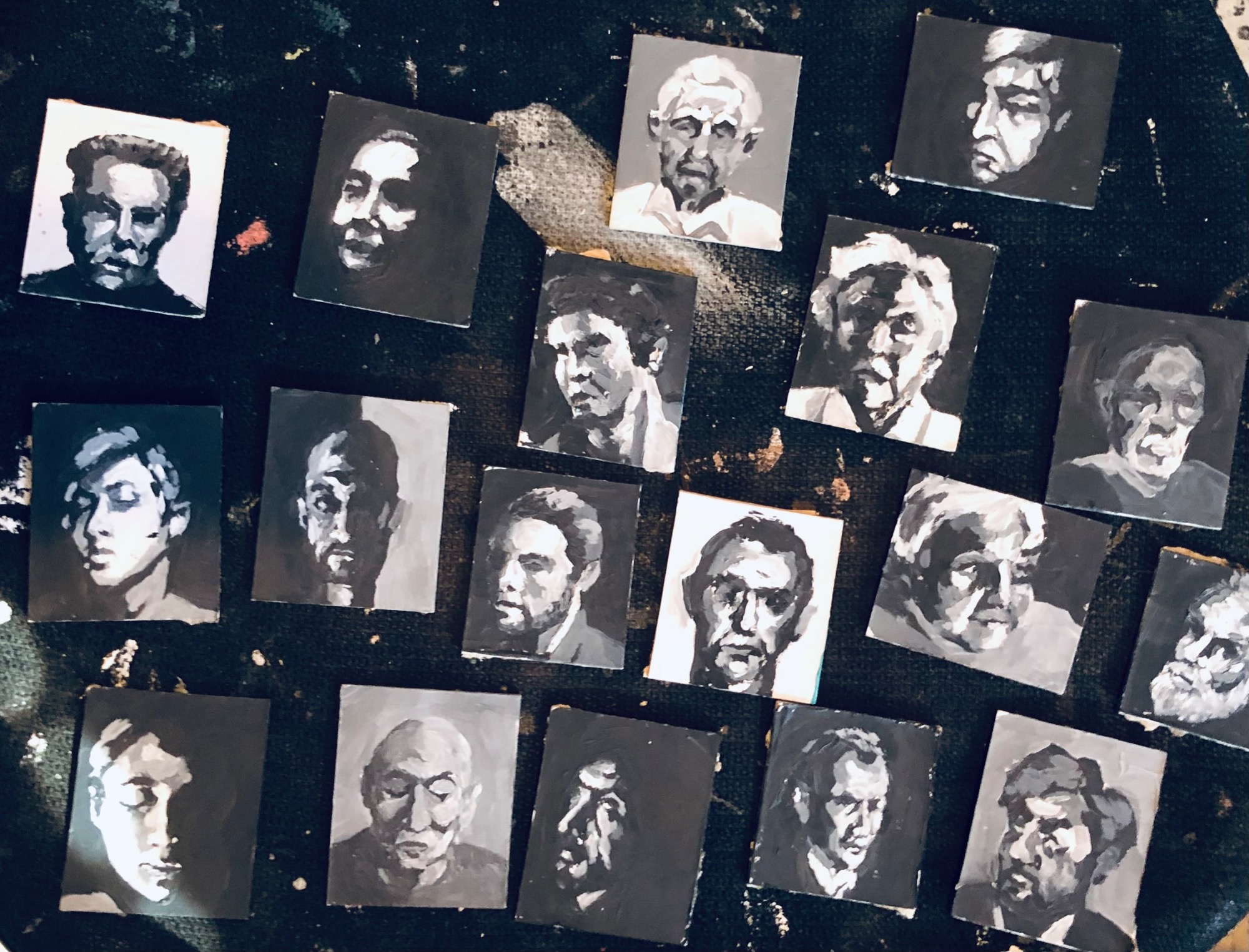
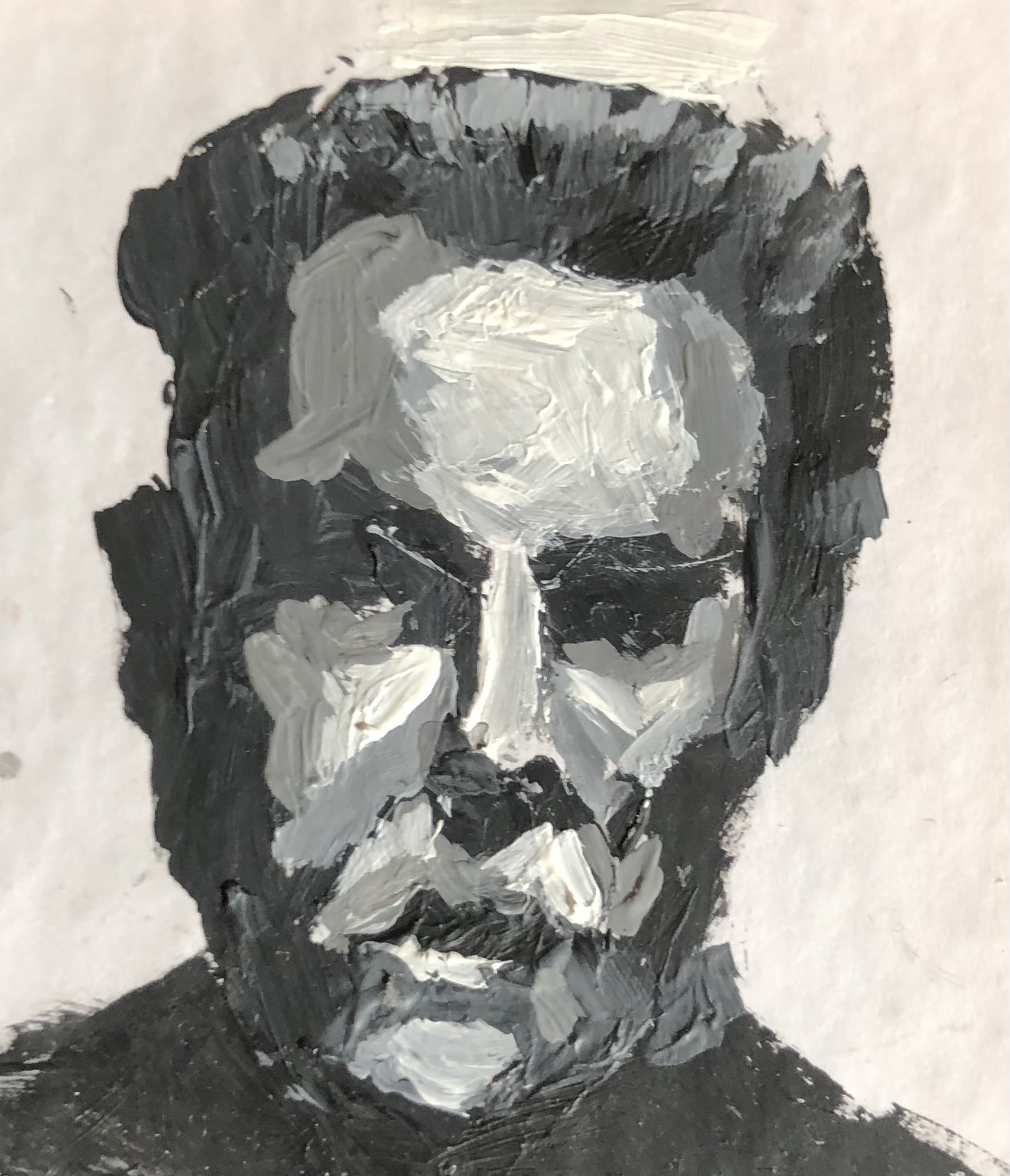
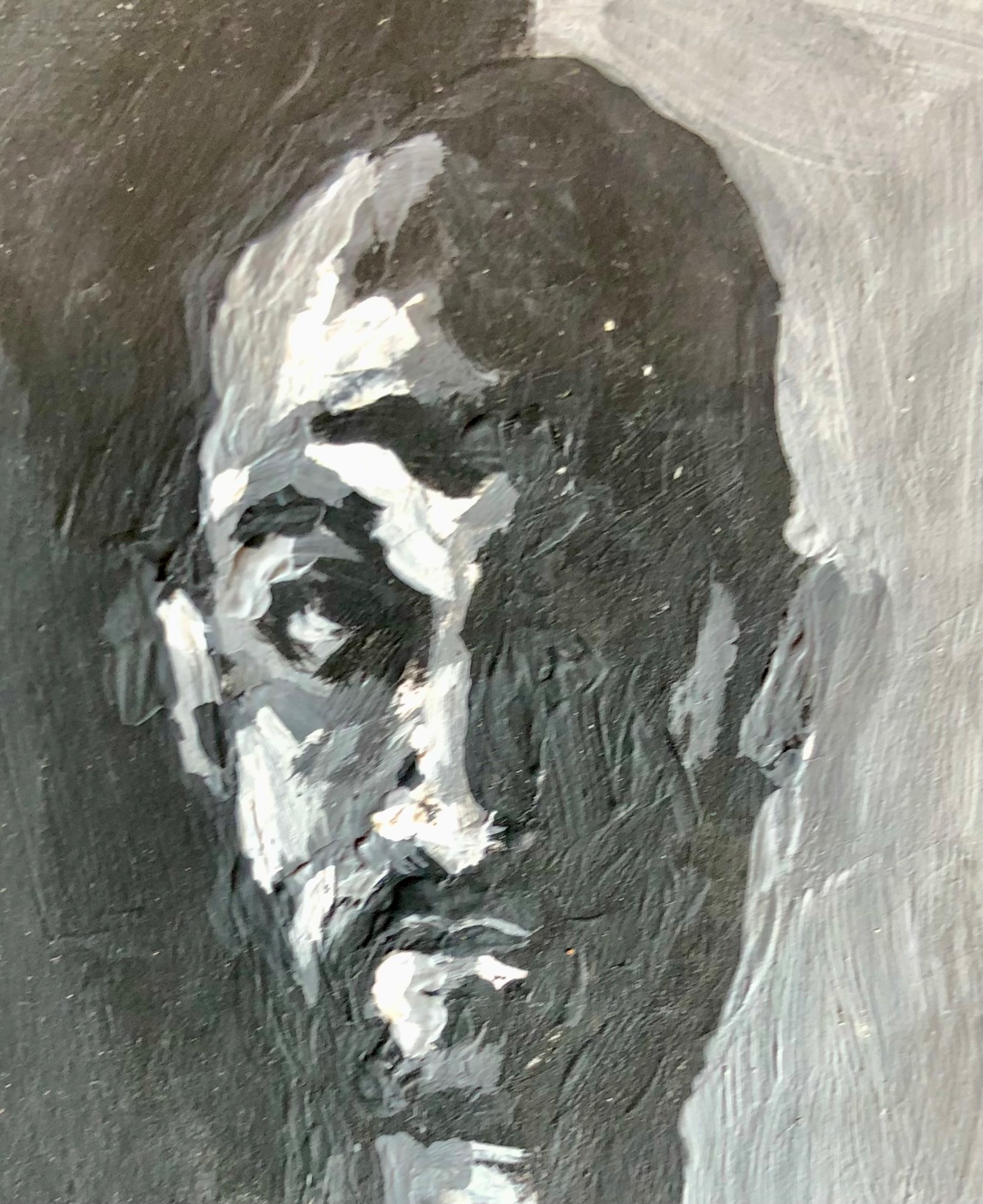
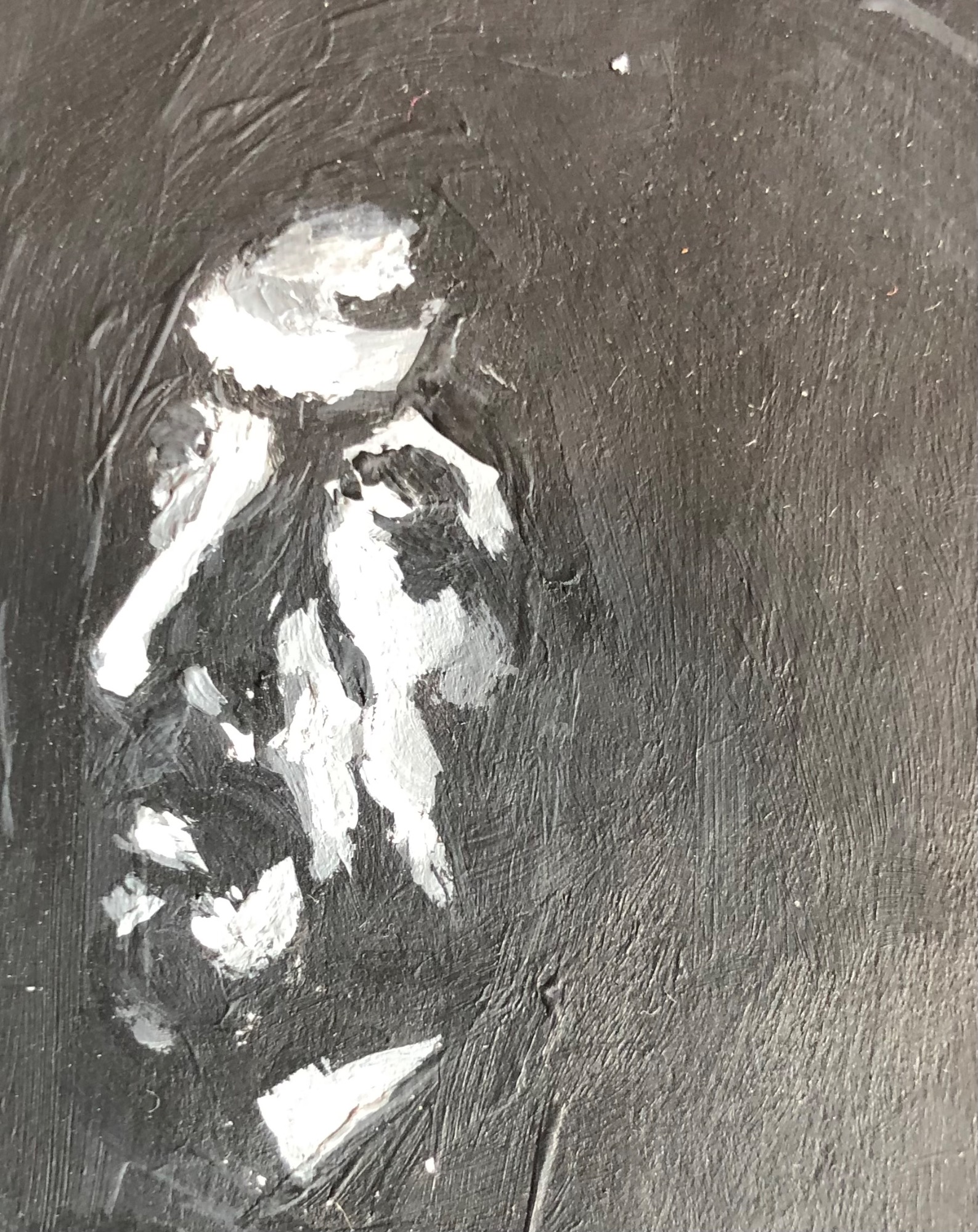
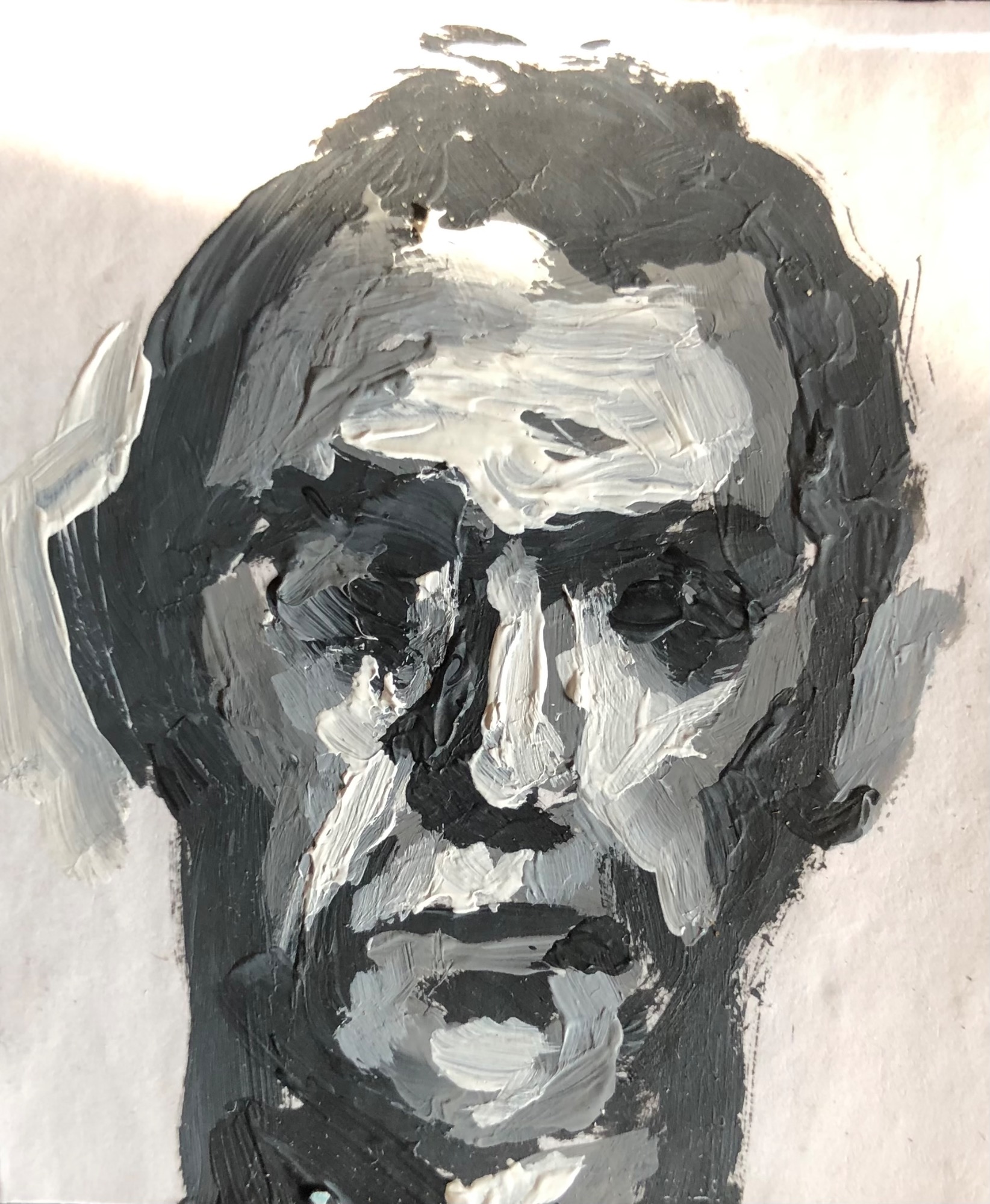
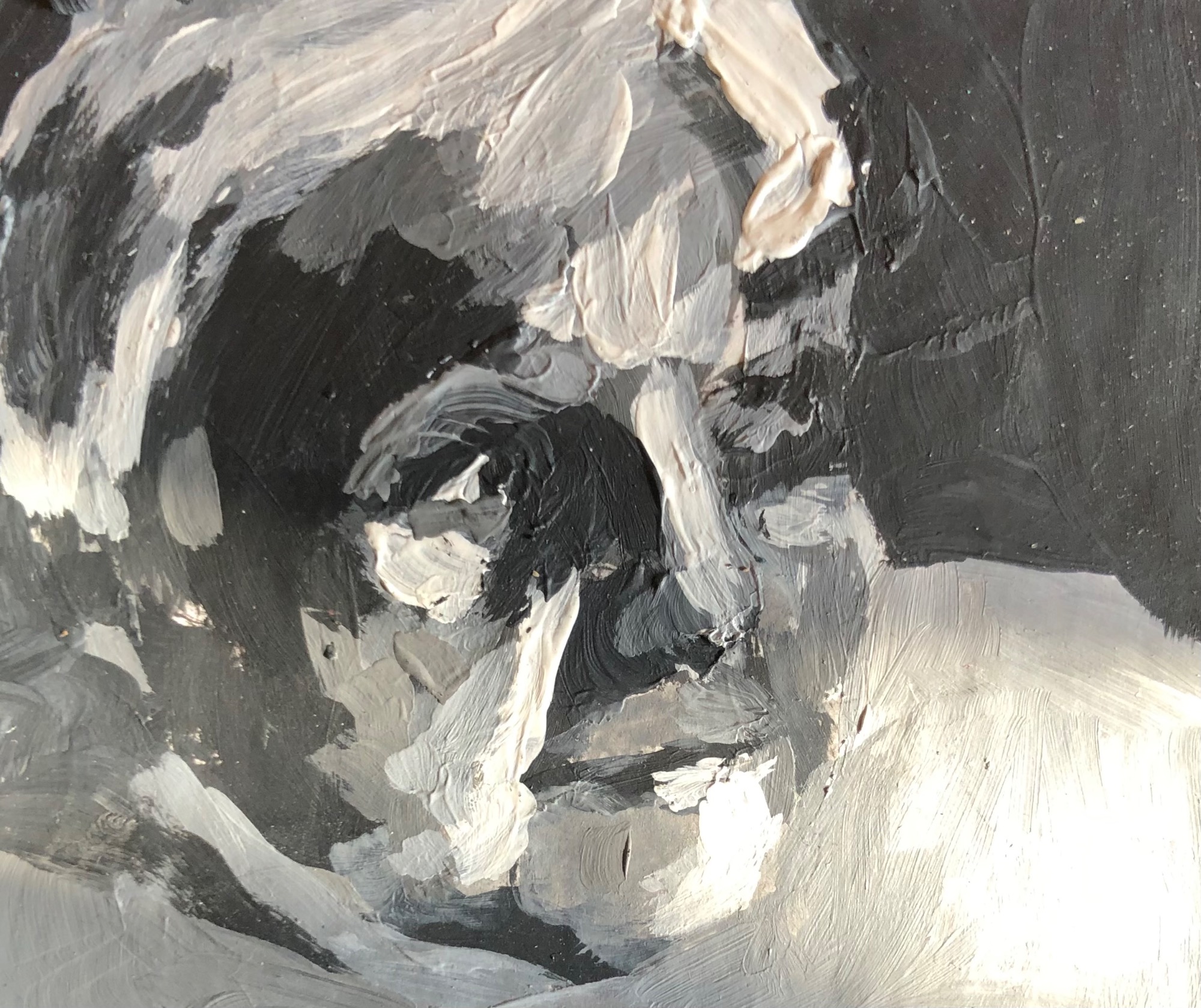
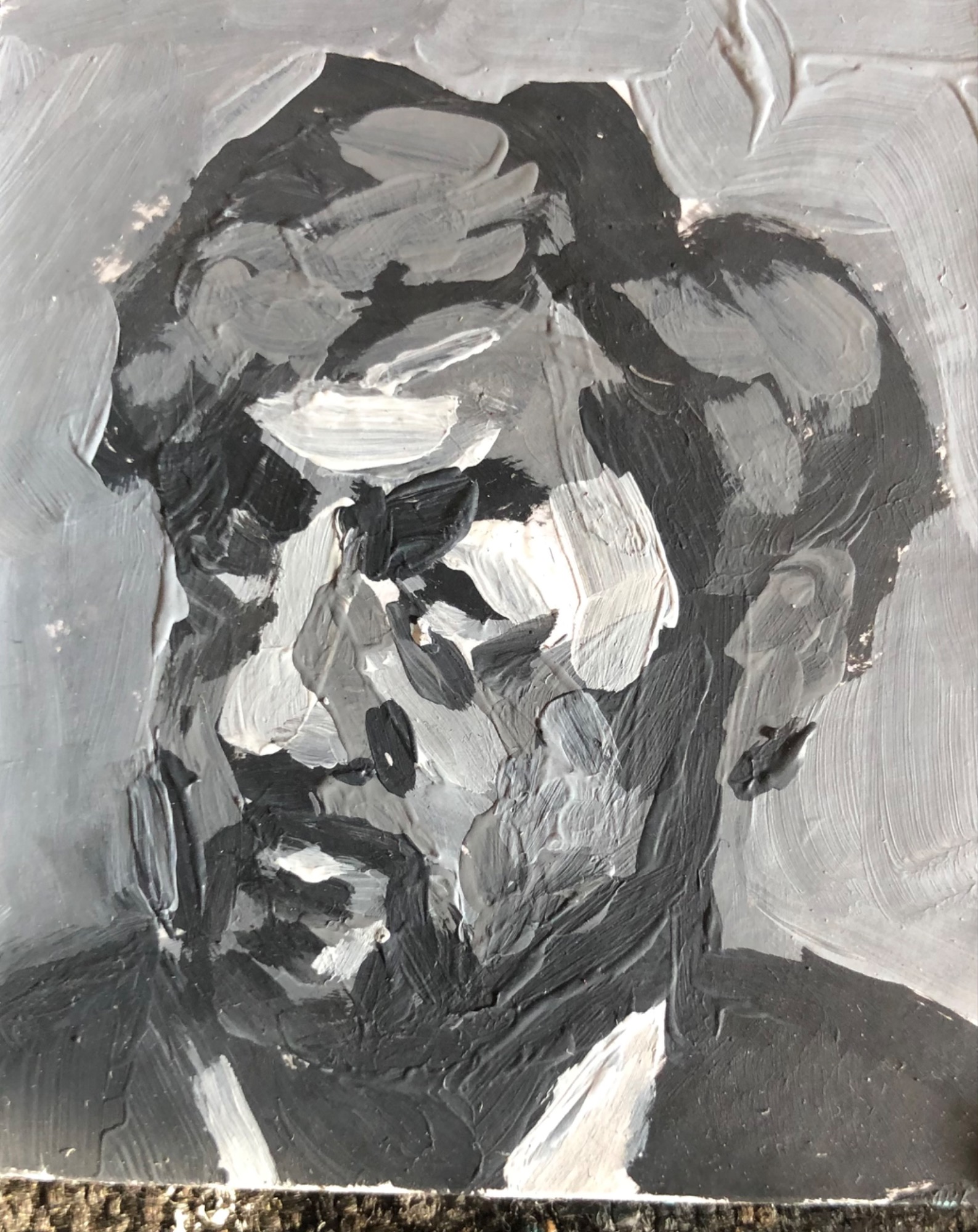
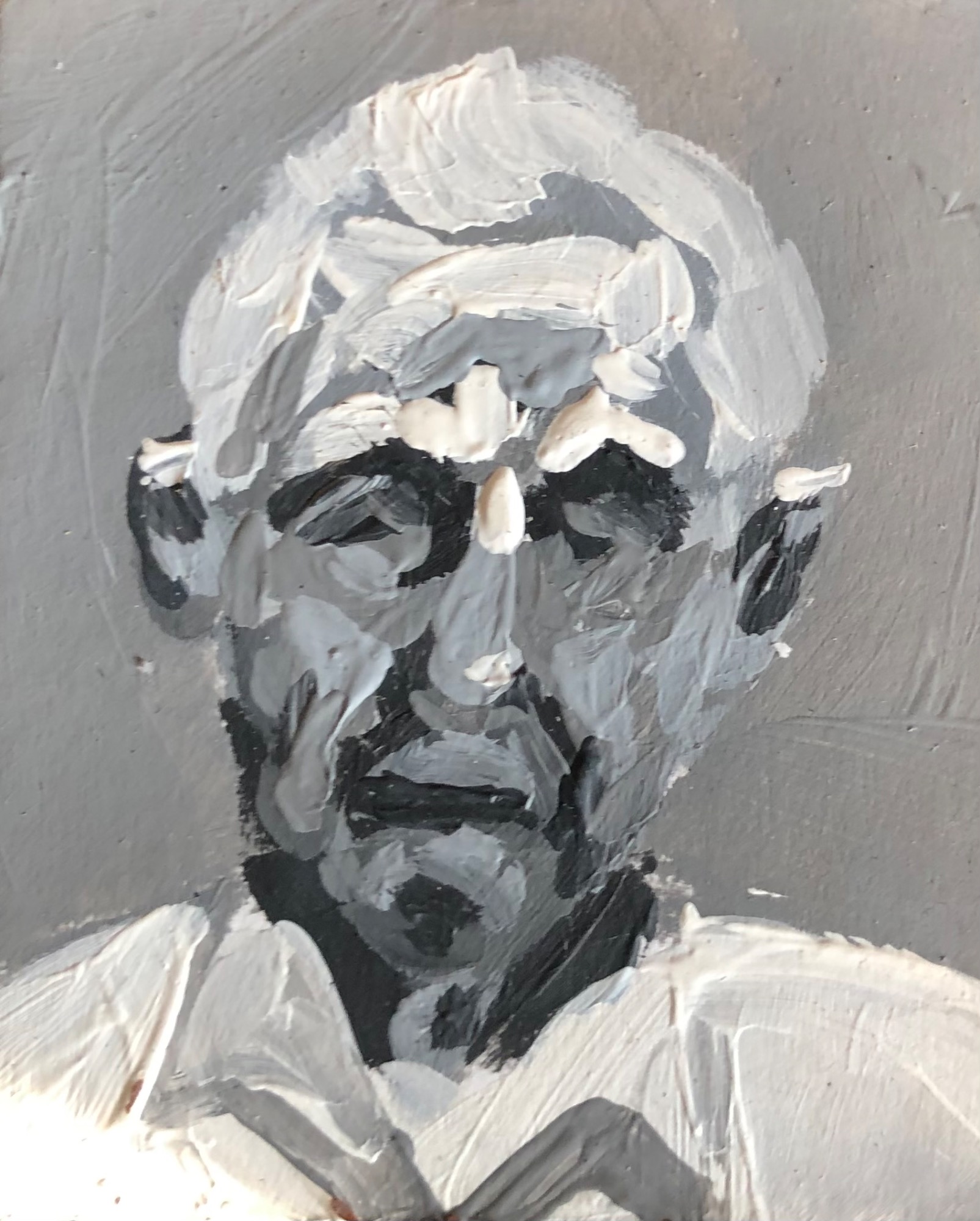
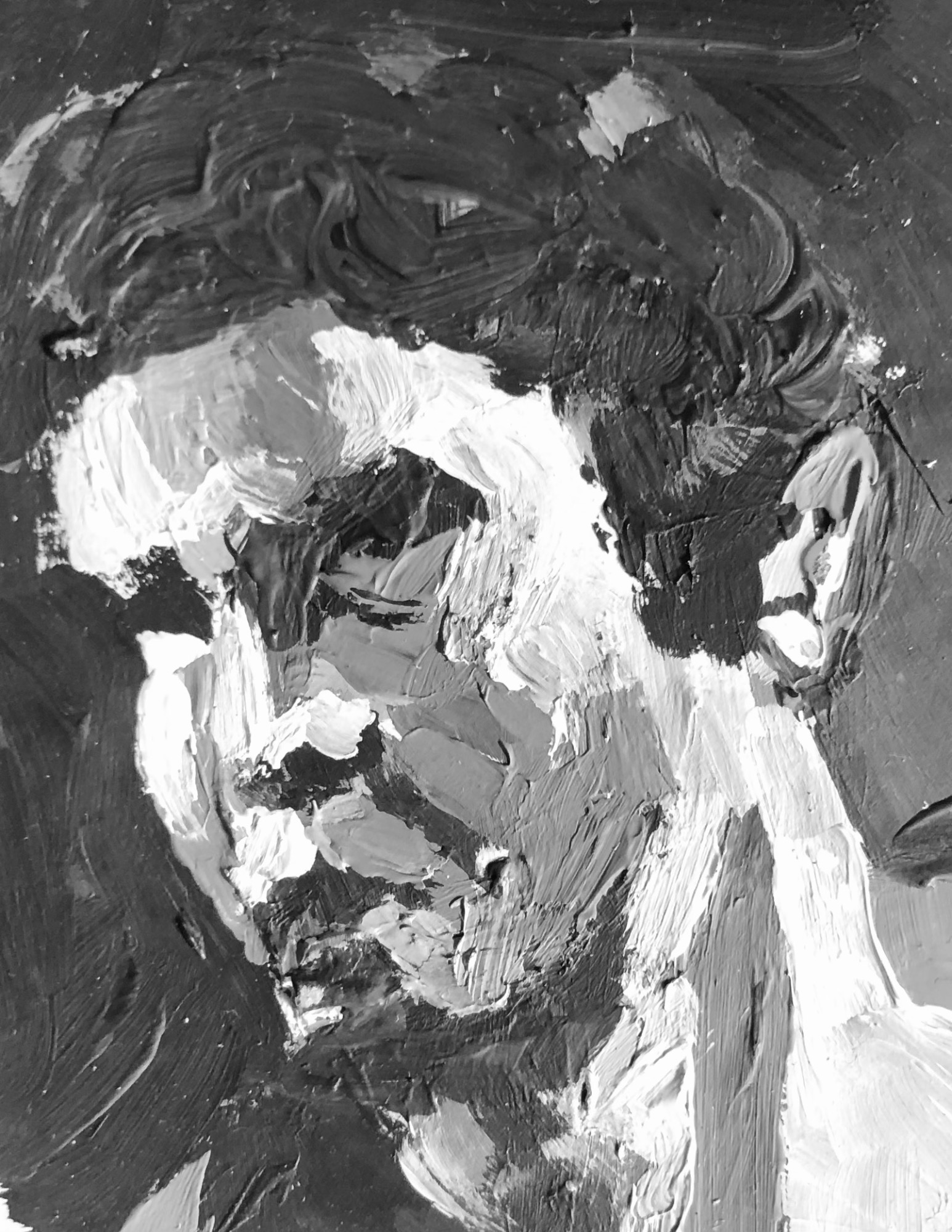
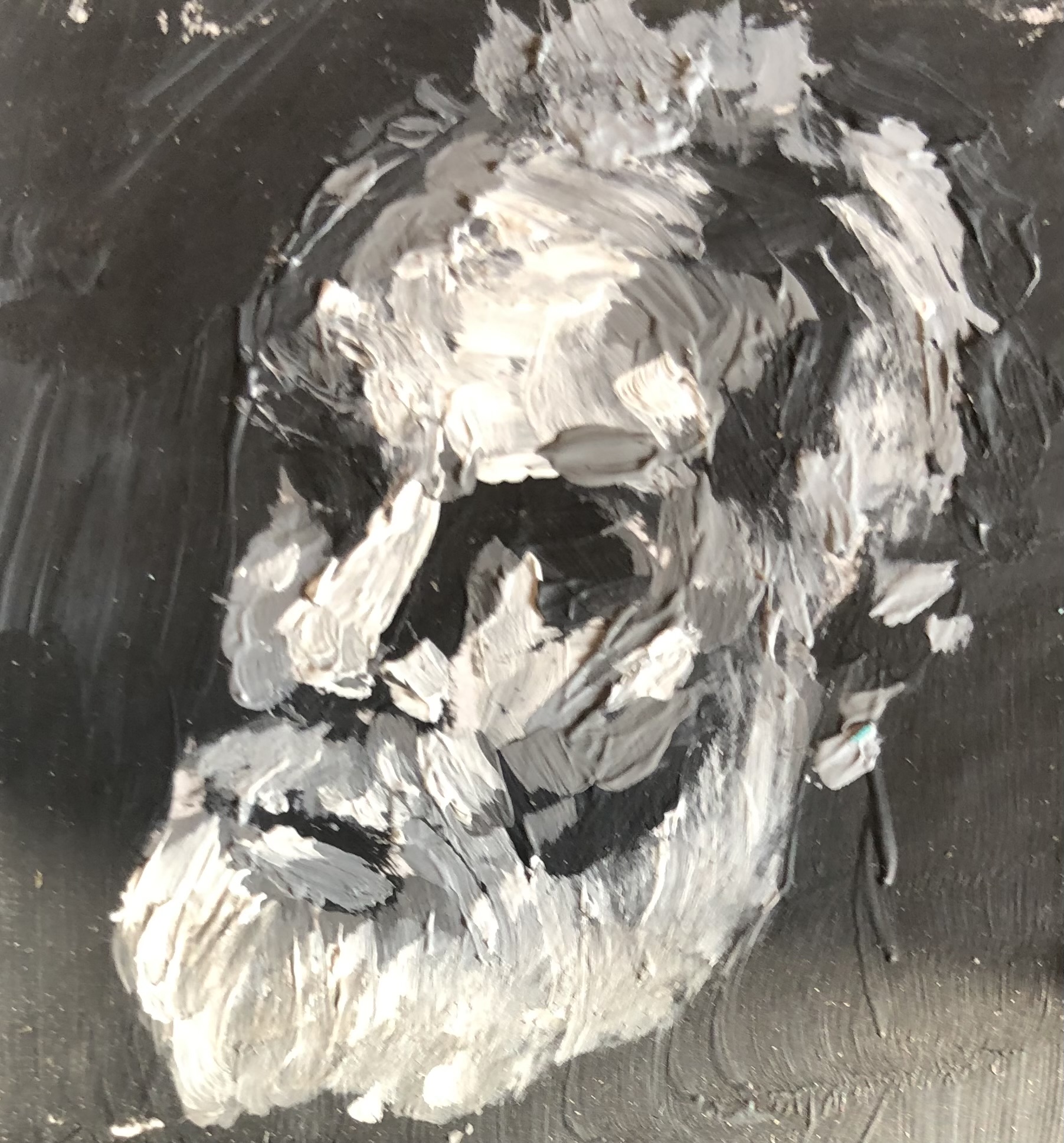
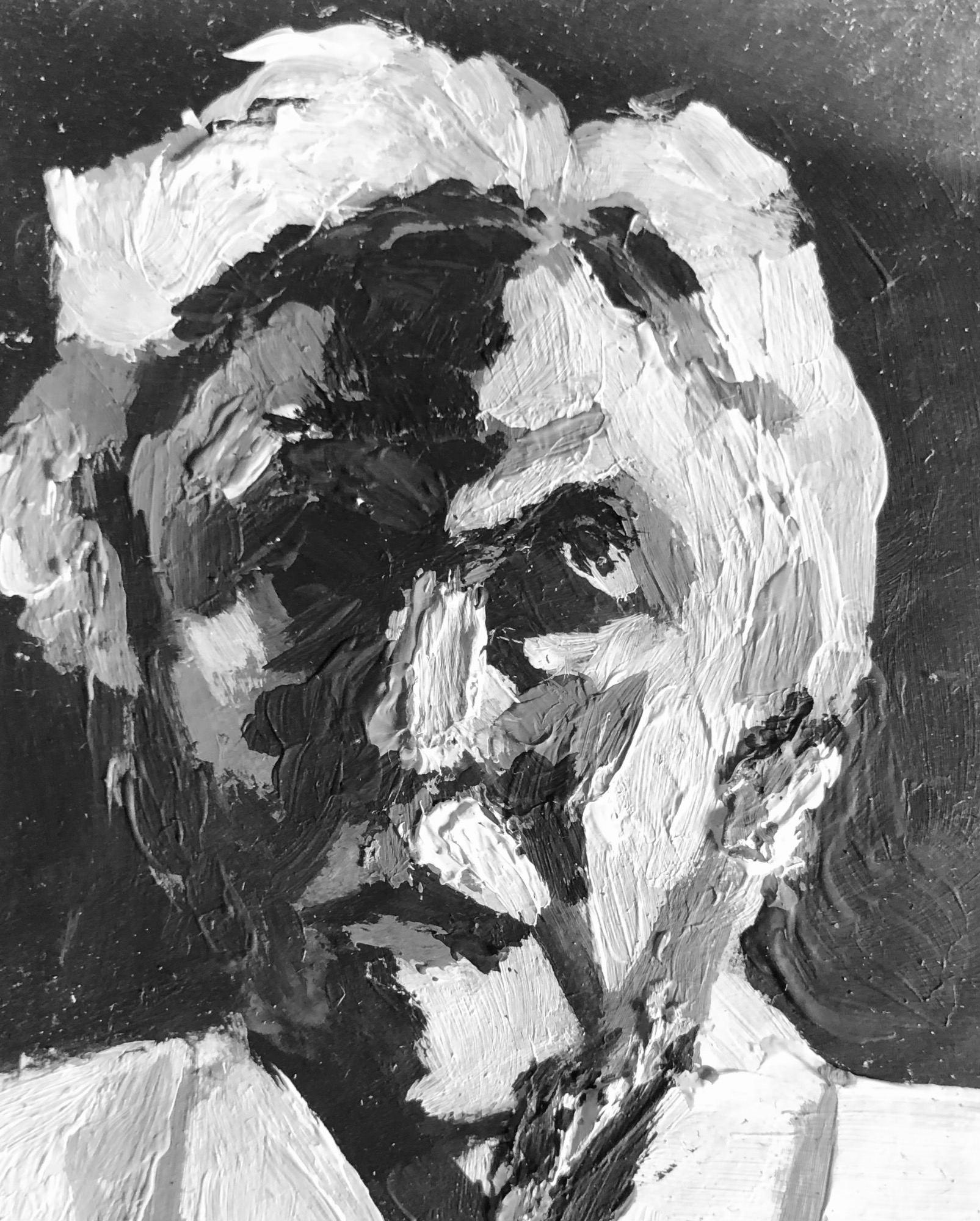
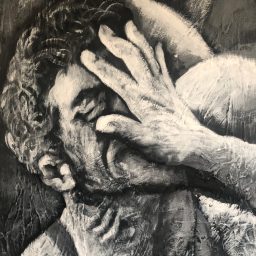
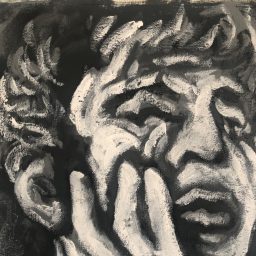
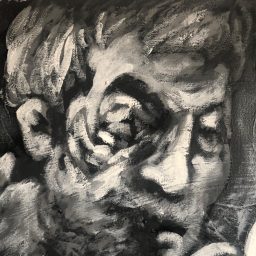
This collection, titled “Finger prints,” consists of 30 miniature black-and-white portraits, each created without the use of a brush—painted entirely with my fingers. The artworks are matchbox-sized, emphasizing simplicity and reducing detail to focus on the essence of humanity. The collection explores the concept of the individual as a small, seemingly insignificant entity within society and the vastness of the modern world.The dimensions of this project are 4 * 4 cm, which is approximately equivalent to roughly 1.57 * 1.57 inches.
Solution
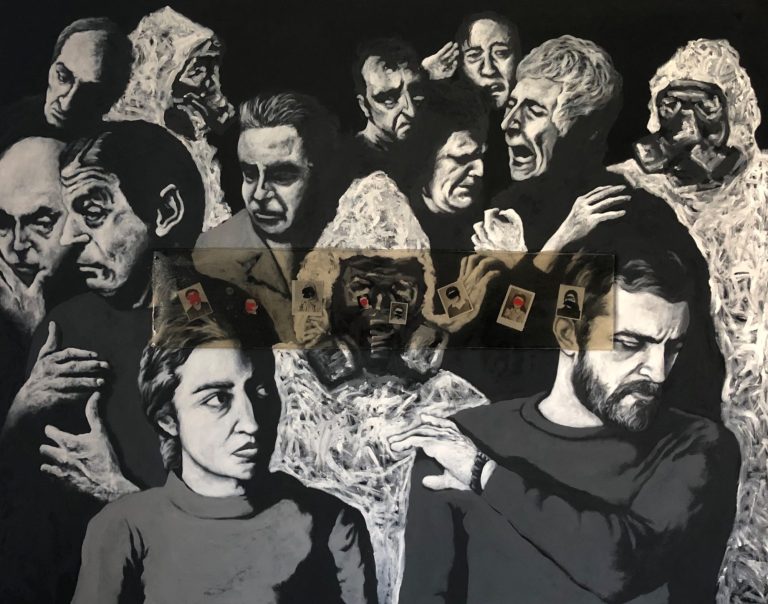
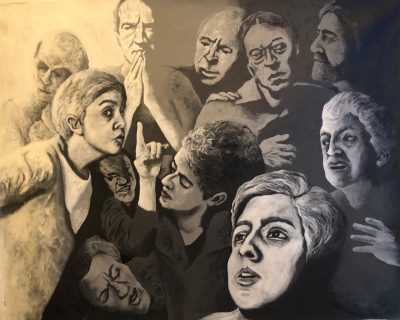
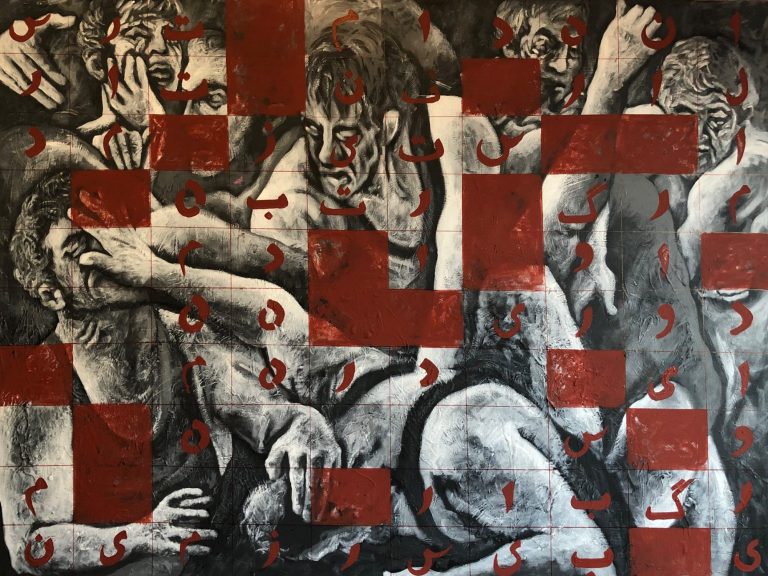
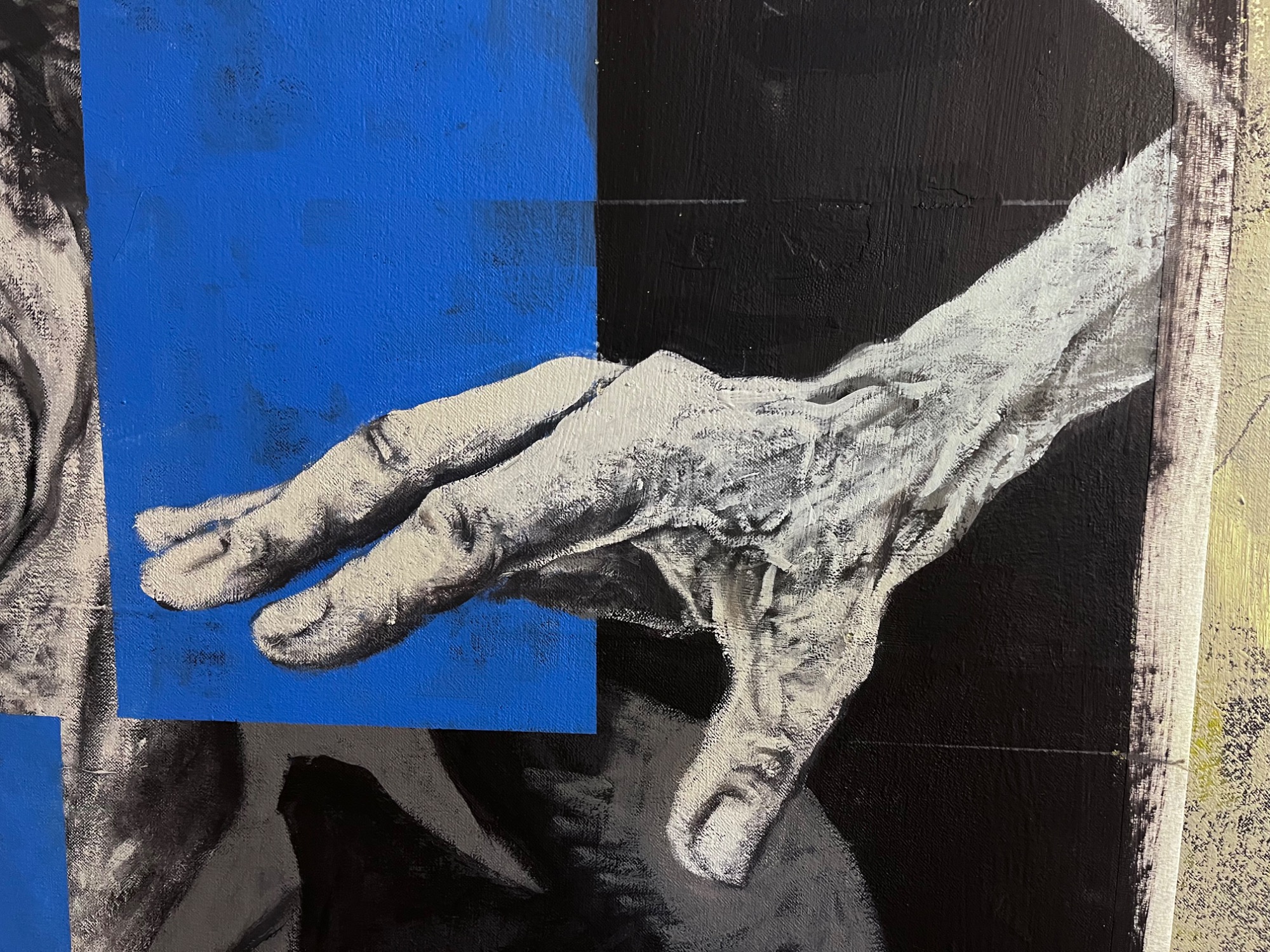
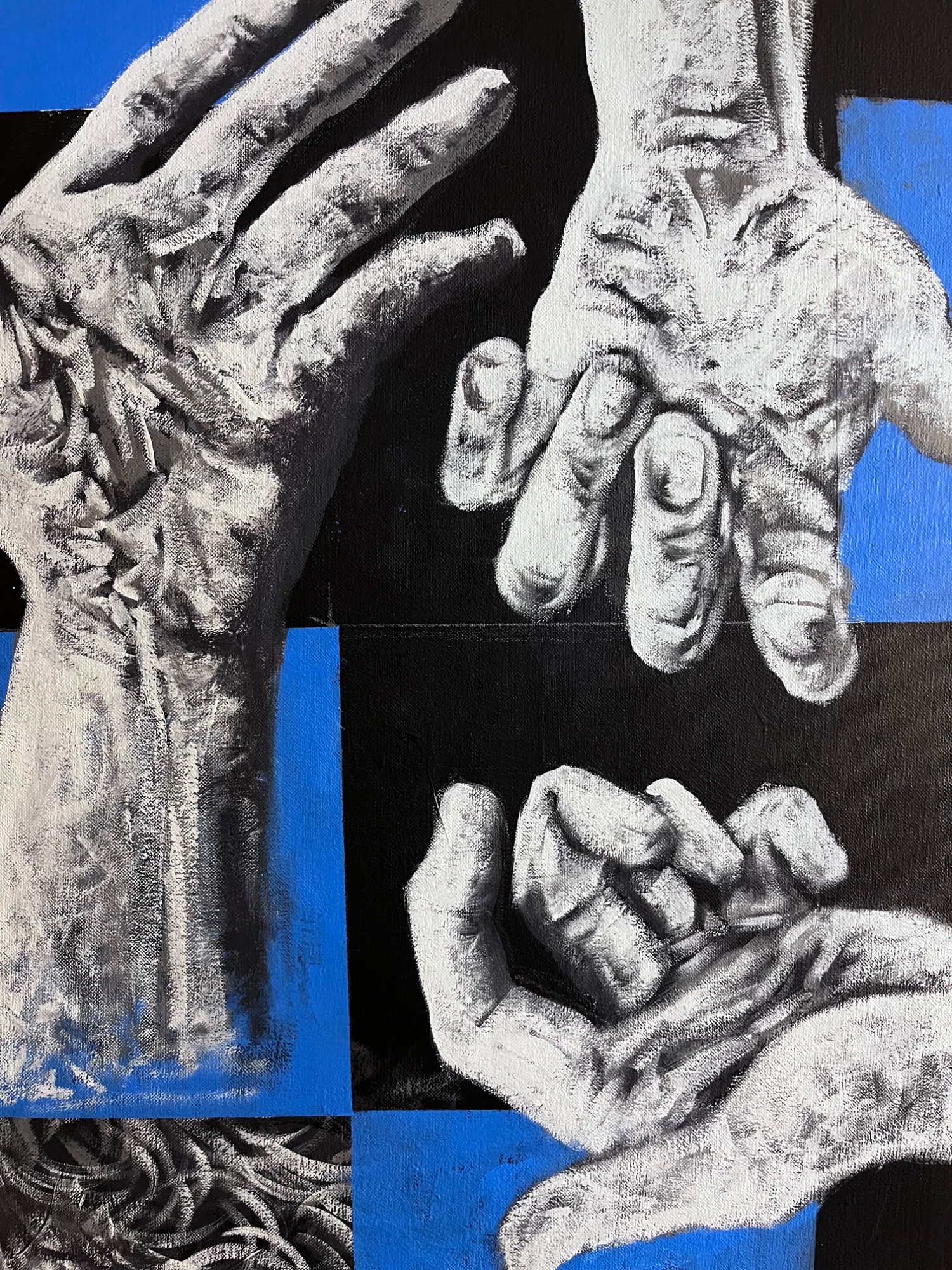
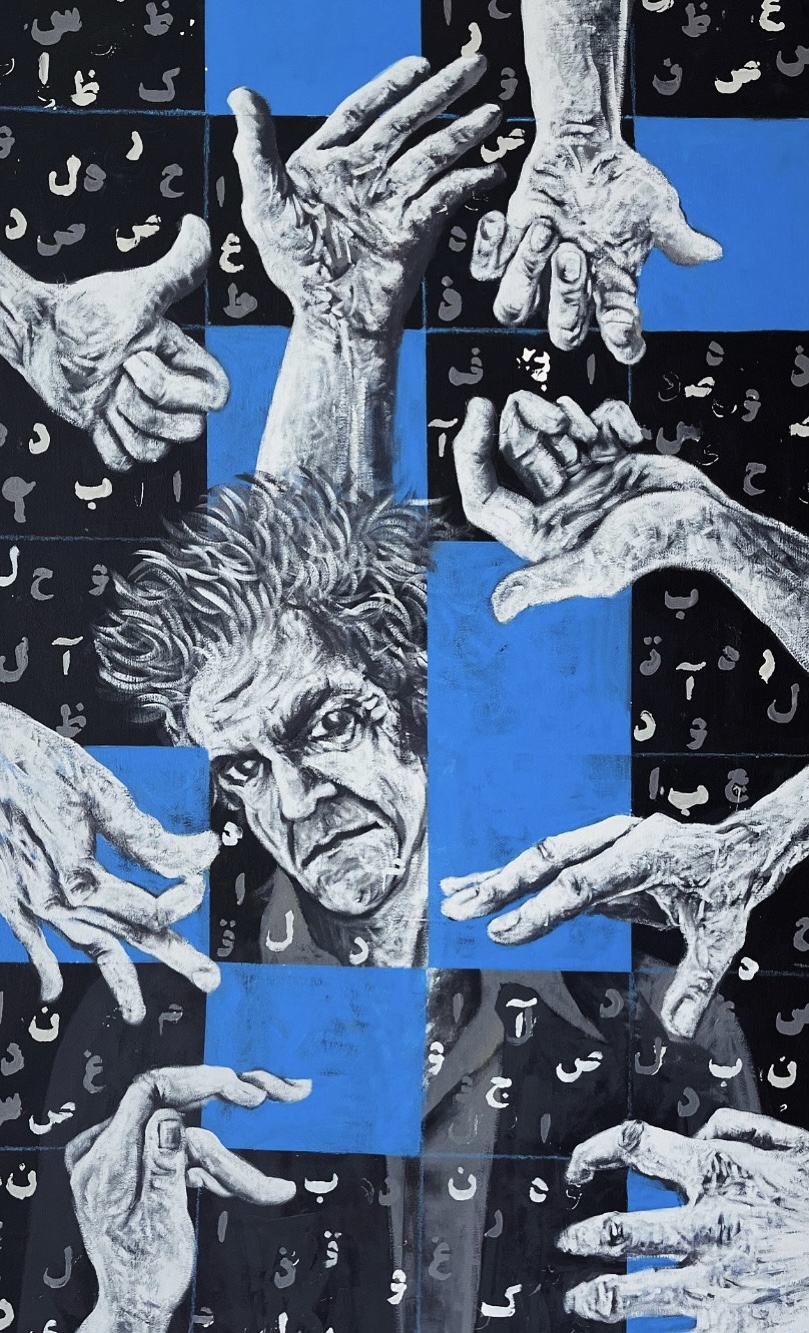
The artwork presents a solution, highlighting the ongoing struggles among people and the often-overlooked path to peace. By contemplating the intricate world depicted in the artwork, you may discover your own resolution. This piece is created using acrylic on canvas.
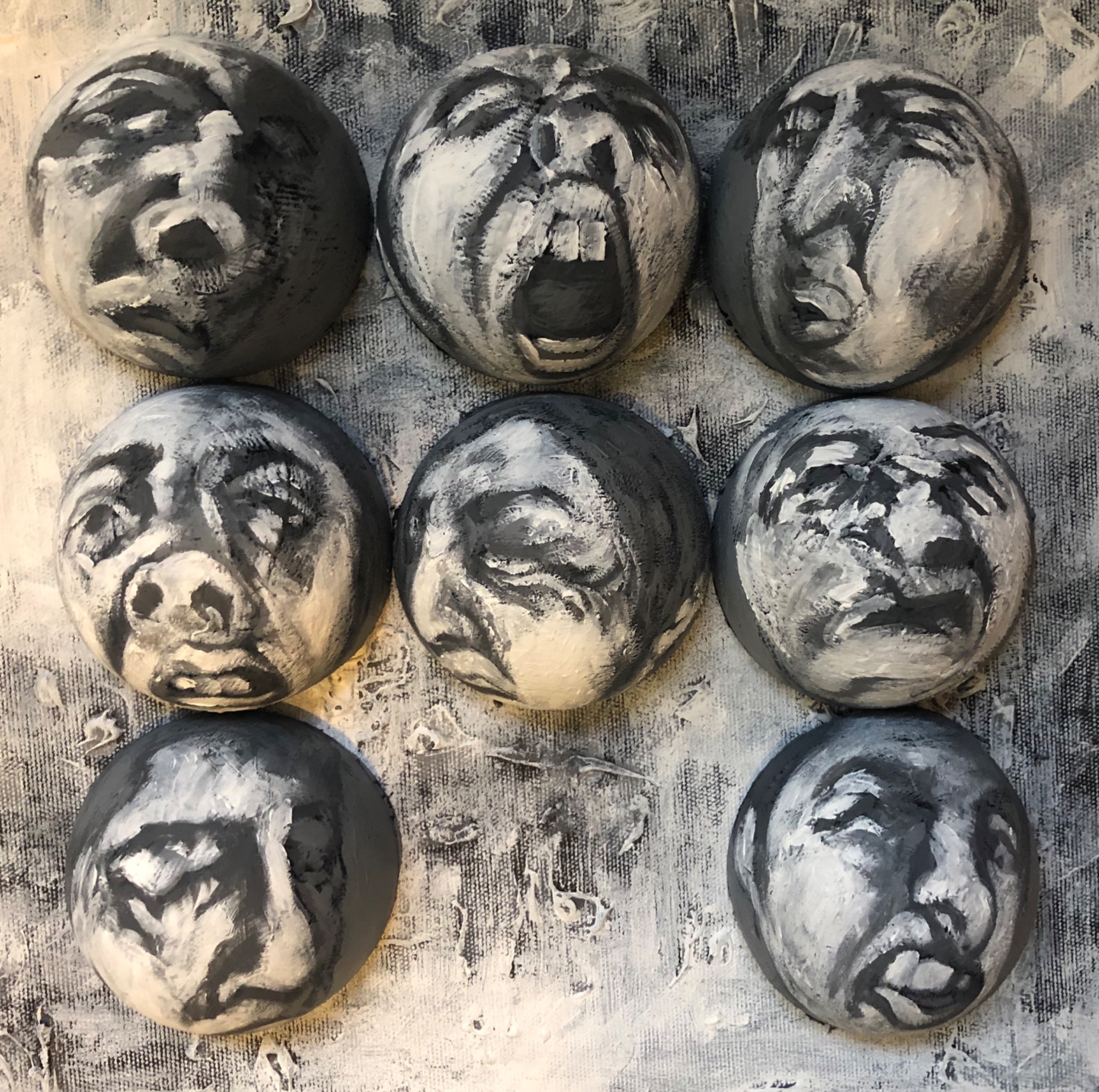
Balls
Seeking to further expand my skills with unconventional materials, I created a collection using balls. This series symbolized the duality of human existence, reflecting both internal and external perspectives. By painting on spheres, I aimed to represent how every individual’s actions can influence others, much like a ball’s movement can set off a chain reaction when it collides with others. This collection embodied the interconnected nature of human behaviors, akin to the “butterfly effect.”
For this collection, I spent several months in the sculpture studio of artist Asanlou , learning the art of molding and casting techniques.
Pipes
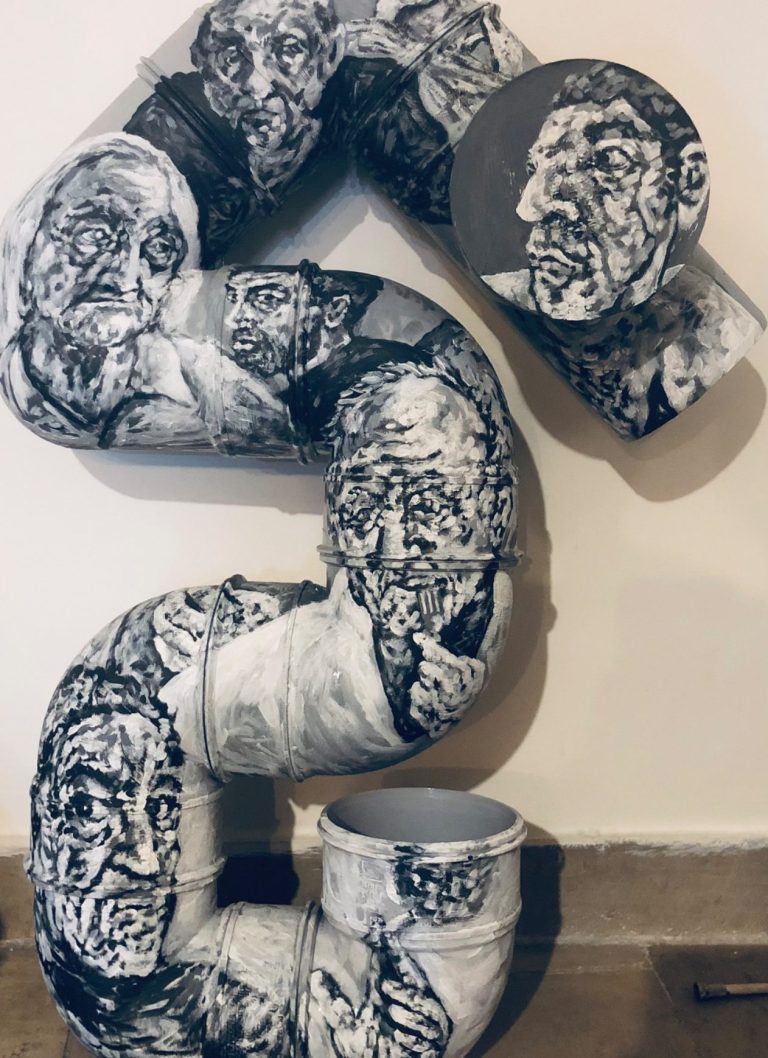
My first collection during this period was based on pipes as an alternative material to traditional canvas. This project presented a unique challenge due to the difficulty of painting on curved surfaces. The collection explored human relationships within society, using the pipe as a metaphor for connections and communication. This series was exclusively exhibited in my art studio
Animal Farm
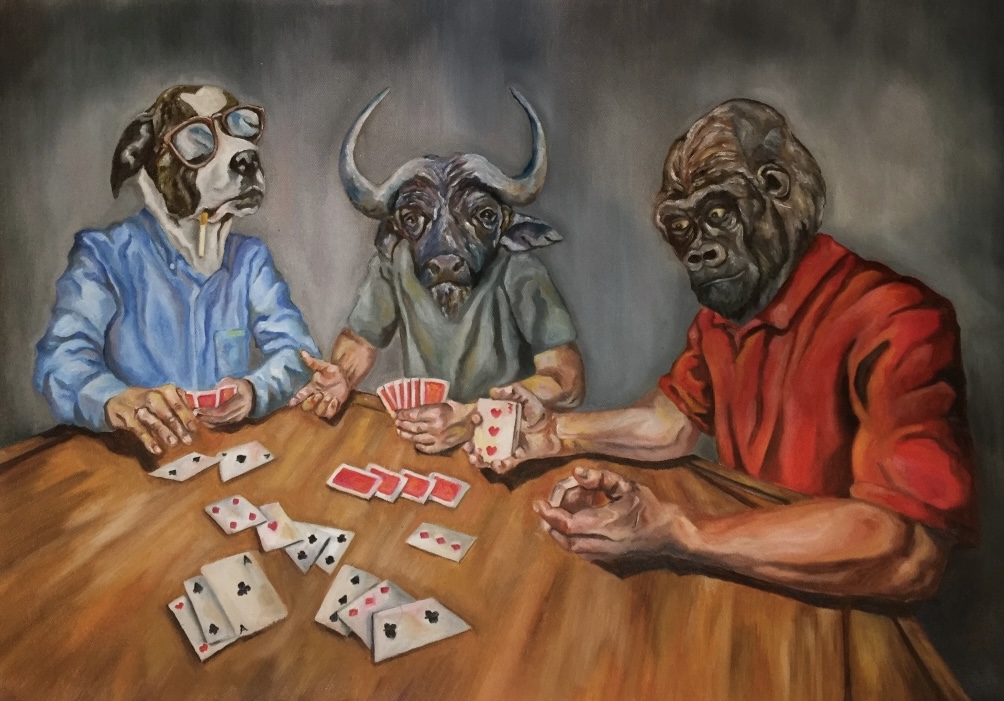
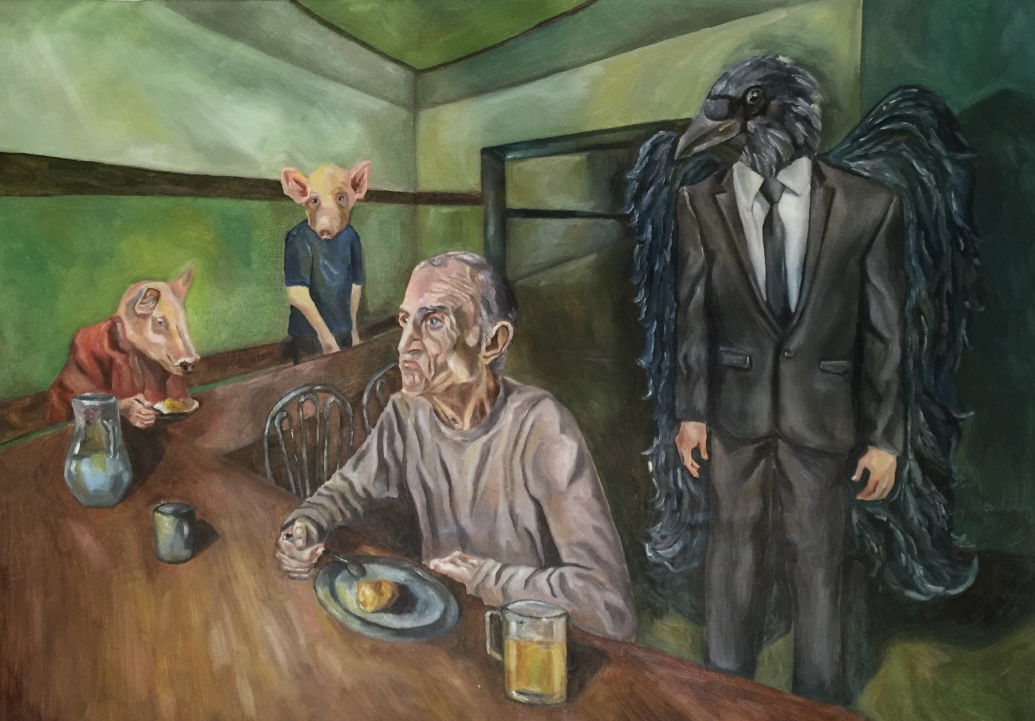
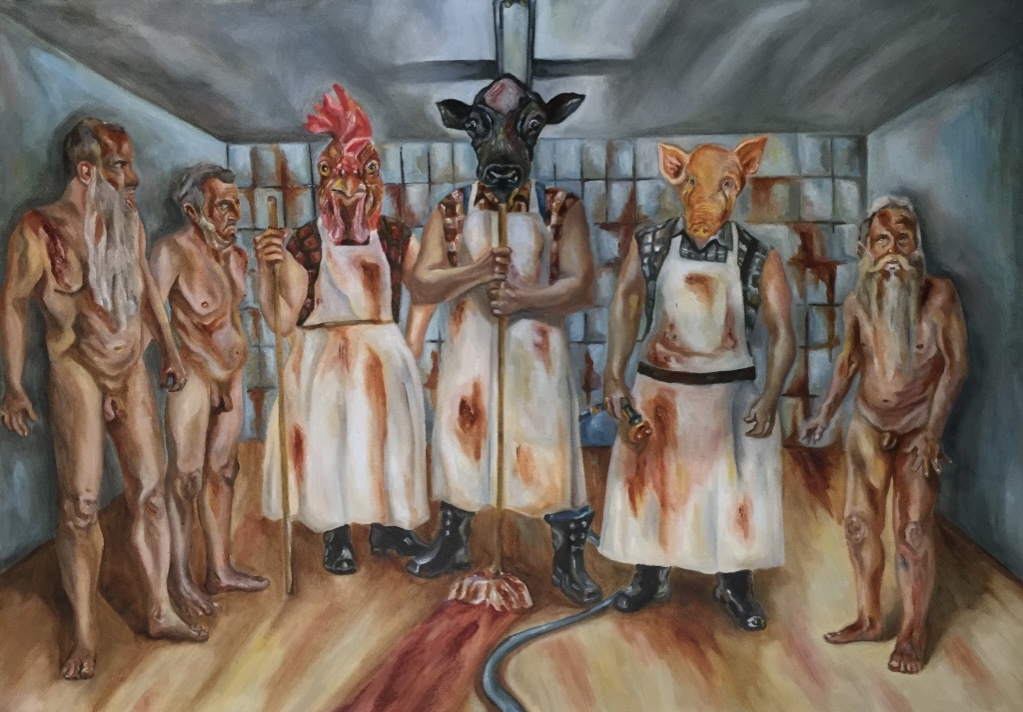
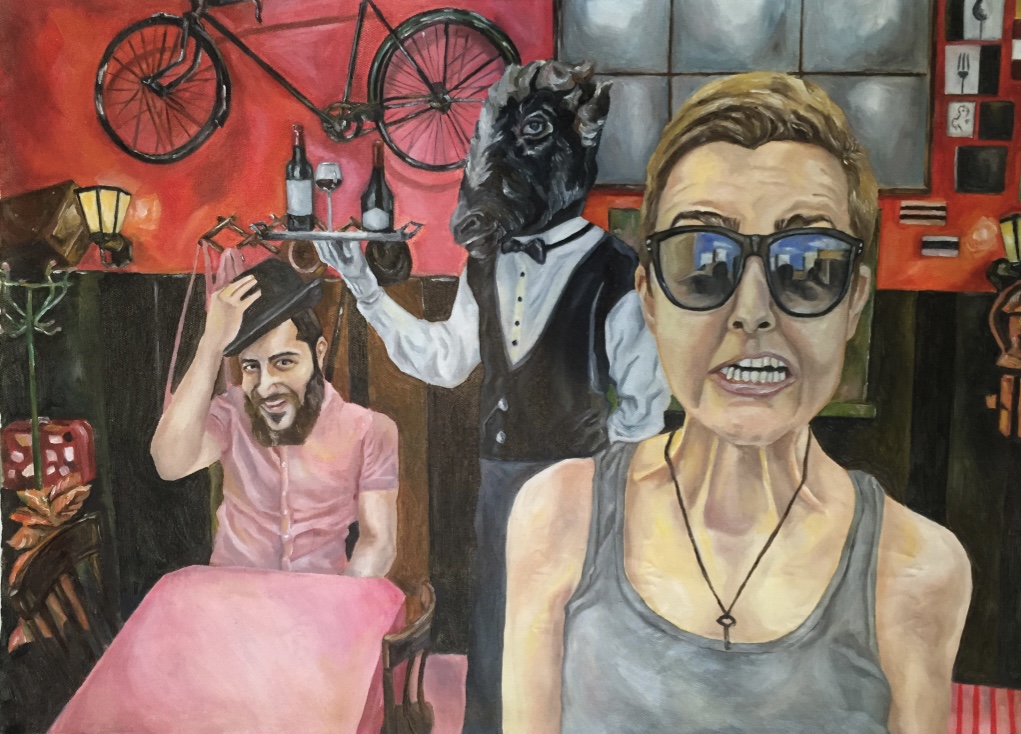
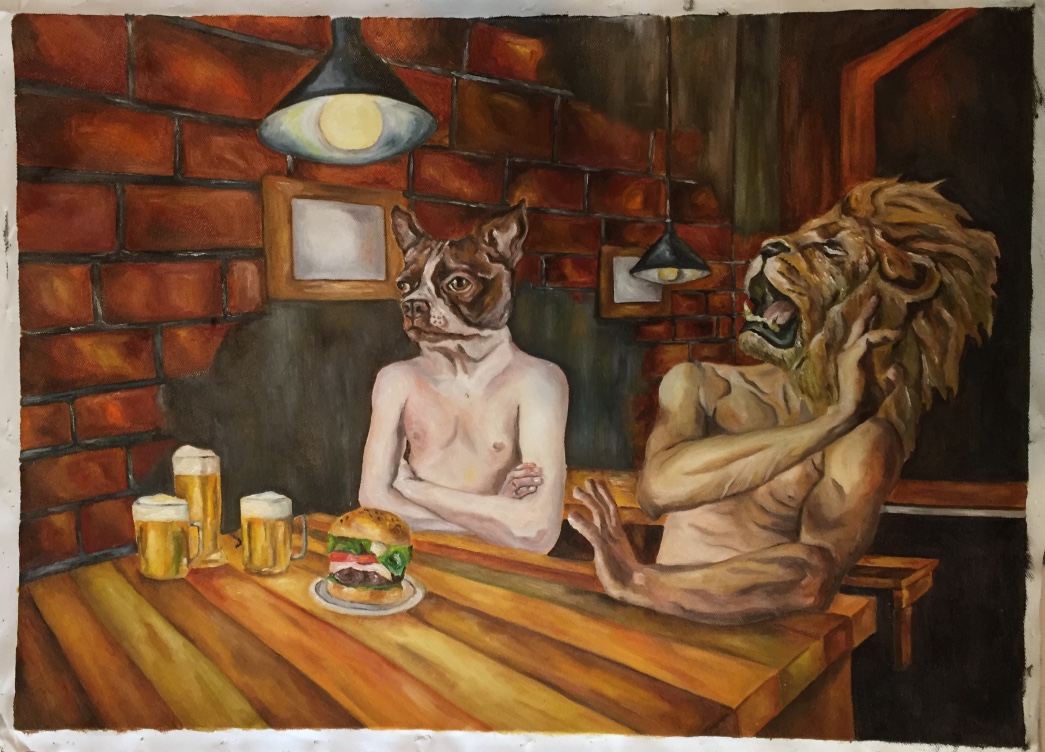
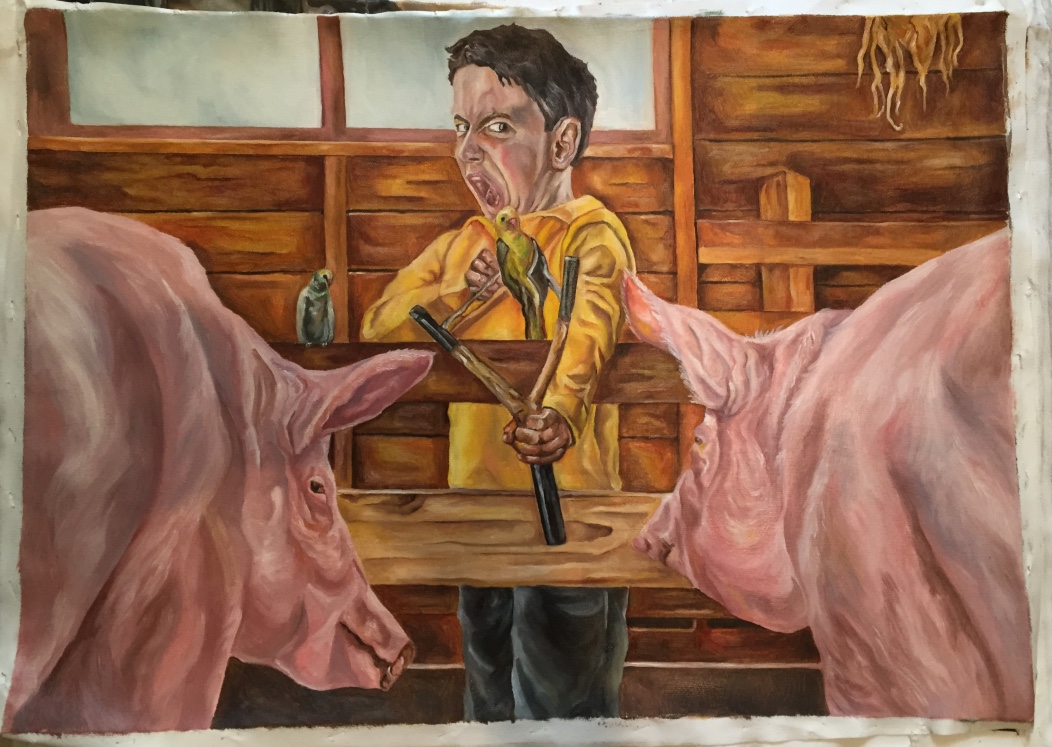
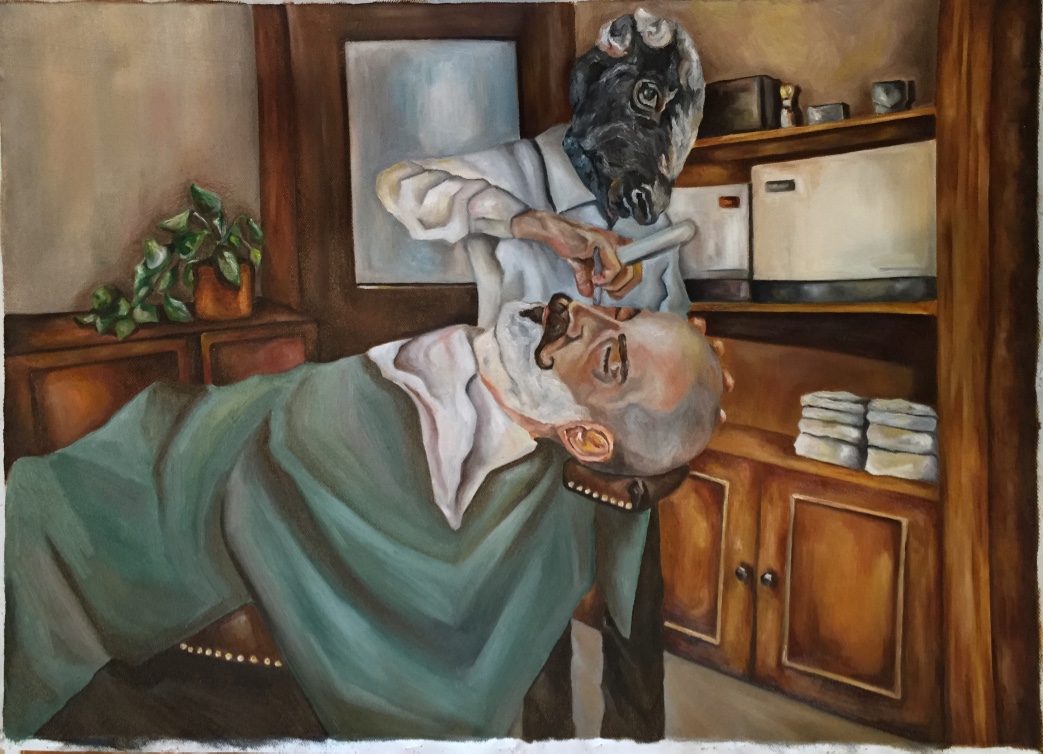
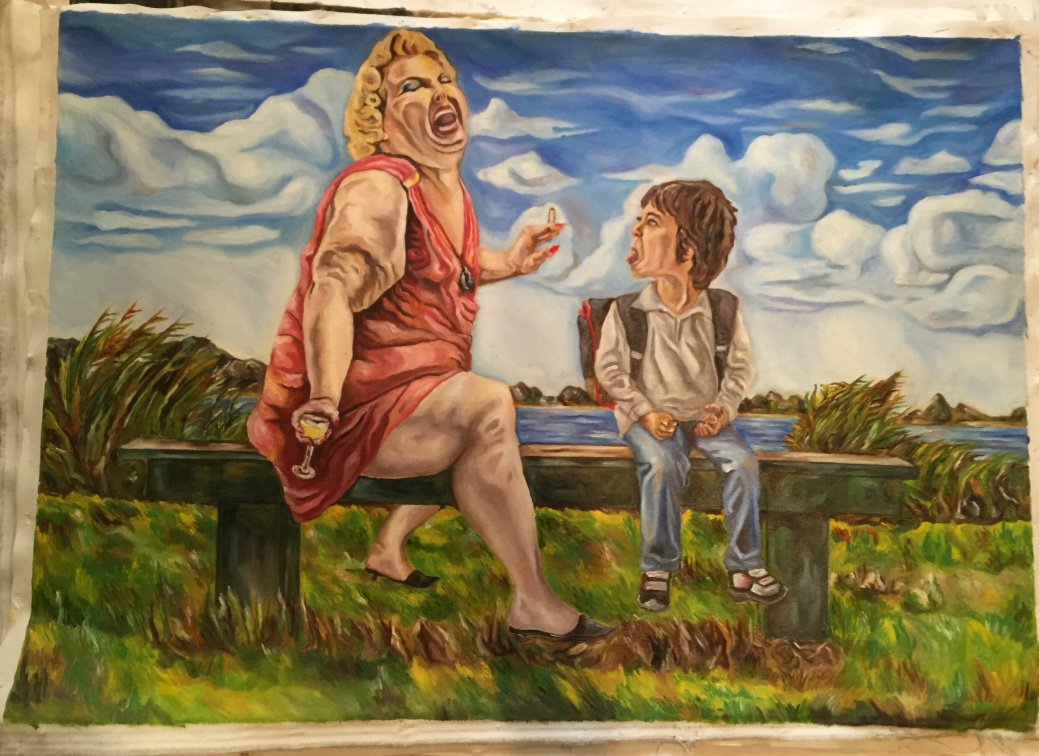
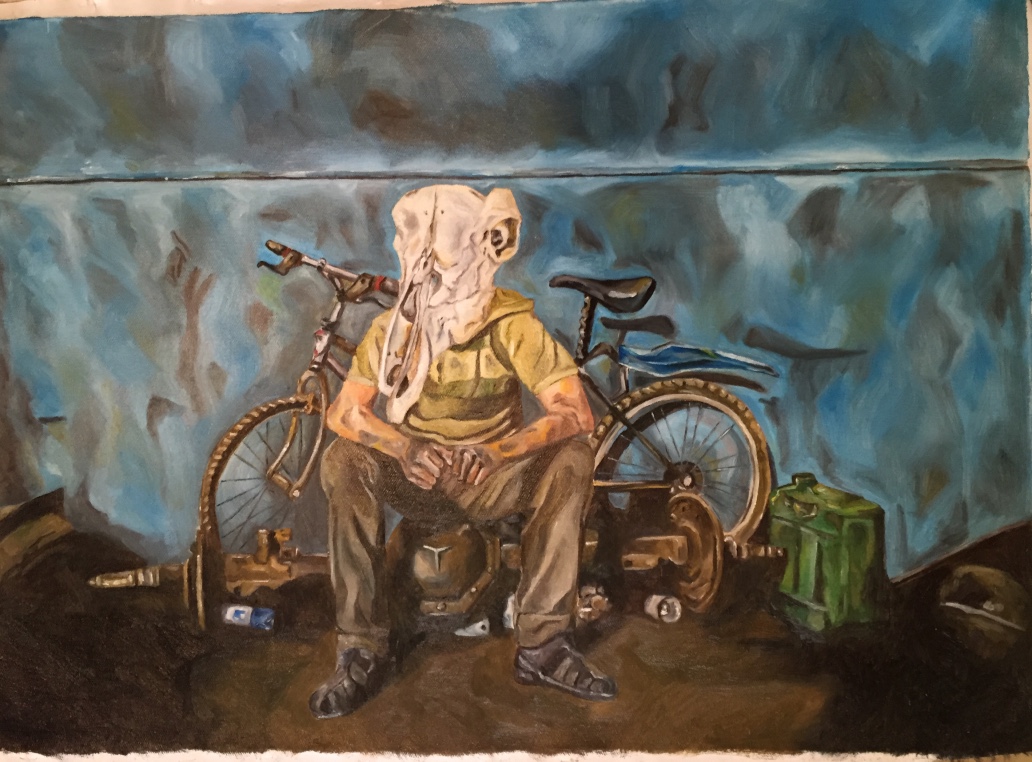
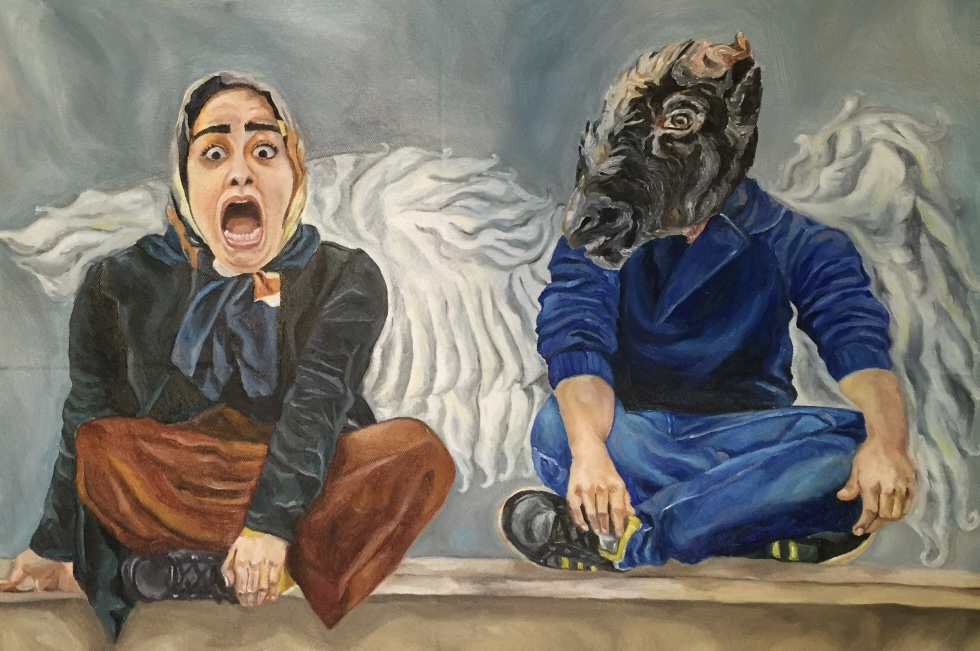
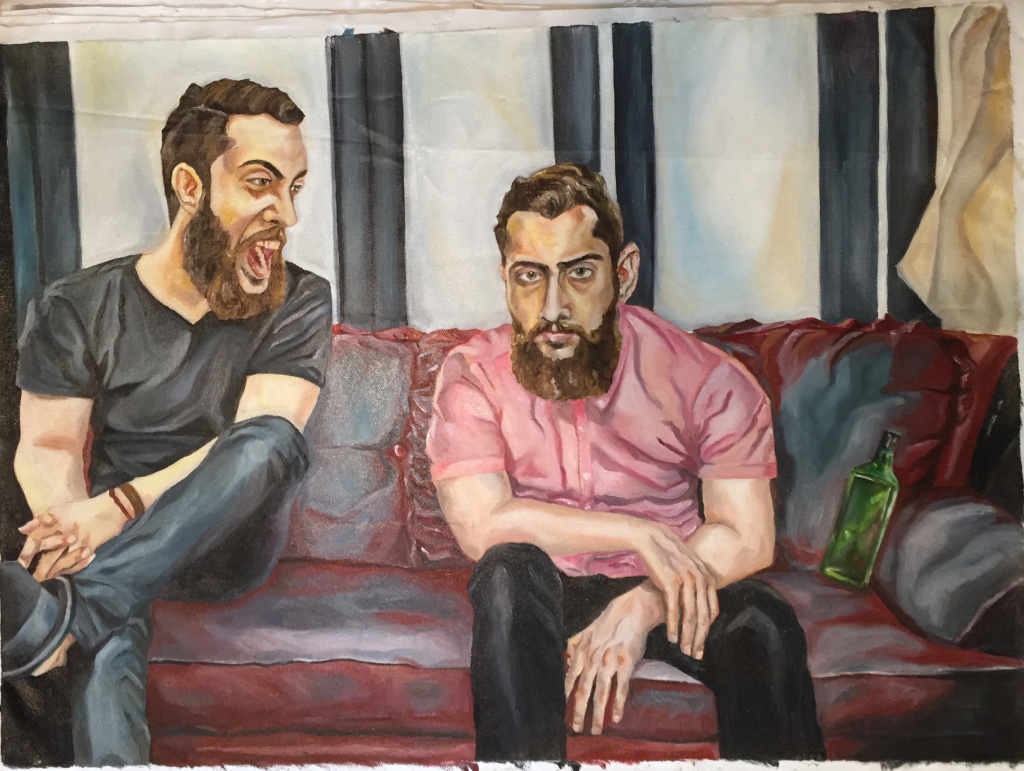
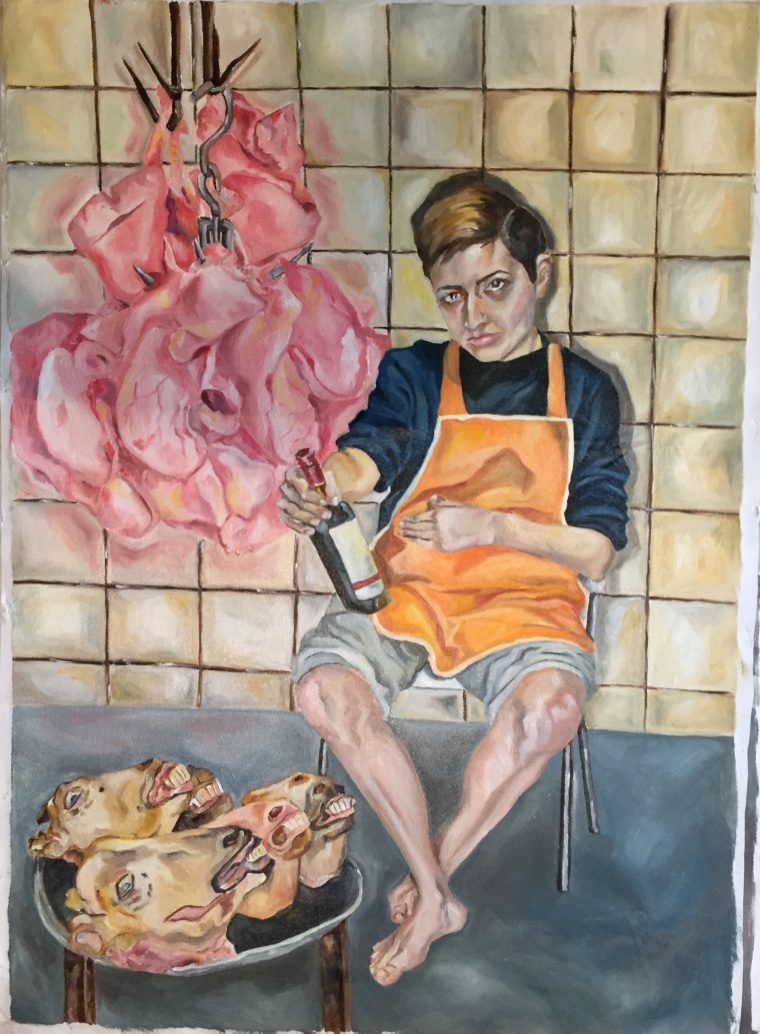
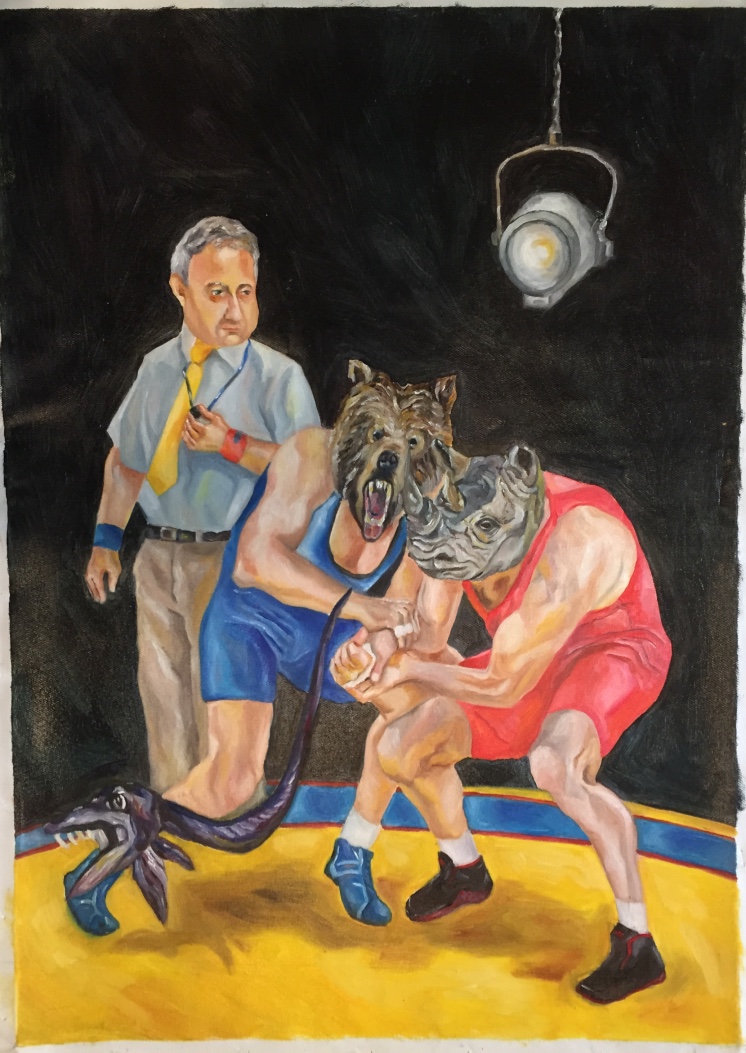
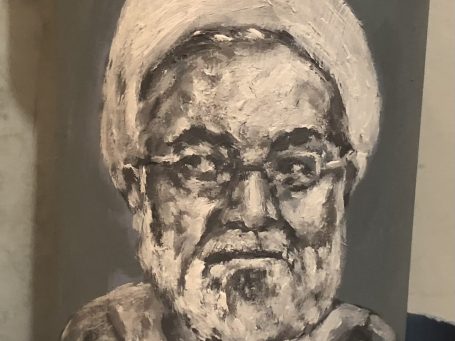
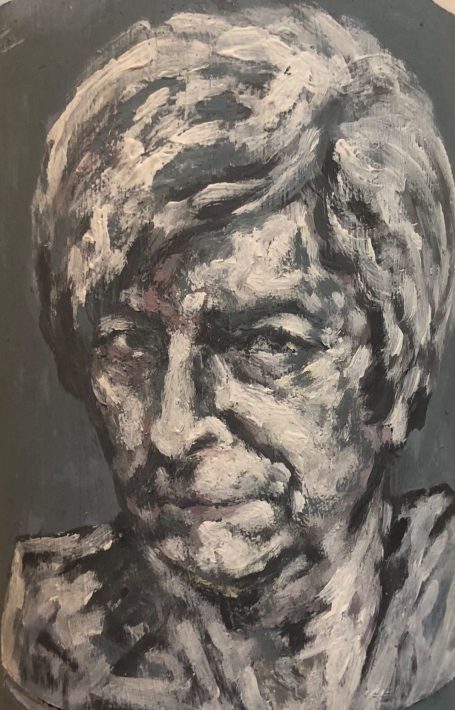
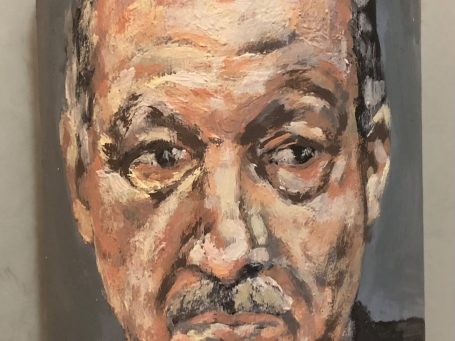
This collection is oil paintings, each measuring 50x70 cm. Inspired by George Orwell’s novel Animal Farm, the series explores human connections through a blend of humor and irony, portraying tragic situations in a visually compelling and thought-provoking way.